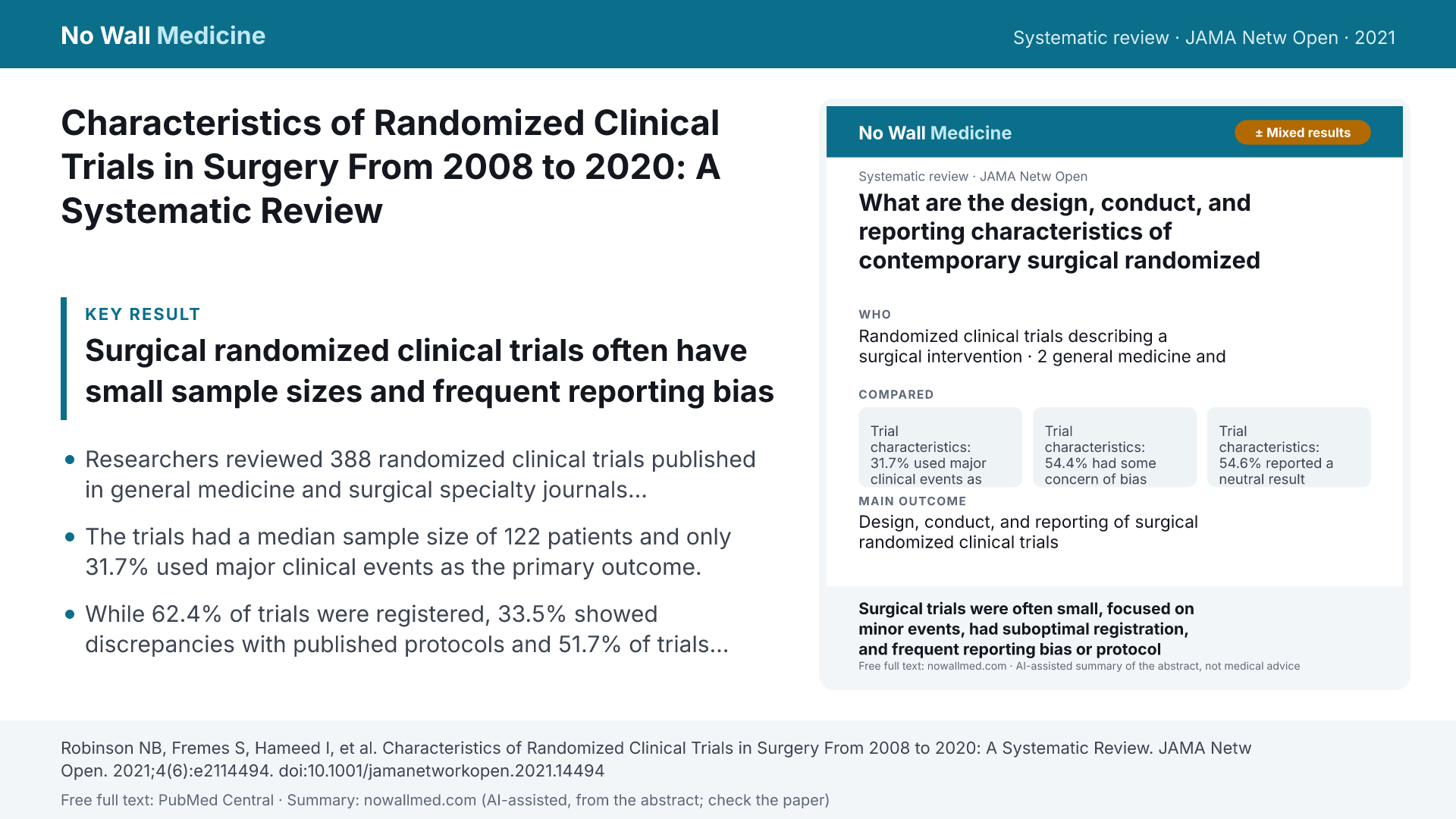
Surgical randomized clinical trials often have small sample sizes and frequent reporting bias
Characteristics of Randomized Clinical Trials in Surgery From 2008 to 2020: A Systematic Review
Systematic reviewMixed results
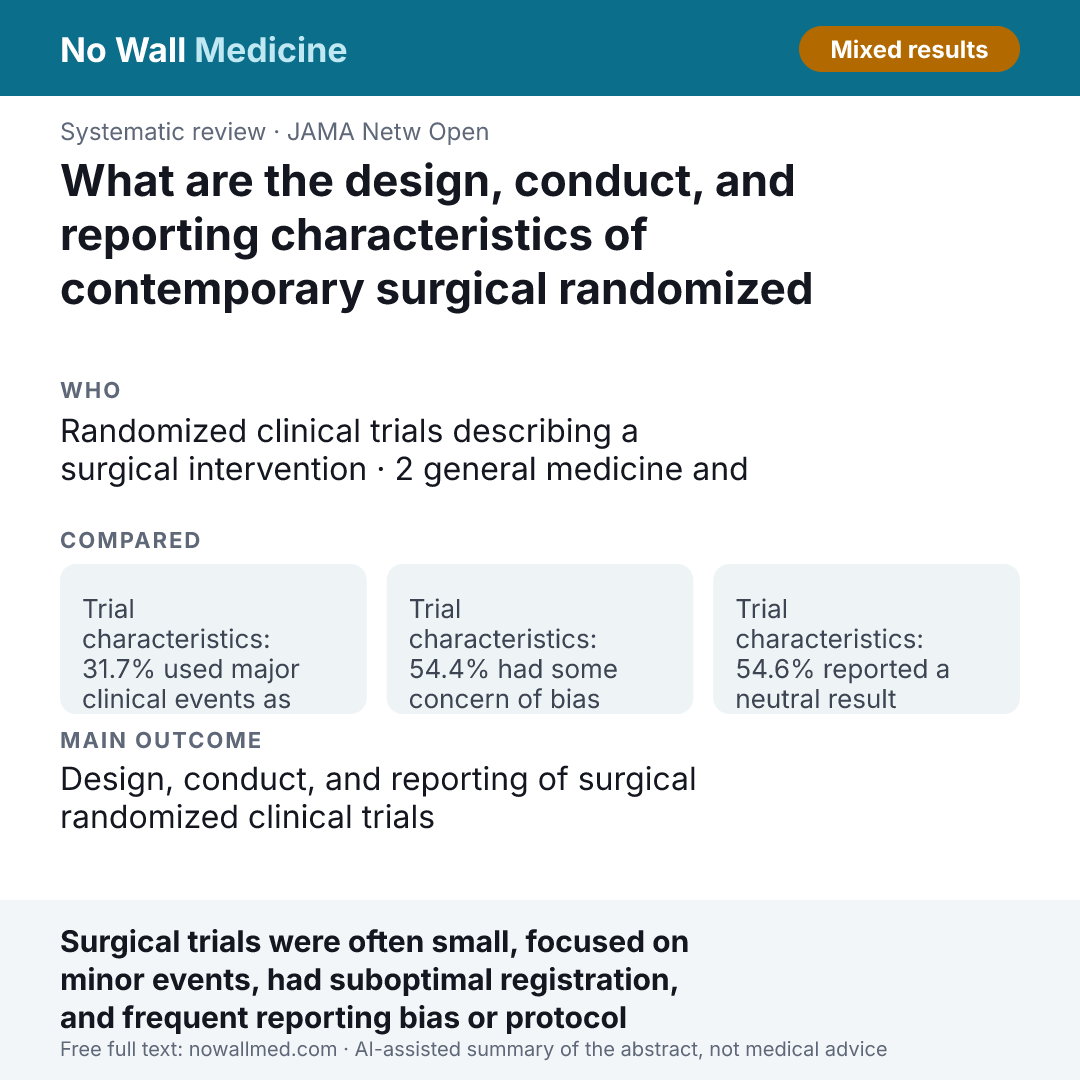
What are the design, conduct, and reporting characteristics of contemporary surgical randomized clinical trials?
Who
Randomized clinical trials describing a surgical intervention · 2 general medicine and 6 surgical specialty journals
Compared
Trial characteristics: 31.7% used major clinical events as primary outcome
Trial characteristics: 54.4% had some concern of bias
Trial characteristics: 54.6% reported a neutral result
Main outcome
Design, conduct, and reporting of surgical randomized clinical trials
Bottom line: Surgical trials were often small, focused on minor events, had suboptimal registration, and frequent reporting bias or protocol discrepancies.
JAMA Netw Open · 2021-06-01 · Save PNG
Clinical question: What are the design, conduct, and reporting characteristics of contemporary surgical randomized clinical trials?
Key points
- Researchers reviewed 388 randomized clinical trials published in general medicine and surgical specialty journals between 2008 and 2020.
- The trials had a median sample size of 122 patients and only 31.7% used major clinical events as the primary outcome.
- While 62.4% of trials were registered, 33.5% showed discrepancies with published protocols and 51.7% of trials with neutral results showed reporting bias.
Headline and key points written with AI from the paper’s abstract, with every number checked against it. Read the paper before relying on them.
Was this summary helpful?
Subject terms
Headline, design, result, key points, caveat and citation as plain text.
Cite this article
Robinson NB, Fremes S, Hameed I, et al. Characteristics of Randomized Clinical Trials in Surgery From 2008 to 2020: A Systematic Review. JAMA Netw Open. 2021. doi:10.1001/jamanetworkopen.2021.14494
Spotted a mistake? Suggest a correction