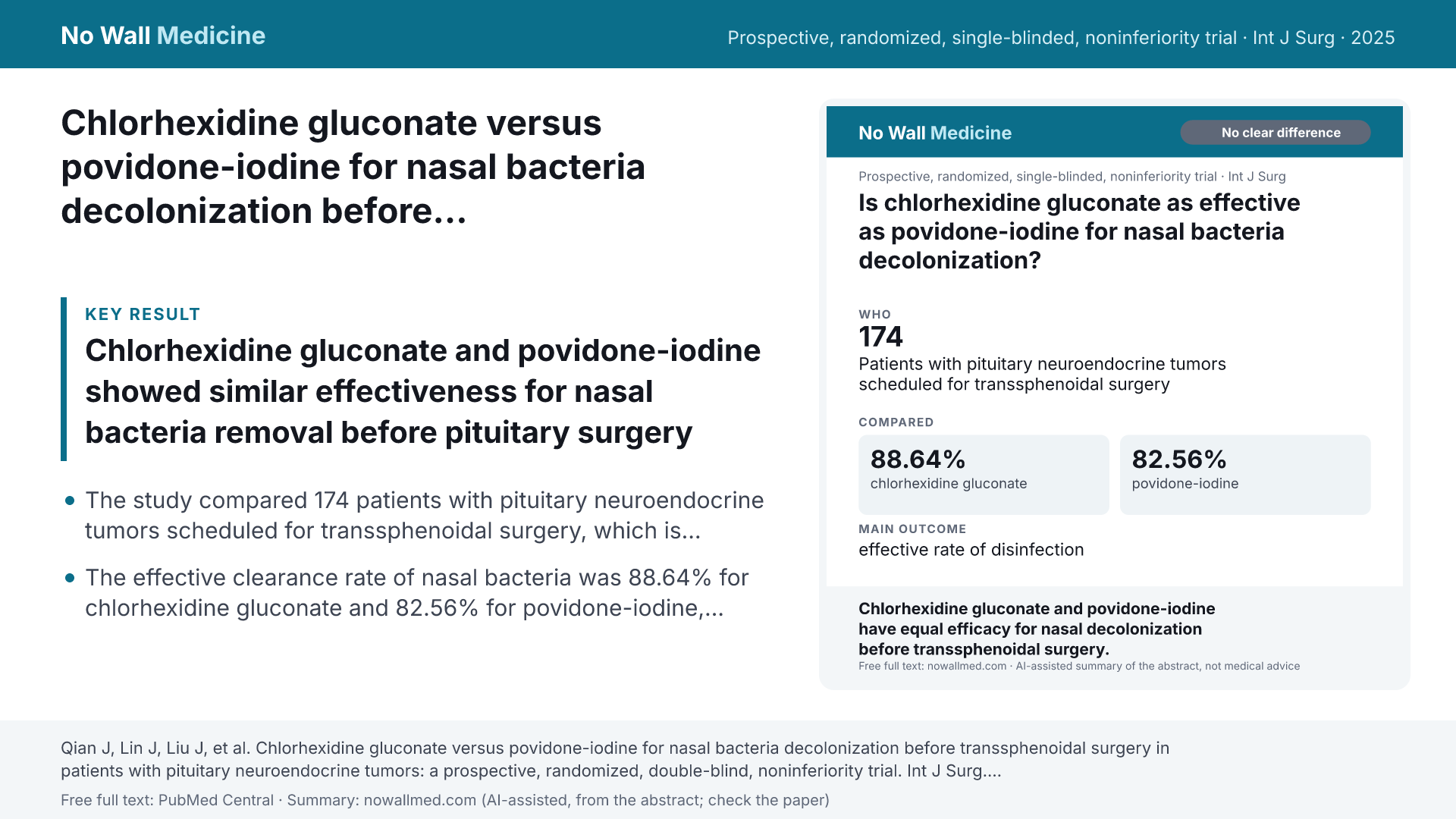
Chlorhexidine gluconate and povidone-iodine showed similar effectiveness for nasal bacteria removal before pituitary surgery
Chlorhexidine gluconate versus povidone-iodine for nasal bacteria decolonization before transsphenoidal surgery in patients with pituitary neuroendocrine tumors: a prospective, randomized, double-blind, noninferiority trial
Prospective, randomized, single-blinded, noninferiority trialNo clear difference
Is chlorhexidine gluconate as effective as povidone-iodine for nasal bacteria decolonization?
Who
174
Patients with pituitary neuroendocrine tumors scheduled for transsphenoidal surgery
Compared
88.64%chlorhexidine gluconate
82.56%povidone-iodine
Main outcome
effective rate of disinfection
Result: between-group difference 6.10% (95% CI -5.30 to 17.50)
Bottom line: Chlorhexidine gluconate and povidone-iodine have equal efficacy for nasal decolonization before transsphenoidal surgery.
Int J Surg · 2025-01-01Download image
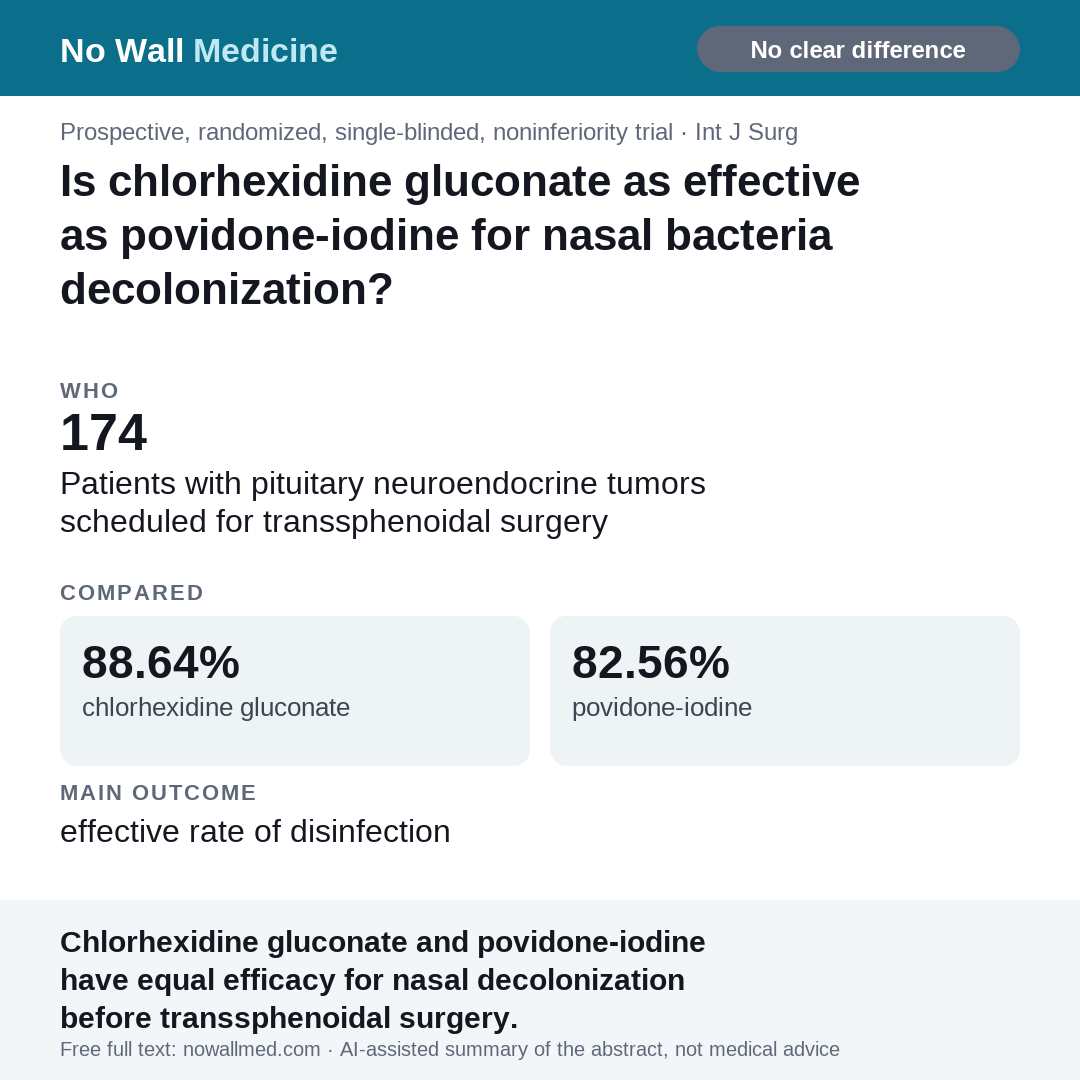
Clinical question: Is chlorhexidine gluconate as effective as povidone-iodine for nasal bacteria decolonization?
Why it matters: It was unknown whether chlorhexidine gluconate or povidone-iodine is more effective or comfortable for removing nasal bacteria before transsphenoidal surgery.
Key points
- The study compared 174 patients with pituitary neuroendocrine tumors scheduled for transsphenoidal surgery, which is a procedure to reach the pituitary gland through the nose.
- The effective clearance rate of nasal bacteria was 88.64% for chlorhexidine gluconate and 82.56% for povidone-iodine, a difference that was not statistically significant.
- Chlorhexidine gluconate was associated with better comfort, including less nasal irritation, less pungency, and better intranasal coloration.
Headline and key points written with AI from the paper’s abstract, with every number checked against it. Read the paper before relying on them.
Was this summary helpful?
Subject terms
Cite this article
Qian J, Lin J, Liu J, et al. Chlorhexidine gluconate versus povidone-iodine for nasal bacteria decolonization before transsphenoidal surgery in patients with pituitary neuroendocrine tumors: a prospective, randomized, double-blind, noninferiority trial. Int J Surg. 2025. doi:10.1097/JS9.0000000000002052
Spotted a mistake? Suggest a correction