Chorioamnionitis was associated with lower severity of two-year neurodevelopmental outcomes in infants with HIE
Chorioamnionitis and Two-Year Outcomes in Infants with Hypoxic-Ischemic Encephalopathy
Cohort studyNo clear difference
Is chorioamnionitis associated with adverse 2-year outcomes in infants with hypoxic-ischemic encephalopathy?
Who
500
Infants with moderate to severe hypoxic-ischemic encephalopathy treated with therapeutic hypothermia
Compared
Clinical chorioamnionitis: odds ratio 0.57 (95% CI 0.34-0.95)
Histologic chorioamnionitis: odds ratio 0.62 (95% CI 0.40-0.96)
Unexposed infants
Main outcome
ordinal 2-year neurodevelopmental outcome measure
Result: odds ratio 0.57 (95% CI 0.34-0.95) for clinical chorioamnionitis
Bottom line: Chorioamnionitis was associated with lower severity of 2-year neurodevelopmental outcomes in infants with hypoxic-ischemic encephalopathy.
J Pediatr · 2024-12-09Download image
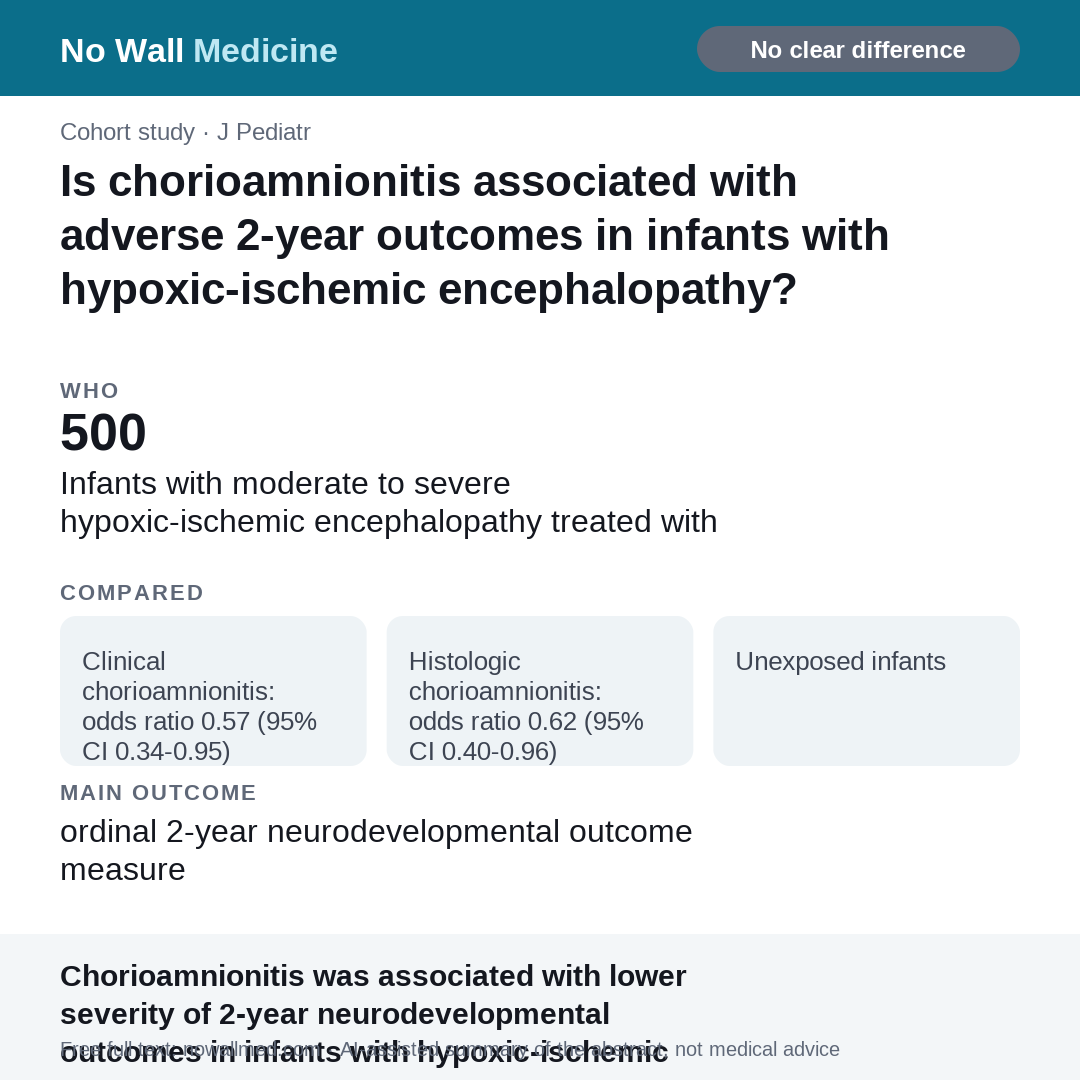
Clinical question: Is chorioamnionitis associated with adverse 2-year outcomes in infants with hypoxic-ischemic encephalopathy?
Why it matters: It was unknown if chorioamnionitis is associated with an increased risk of adverse two-year neurodevelopmental outcomes among infants with hypoxic-ischemic encephalopathy.
Key points
- Researchers studied 500 infants with moderate to severe hypoxic-ischemic encephalopathy, a type of brain injury caused by lack of oxygen, treated with therapeutic hypothermia.
- Infants with clinical chorioamnionitis, or infection of the fetal membranes, had an odds ratio of 0.57 for neurodevelopmental impairment severity compared to unexposed infants.
- Infants with histologic chorioamnionitis, or placental inflammation seen under a microscope, had an odds ratio of 0.62 for neurodevelopmental impairment severity.
Headline and key points written with AI from the paper’s abstract, with every number checked against it. Read the paper before relying on them.
Was this summary helpful?
Subject terms
Cite this article
Cornet MC, Gonzalez FF, Glass HC, Wu TW, Wisnowski JL, Li Y. Chorioamnionitis and Two-Year Outcomes in Infants with Hypoxic-Ischemic Encephalopathy. J Pediatr. 2024. doi:10.1016/j.jpeds.2024.114415
Spotted a mistake? Suggest a correction
Top studies every Monday
The week’s key trials and guidelines in your specialties, plus any topics you follow. By email, free.
Get the weekly digest