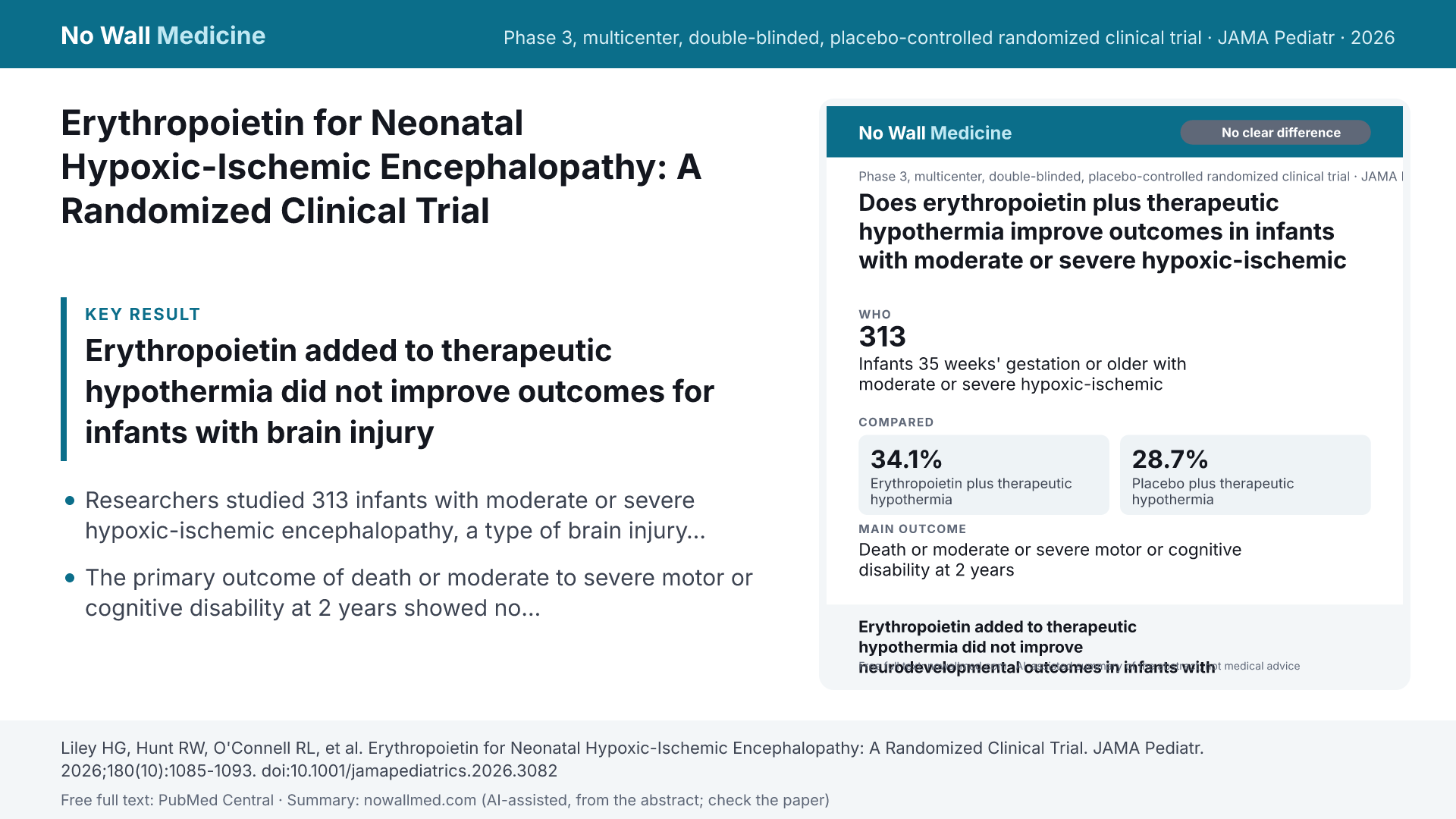
Erythropoietin added to therapeutic hypothermia did not improve outcomes for infants with brain injury
Erythropoietin for Neonatal Hypoxic-Ischemic Encephalopathy: A Randomized Clinical Trial
Phase 3, multicenter, double-blinded, placebo-controlled randomized clinical trialNo clear difference
Does erythropoietin plus therapeutic hypothermia improve outcomes in infants with moderate or severe hypoxic-ischemic encephalopathy?
Who
313
Infants 35 weeks' gestation or older with moderate or severe hypoxic-ischemic encephalopathy · 24 neonatal intensive care units in Australia, New Zealand, and Singapore
Compared
34.1%Erythropoietin plus therapeutic hypothermia
28.7%Placebo plus therapeutic hypothermia
Main outcome
Death or moderate or severe motor or cognitive disability at 2 years
Result: relative risk 1.19 (95% CI 0.84-1.68)
Bottom line: Erythropoietin added to therapeutic hypothermia did not improve neurodevelopmental outcomes in infants with hypoxic-ischemic encephalopathy.
JAMA Pediatr · 2026-07-27Download image
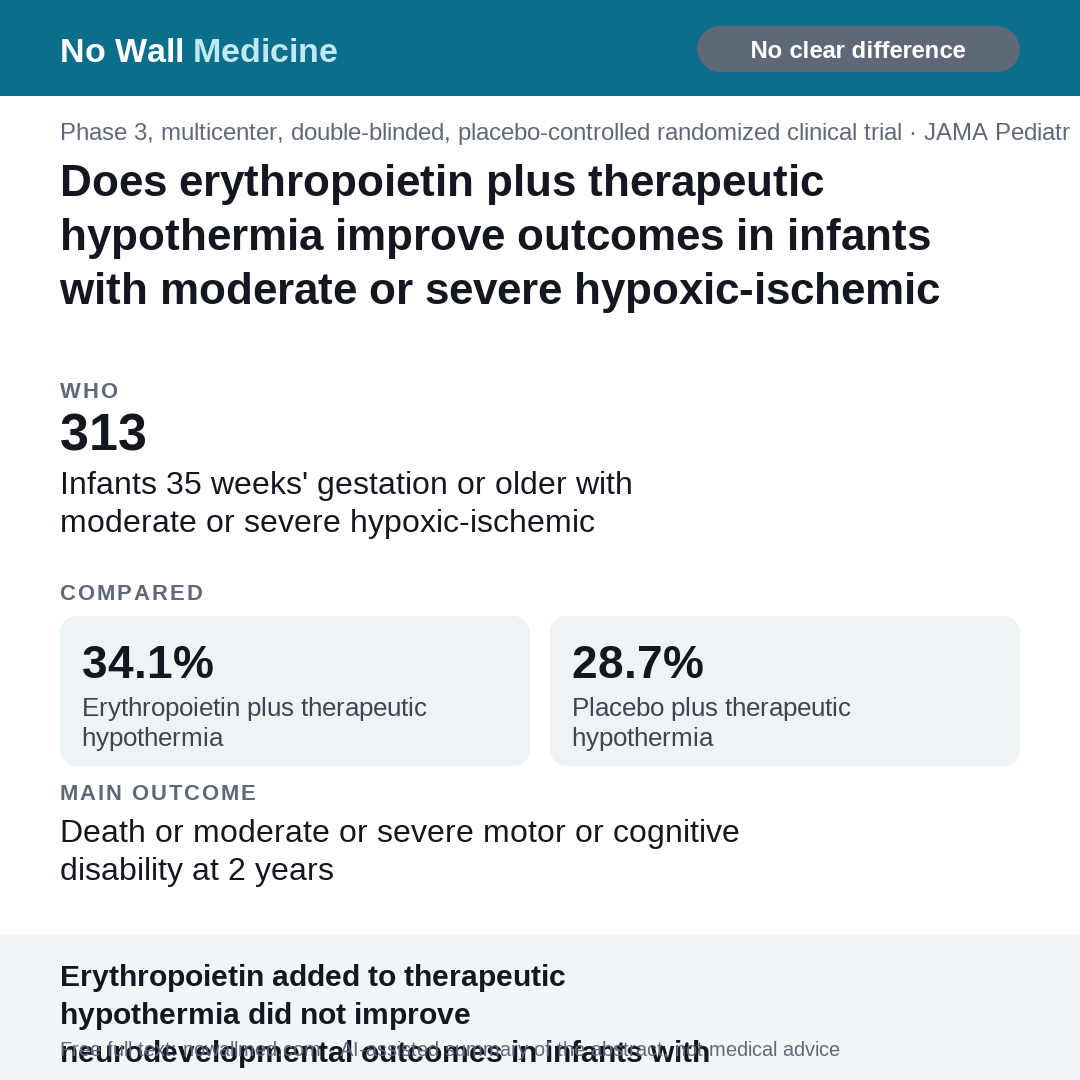
Clinical question: Does erythropoietin plus therapeutic hypothermia improve outcomes in infants with moderate or severe hypoxic-ischemic encephalopathy?
Why it matters: While therapeutic hypothermia is the standard care for neonatal brain injury, mortality and disability rates remain high, necessitating research into additional treatments.
Key points
- Researchers studied 313 infants with moderate or severe hypoxic-ischemic encephalopathy, a type of brain injury from lack of oxygen, comparing erythropoietin to a placebo.
- The primary outcome of death or moderate to severe motor or cognitive disability at 2 years showed no significant difference between erythropoietin (34.1%) and placebo (28.7%).
- No significant differences were found in secondary outcomes including death, cerebral palsy, motor deficits, cognitive deficits, or any safety concerns.
Headline and key points written with AI from the paper’s abstract, with every number checked against it. Read the paper before relying on them.
Was this summary helpful?
Subject terms
Cite this article
Liley HG, Hunt RW, O'Connell RL, et al. Erythropoietin for Neonatal Hypoxic-Ischemic Encephalopathy: A Randomized Clinical Trial. JAMA Pediatr. 2026. doi:10.1001/jamapediatrics.2026.3082
Spotted a mistake? Suggest a correction