Oral health care treatments were feasible and safe for patients with acute stroke and swallowing difficulties
CHOSEN: A Randomized Controlled Feasibility Trial
Randomized controlled feasibility trialBenefit found
Is a definitive trial of oral health care treatments feasible in stroke unit care?
Who
101
Patients with acute stroke and dysphagia · 4 stroke units in northwest England
Compared
Manual toothbrush with nonfoaming toothpaste
Manual toothbrush with chlorhexidine 1% gel
Powered toothbrush with nonfoaming toothpaste
Powered toothbrush with chlorhexidine 1% gel
Main outcome
Feasibility of oral health care treatments
Bottom line: Oral health care treatments supported by staff training appeared feasible and safe in acutely dysphagic stroke patients.
J Am Heart Assoc · 2025-09-11Download image
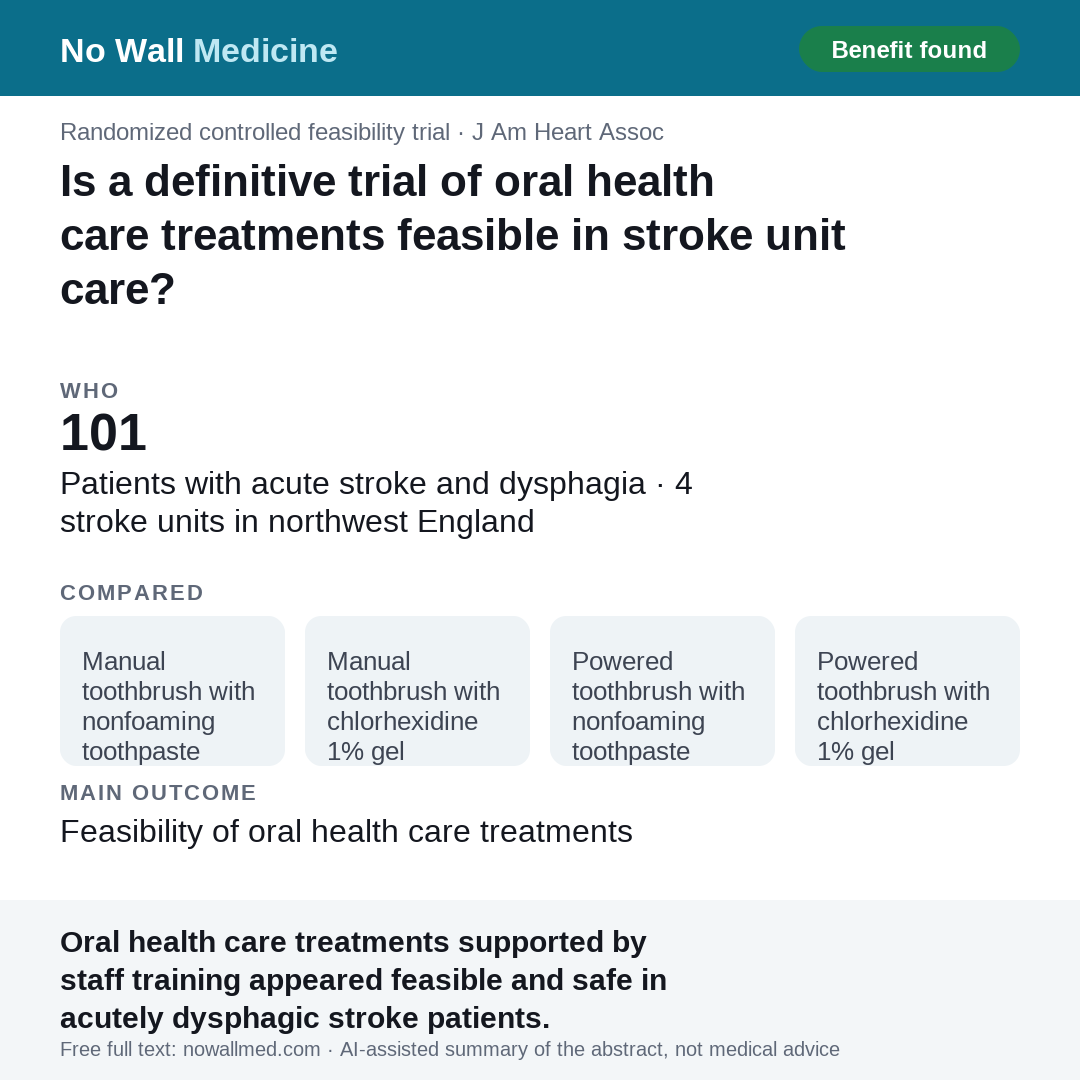
Clinical question: Is a definitive trial of oral health care treatments feasible in stroke unit care?
Why it matters: It is unclear if specific oral health care treatments supported by staff training are feasible to implement in stroke unit care.
Key points
- Researchers studied 101 patients with acute stroke and dysphagia, which is difficulty swallowing, across four stroke units in England.
- The study found 91% adherence to the four oral health care treatments and no substantial differences in survival or pneumonia rates.
- There were 19 serious adverse events, but no marked differences were found between the different oral health care treatment groups.
Headline and key points written with AI from the paper’s abstract, with every number checked against it. Read the paper before relying on them.
Topics
Cite this article
Smith CJ, Brand A, Hoare Z, Jones E, Davidson C, Westoby W. CHOSEN: A Randomized Controlled Feasibility Trial. J Am Heart Assoc. 2025. doi:10.1161/JAHA.124.040677
Spotted a mistake? Suggest a correction
Top studies every Monday
The week’s key trials and guidelines in your specialties, by email. Free.
Get the weekly digest