Purpose
Although immune checkpoint inhibitors (ICI) are generally the preferred first-line treatment for metastatic BRAF V600-mutated melanoma, a subgroup that remains incompletely defined requires initial tumor control with BRAF/MEK-targeted therapy (TT). The purpose of this study was to evaluate circulating thymidine kinase activity (TKa), a blood-based marker of cellular proliferation, as a biomarker of outcome and treatment sequencing in patients enrolled in the randomized phase II SECOMBIT trial (NCT02631447). Patients and methods
Serum TKa was analyzed in samples from patients at baseline and during treatment. Patients were stratified by median baseline TKa, and survival outcomes were compared across three strategies for first- and second-line treatments: TT followed by ICI (arm A), ICI followed by TT (arm B), and a "sandwich" strategy with short-term TT induction prior ICI (arm C) followed by TT. Results
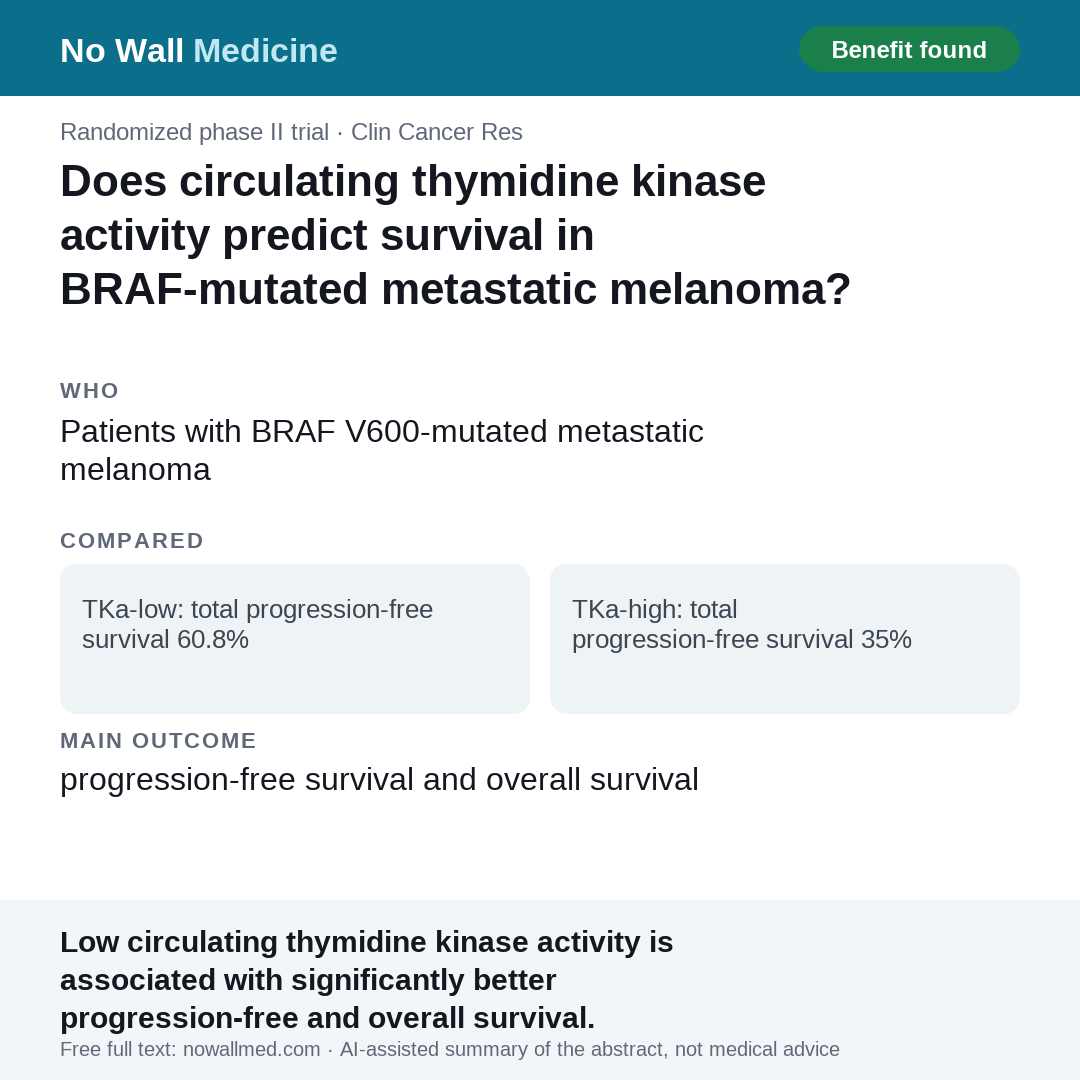
In TKa-low (n = 41) versus TKa-high (n = 40) patients, the first progression-free survival (PFS) at 5 years was 43.3% versus 27.5% (P = 0.062), the total PFS was 60.8% versus 35% (P = 0.004), and overall survival (OS) was 70.7% versus 36.9% (P Conclusions
These findings suggest that circulating TKa could serve as a clinically actionable biomarker for risk stratification, treatment sequencing, and on-treatment disease monitoring.
Prostate and pelvic nodal stereotactic body radiotherapy (SBRT) versus prostate-only SBRT for high-risk, localised prostate cancer (PACE-NODES): early adverse event results from an international, open-label, phase 3, randomised controlled trial