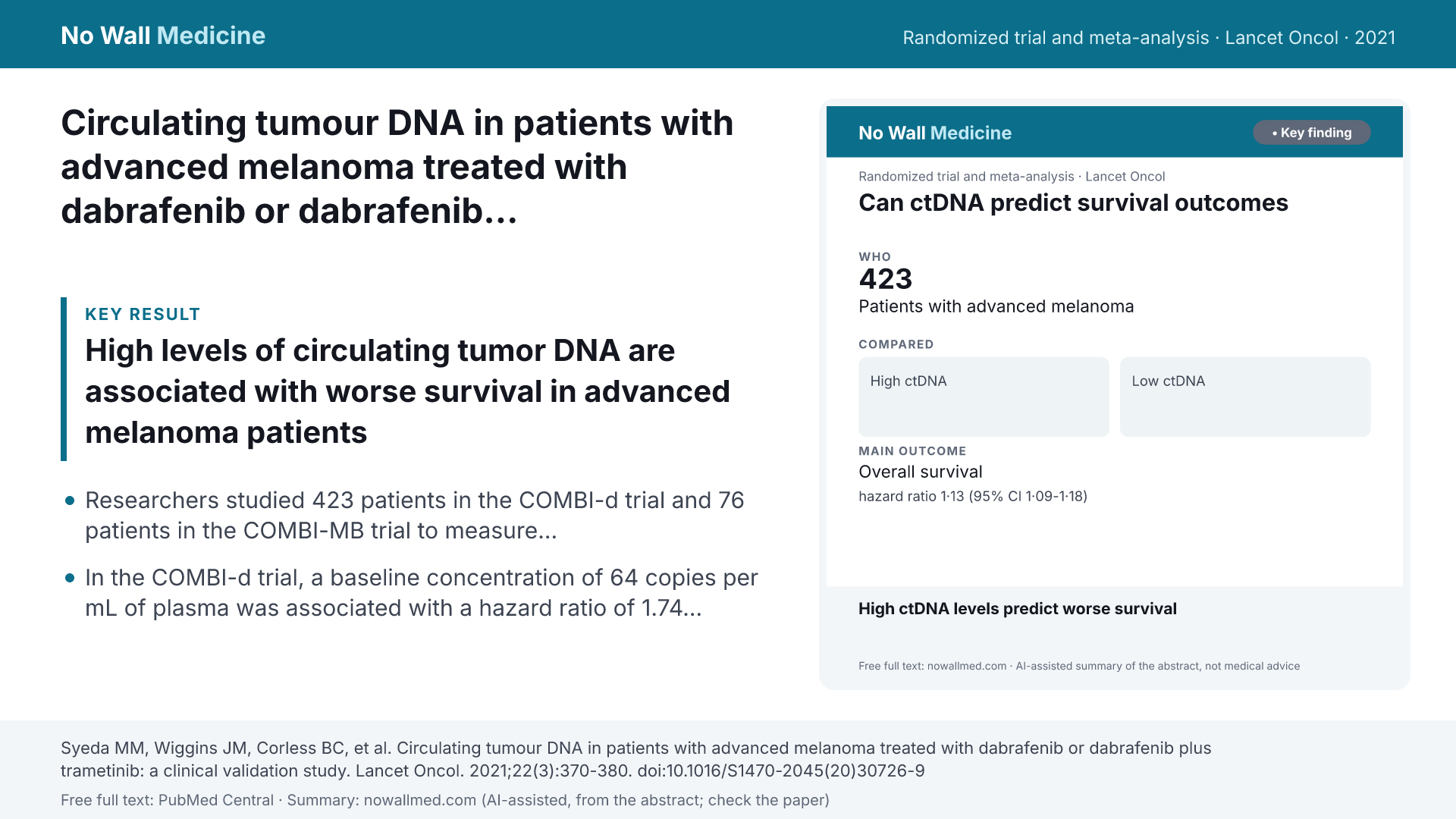
High levels of circulating tumor DNA are associated with worse survival in advanced melanoma patients
Circulating tumour DNA in patients with advanced melanoma treated with dabrafenib or dabrafenib plus trametinib: a clinical validation study
Randomized trial and meta-analysisKey finding
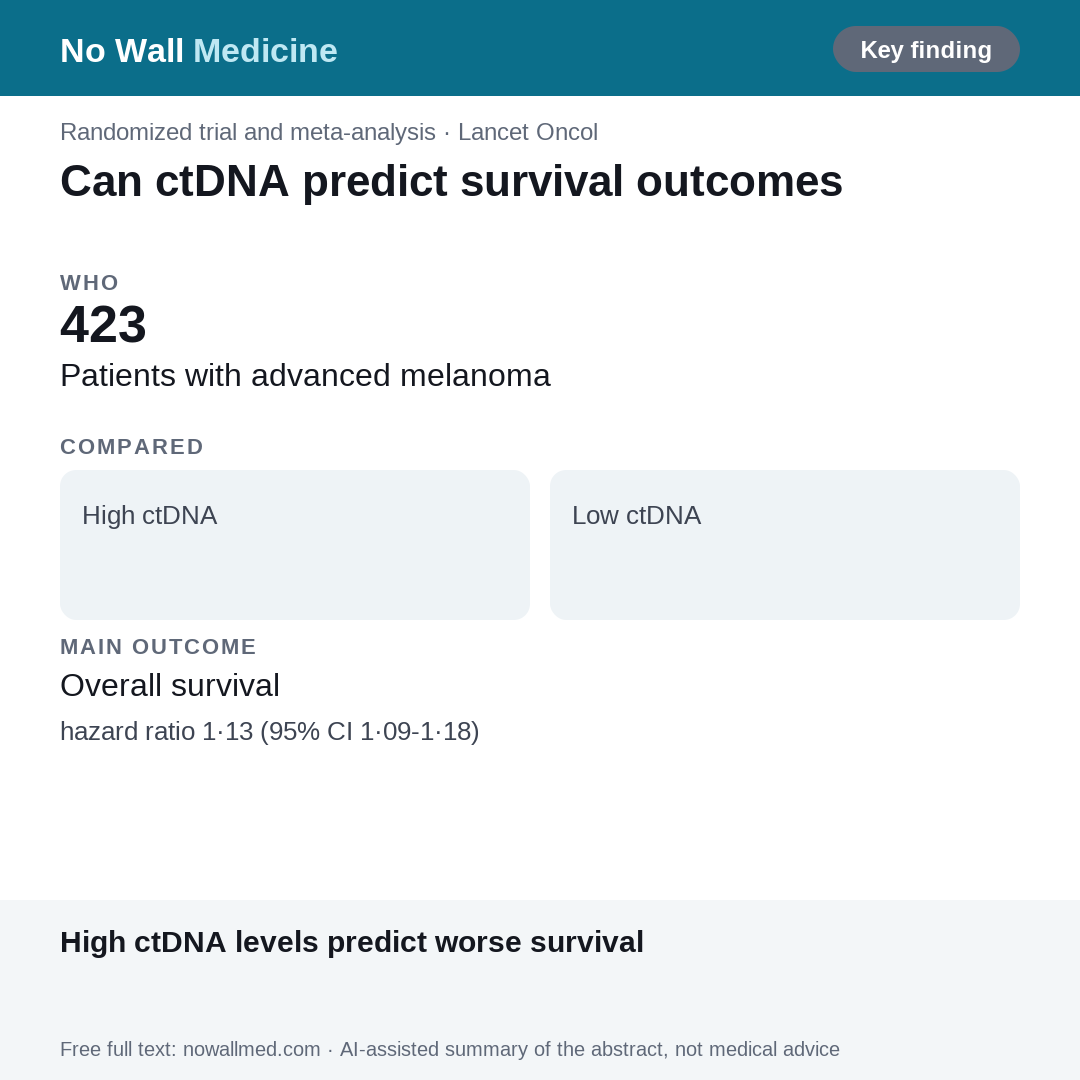
Can ctDNA predict survival outcomes
Who
423
Patients with advanced melanoma
Compared
High ctDNA
Low ctDNA
Main outcome
Overall survival
Result: hazard ratio 1·13 (95% CI 1·09-1·18)
Bottom line: High ctDNA levels predict worse survival
Funded by: Novartis
Lancet Oncol · 2021-02-12Download image
Why it matters: Melanoma lacks validated blood-based biomarkers to monitor and predict how well patients respond to treatment.
Key points
- Researchers studied 423 patients in the COMBI-d trial and 76 patients in the COMBI-MB trial to measure BRAFV600-mutant circulating tumor DNA, which is small fragments of cancer DNA found in the blood.
- In the COMBI-d trial, a baseline concentration of 64 copies per mL of plasma was associated with a hazard ratio of 1.74 for progression-free survival and 2.23 for overall survival.
- In the COMBI-d trial, having undetectable circulating tumor DNA at week 4 was associated with extended progression-free survival (hazard ratio 1.99) and overall survival (hazard ratio 2.38).
Headline and key points written with AI from the paper’s abstract, with every number checked against it. Read the paper before relying on them.
Was this summary helpful?
Subject terms
Cite this article
Syeda MM, Wiggins JM, Corless BC, et al. Circulating tumour DNA in patients with advanced melanoma treated with dabrafenib or dabrafenib plus trametinib: a clinical validation study. Lancet Oncol. 2021. doi:10.1016/S1470-2045(20)30726-9
Spotted a mistake? Suggest a correction