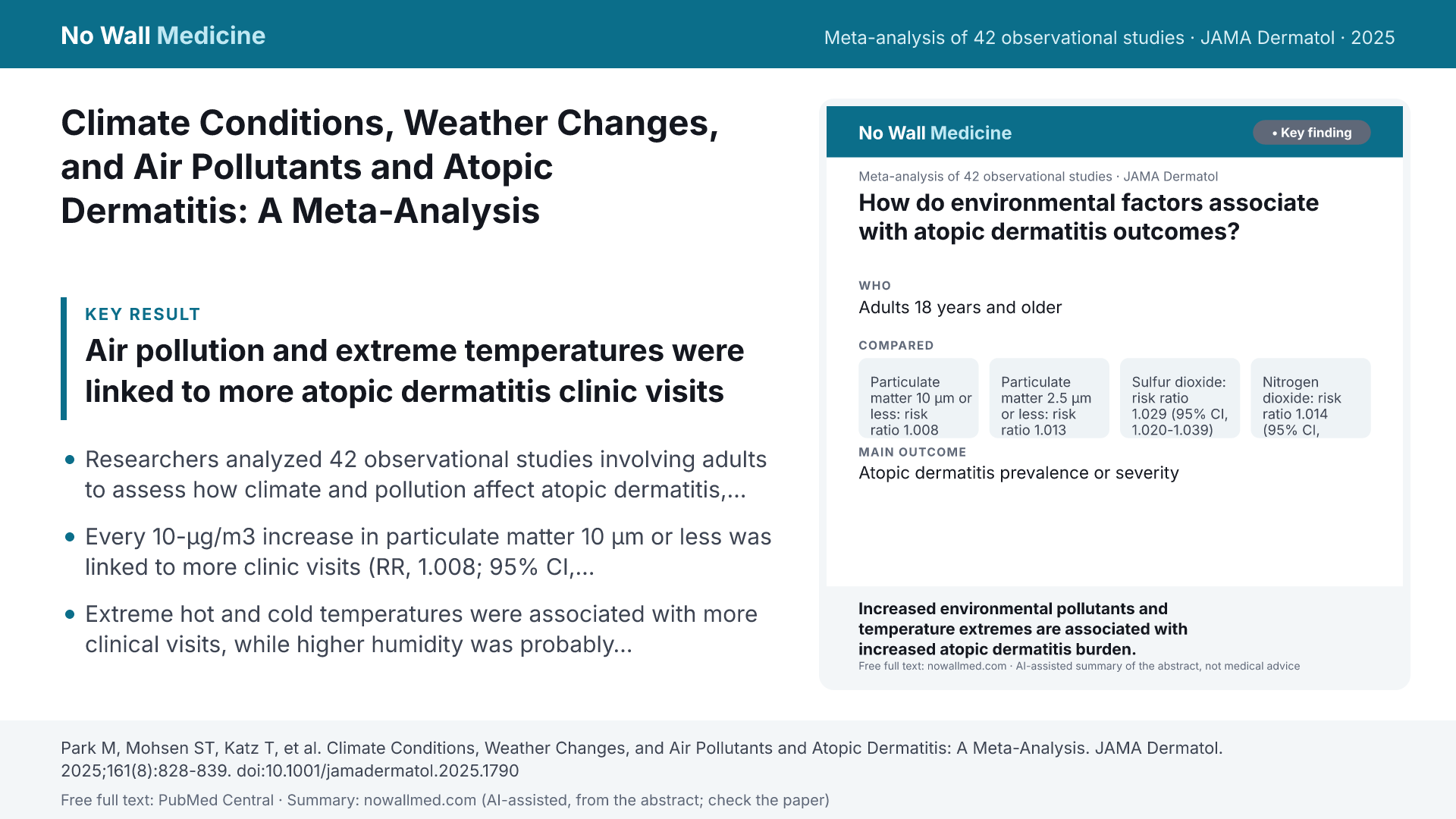
Air pollution and extreme temperatures were linked to more atopic dermatitis clinic visits
Climate Conditions, Weather Changes, and Air Pollutants and Atopic Dermatitis: A Meta-Analysis
Meta-analysis of 42 observational studiesKey finding
How do environmental factors associate with atopic dermatitis outcomes?
Who
Adults 18 years and older
Compared
Particulate matter 10 μm or less: risk ratio 1.008 (95% CI, 1.003-1.012)
Particulate matter 2.5 μm or less: risk ratio 1.013 (95% CI, 0.999-1.027)
Sulfur dioxide: risk ratio 1.029 (95% CI, 1.020-1.039)
Nitrogen dioxide: risk ratio 1.014 (95% CI, 0.999-1.030)
Main outcome
Atopic dermatitis prevalence or severity
Bottom line: Increased environmental pollutants and temperature extremes are associated with increased atopic dermatitis burden.
JAMA Dermatol · 2025-06-25 · Save PNG
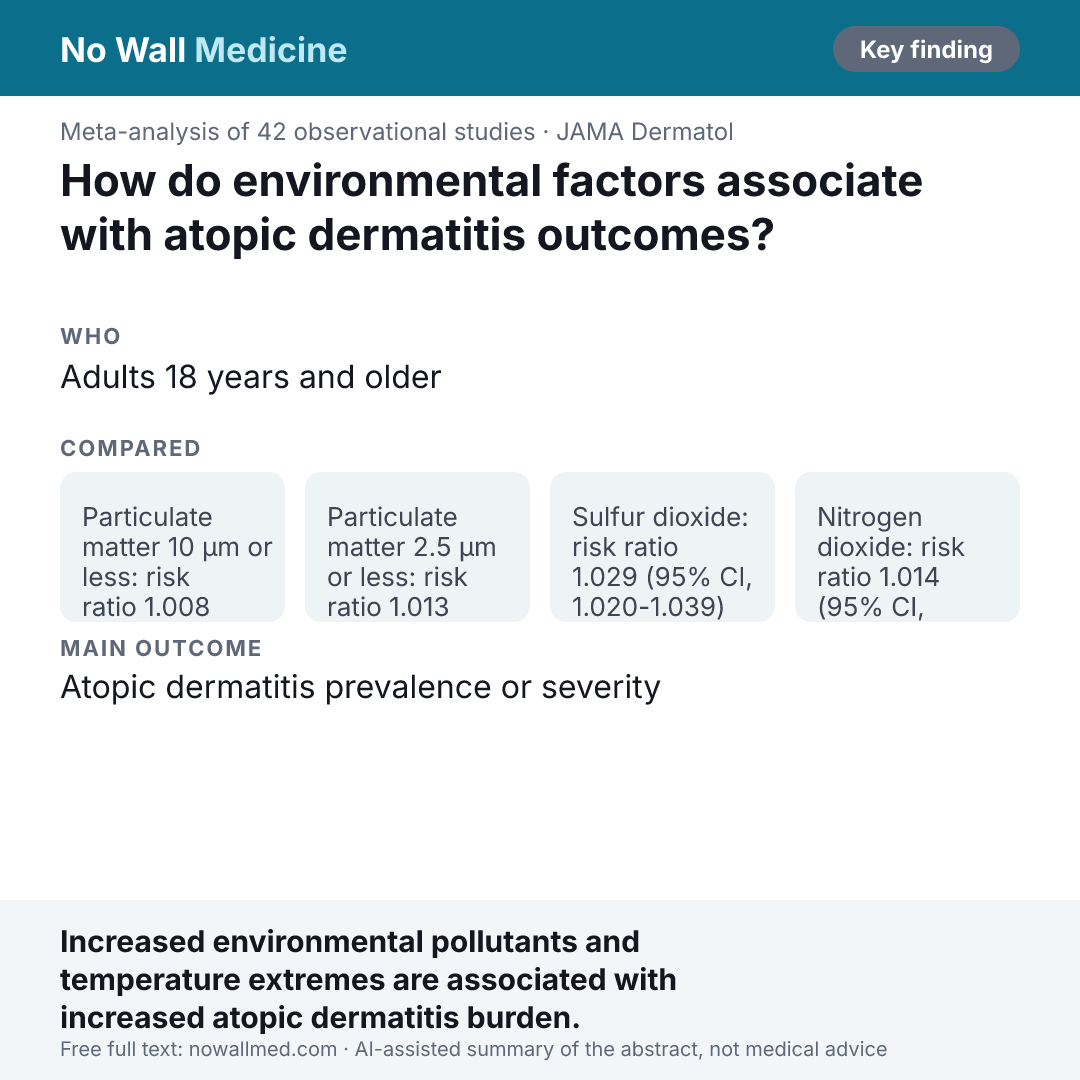
Clinical question: How do environmental factors associate with atopic dermatitis outcomes?
Why it matters: The certainty of evidence regarding how environmental factors like weather and air pollution affect atopic dermatitis outcomes needed to be summarized and assessed.
Key points
- Researchers analyzed 42 observational studies involving adults to assess how climate and pollution affect atopic dermatitis, a chronic skin inflammation.
- Every 10-μg/m3 increase in particulate matter 10 μm or less was linked to more clinic visits (RR, 1.008; 95% CI, 1.003-1.012) and sulfur dioxide (RR, 1.029; 95% CI, 1.020-1.039).
- Extreme hot and cold temperatures were associated with more clinical visits, while higher humidity was probably associated with increased disease severity.
Headline and key points written with AI from the paper’s abstract, with every number checked against it. Read the paper before relying on them.
Was this summary helpful?
Subject terms
Headline, design, result, key points, caveat and citation as plain text.
Cite this article
Park M, Mohsen ST, Katz T, et al. Climate Conditions, Weather Changes, and Air Pollutants and Atopic Dermatitis: A Meta-Analysis. JAMA Dermatol. 2025;161(8):828-839. doi:10.1001/jamadermatol.2025.1790
Spotted a mistake? Suggest a correction