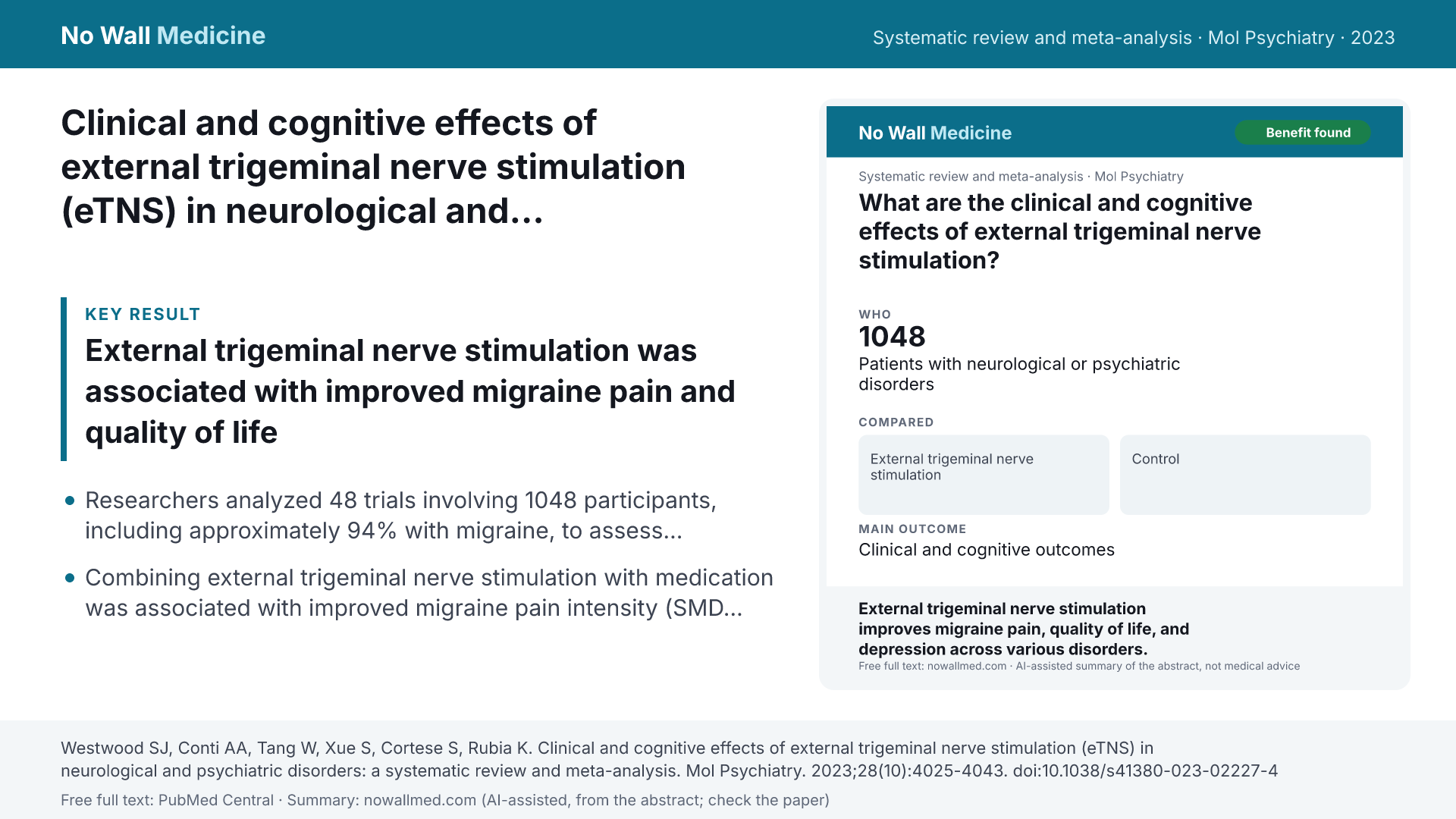
Clinical and cognitive effects of external trigeminal nerve stimulation (eTNS) in neurological and psychiatric disorders: a systematic review and meta-analysis
Key result: External trigeminal nerve stimulation was associated with improved migraine pain and quality of life
Key points
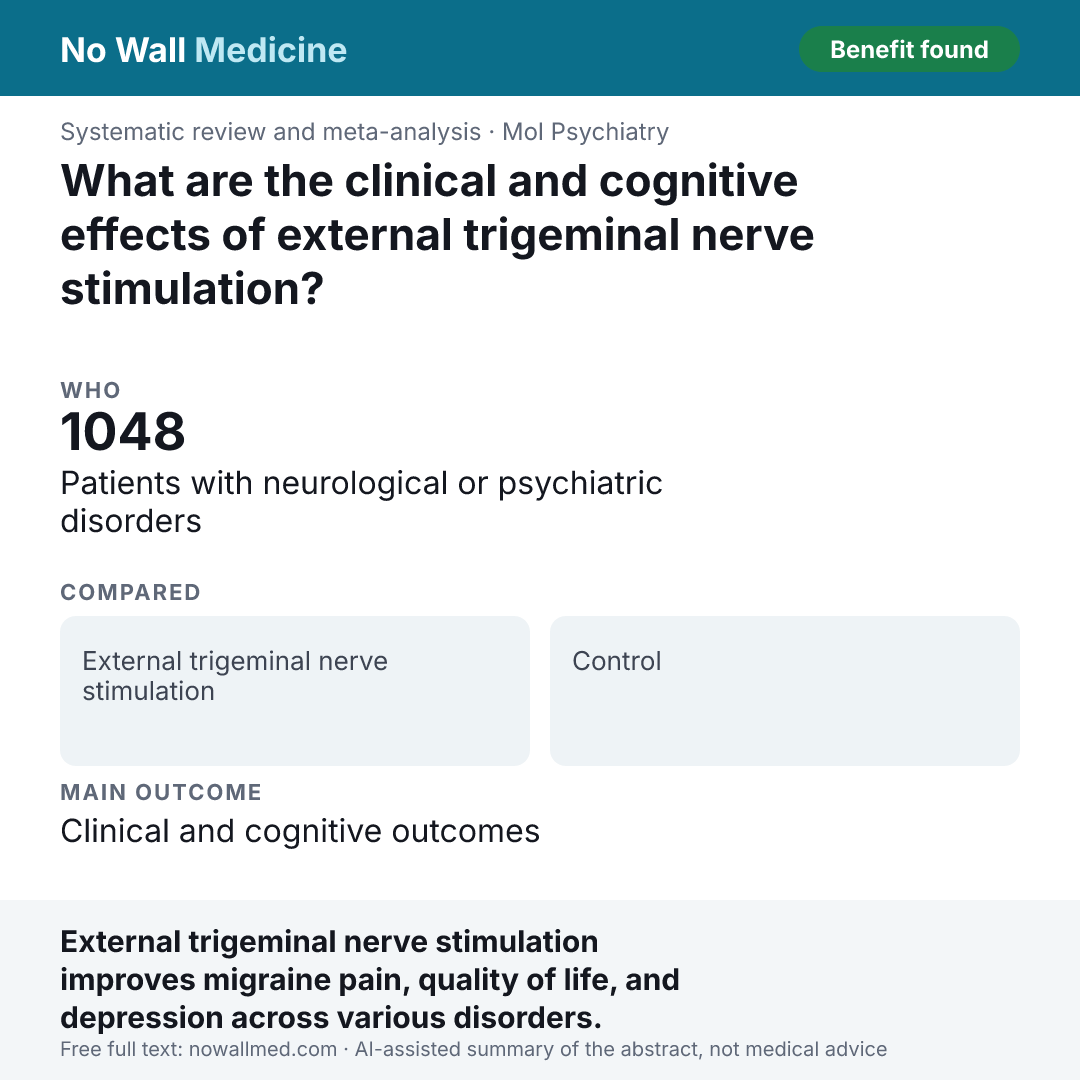
- Researchers analyzed 48 trials involving 1048 participants, including approximately 94% with migraine, to assess the effects of external trigeminal nerve stimulation.
- Combining external trigeminal nerve stimulation with medication was associated with improved migraine pain intensity (SMD = 1.03) and quality of life (SMD = 1.88).
- Dimensional measures of depression were also associated with improved outcomes across 3 different disorders (SMD = 0.45).
Why it matters: The clinical and cognitive effects of external trigeminal nerve stimulation for neurological and psychiatric disorders were not clearly established.
Limitation the authors note: The authors state that well-blinded, adequately powered randomized controlled trials are needed to replicate findings and support optimal dosage guidance.
Discussion prompts
- Would these patients look like yours? Who was left out?
- Is the main outcome one that matters to patients?
- Is the difference large enough to change what you do?
Cite: Westwood SJ, Conti AA, Tang W, Xue S, Cortese S, Rubia K. Clinical and cognitive effects of external trigeminal nerve stimulation (eTNS) in neurological and psychiatric disorders: a systematic review and meta-analysis. Mol Psychiatry. 2023;28(10):4025-4043. doi:10.1038/s41380-023-02227-4
Free full text: PubMed Central · Summary and visual abstract: nowallmed.com/a/clinical-and-cognitive-effects-of-external-trigeminal-nerve-7is00j/ (AI-assisted from the abstract; check the paper before relying on it).