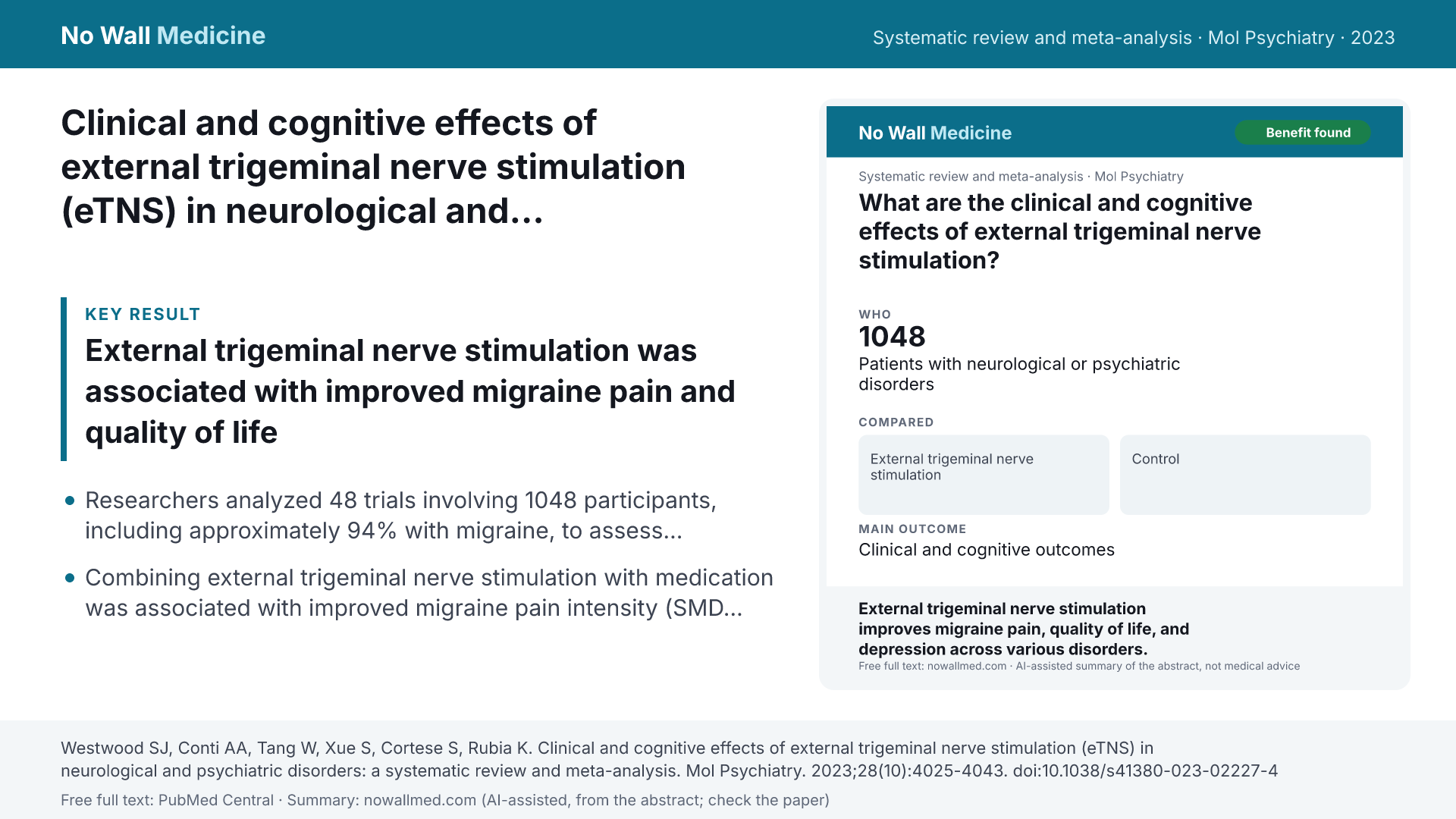
External trigeminal nerve stimulation was associated with improved migraine pain and quality of life
Clinical and cognitive effects of external trigeminal nerve stimulation (eTNS) in neurological and psychiatric disorders: a systematic review and meta-analysis
Systematic review and meta-analysisBenefit found
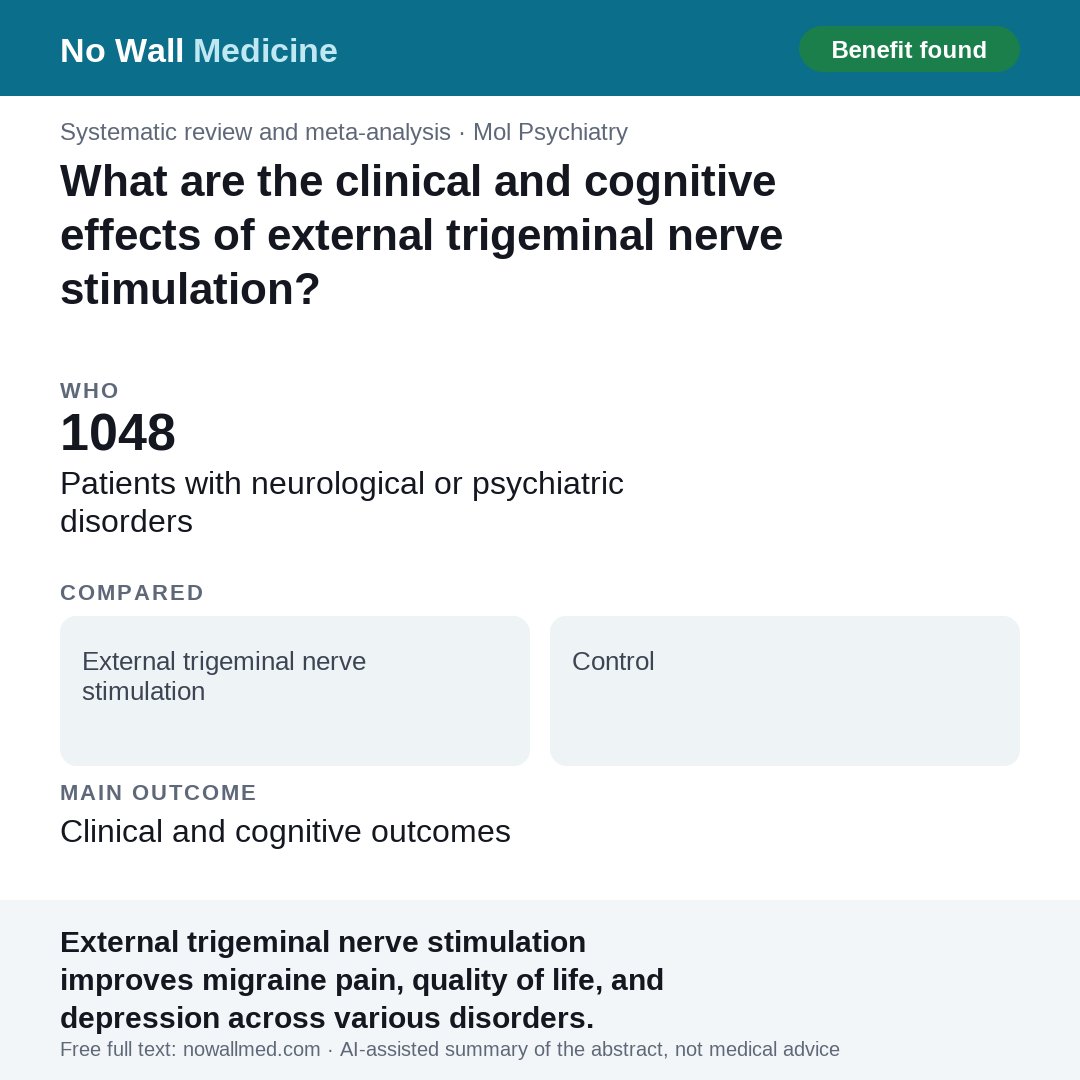
What are the clinical and cognitive effects of external trigeminal nerve stimulation?
Who
1048
Patients with neurological or psychiatric disorders
Compared
External trigeminal nerve stimulation
Control
Main outcome
Clinical and cognitive outcomes
Result: migraine pain intensity SMD 1.03 (95% CI 0.84 to 1.23)
Bottom line: External trigeminal nerve stimulation improves migraine pain, quality of life, and depression across various disorders.
Limitation: Well-blinded, adequately powered randomized controlled trials are needed to replicate findings and support dosage guidance.
Mol Psychiatry · 2023-09-06Download image
Clinical question: What are the clinical and cognitive effects of external trigeminal nerve stimulation?
Why it matters: The clinical and cognitive effects of external trigeminal nerve stimulation for neurological and psychiatric disorders were not clearly established.
Key points
- Researchers analyzed 48 trials involving 1048 participants, including approximately 94% with migraine, to assess the effects of external trigeminal nerve stimulation.
- Combining external trigeminal nerve stimulation with medication was associated with improved migraine pain intensity (SMD = 1.03) and quality of life (SMD = 1.88).
- Dimensional measures of depression were also associated with improved outcomes across 3 different disorders (SMD = 0.45).
Limitation the authors note: The authors state that well-blinded, adequately powered randomized controlled trials are needed to replicate findings and support optimal dosage guidance.
Headline and key points written with AI from the paper’s abstract, with every number checked against it. Read the paper before relying on them.
Was this summary helpful?
Subject terms
Cite this article
Westwood SJ, Conti AA, Tang W, Xue S, Cortese S, Rubia K. Clinical and cognitive effects of external trigeminal nerve stimulation (eTNS) in neurological and psychiatric disorders: a systematic review and meta-analysis. Mol Psychiatry. 2023. doi:10.1038/s41380-023-02227-4
Spotted a mistake? Suggest a correction
Top studies every Monday
The week’s key trials and guidelines in your specialties, plus any topics you follow. By email, free.
Get the weekly digest