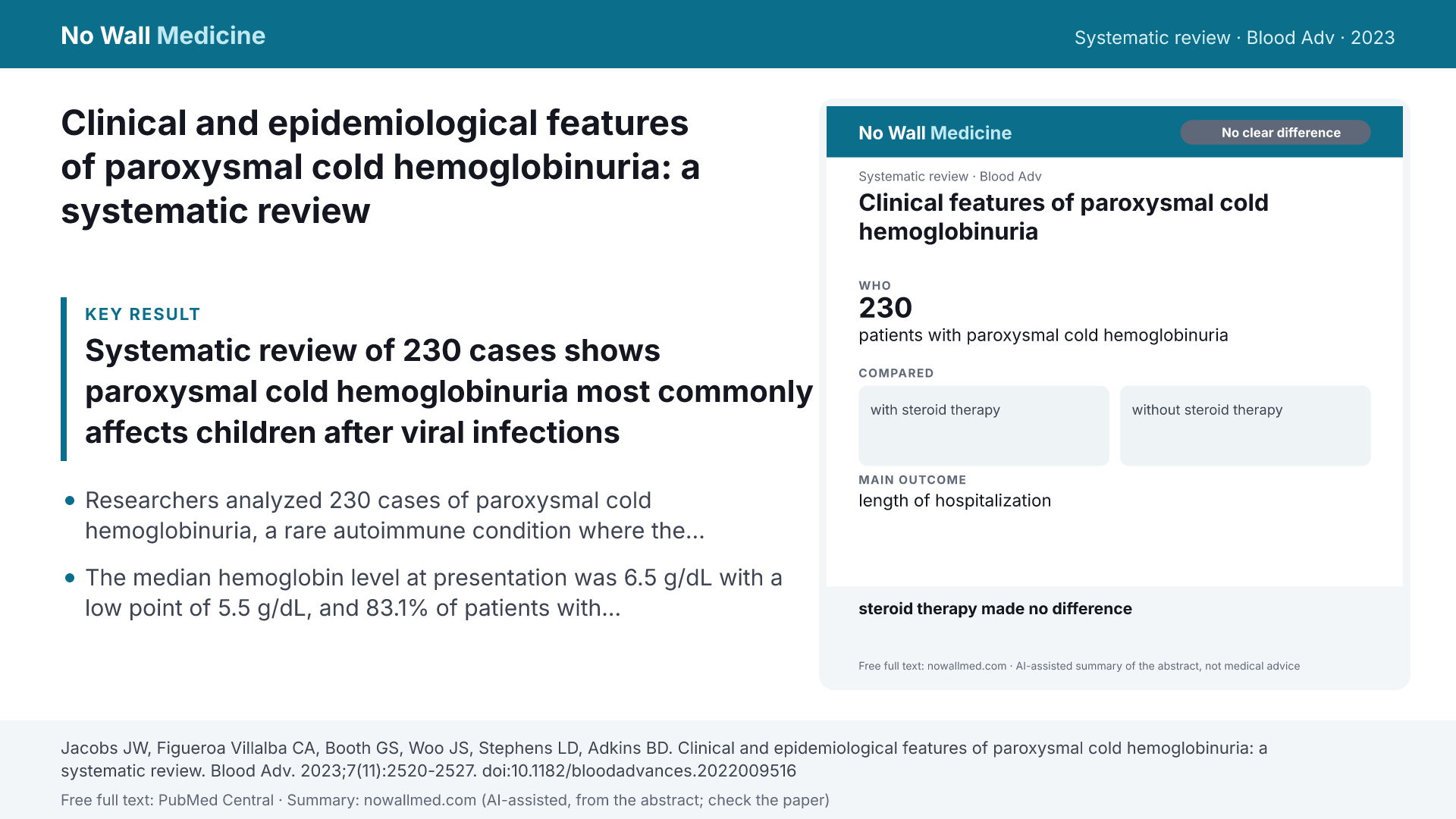
Systematic review of 230 cases shows paroxysmal cold hemoglobinuria most commonly affects children after viral infections
Clinical and epidemiological features of paroxysmal cold hemoglobinuria: a systematic review
Systematic reviewNo clear difference
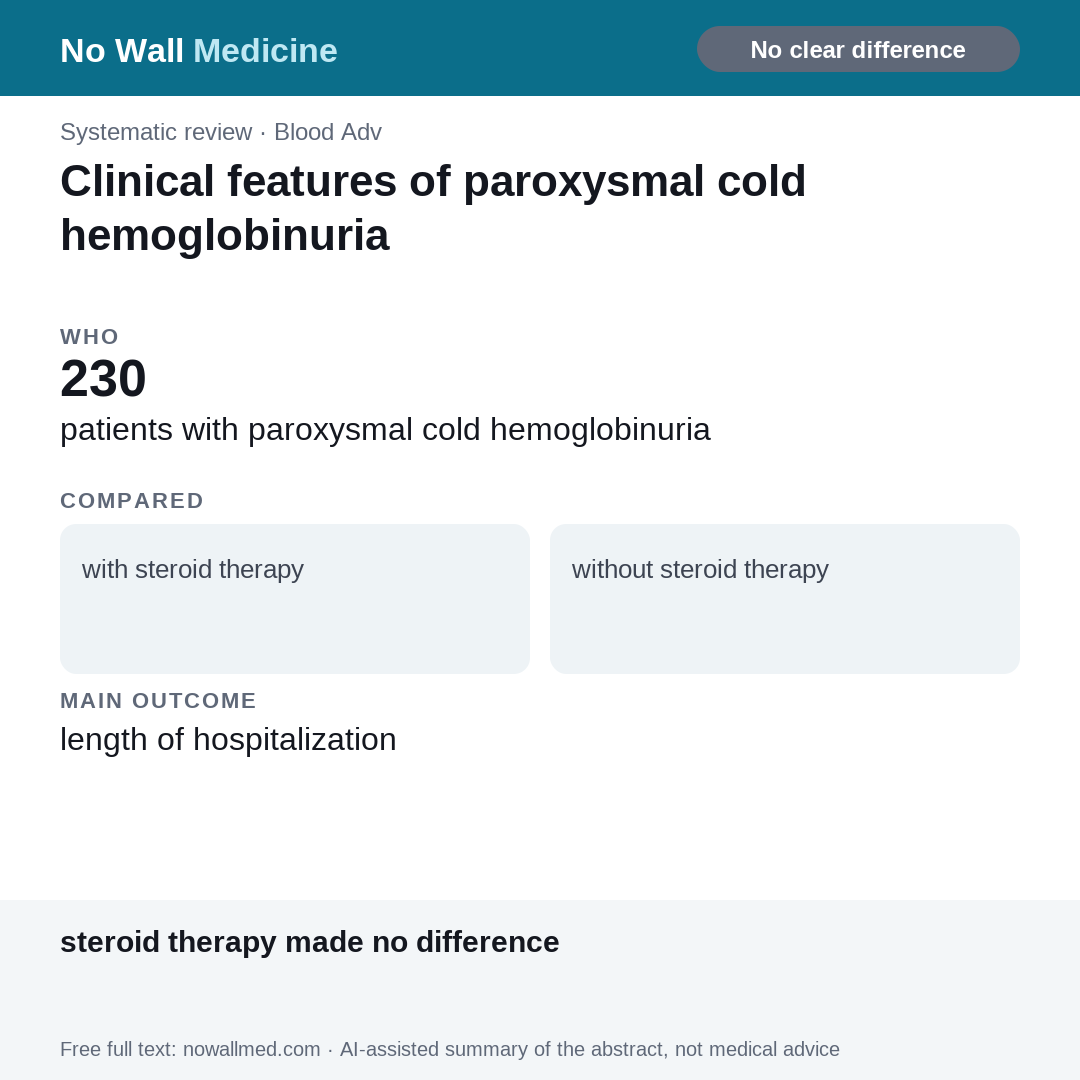
Clinical features of paroxysmal cold hemoglobinuria
Who
230
patients with paroxysmal cold hemoglobinuria
Compared
with steroid therapy
without steroid therapy
Main outcome
length of hospitalization
Bottom line: steroid therapy made no difference
Blood Adv · 2023-01-31Download image
Why it matters: The clinical, laboratory, and treatment characteristics of paroxysmal cold hemoglobinuria are often overlooked or difficult to diagnose due to complicated testing methods.
Key points
- Researchers analyzed 230 cases of paroxysmal cold hemoglobinuria, a rare autoimmune condition where the immune system destroys red blood cells.
- The median hemoglobin level at presentation was 6.5 g/dL with a low point of 5.5 g/dL, and 83.1% of patients with reported antibody data had IgG anti-P.
- Among patients with follow-up, 99% (213 of 216) were alive at the time of reporting.
Headline and key points written with AI from the paper’s abstract, with every number checked against it. Read the paper before relying on them.
Was this summary helpful?
Abstract
Paroxysmal cold hemoglobinuria (PCH) is a rare autoimmune hemolytic anemia often overlooked as a potential etiology of hemolysis and is challenging to diagnose because of the complicated testing methods required. We performed a systematic review of all reported cases to better assess the clinical, immunohematologic, and therapeutic characteristics of PCH. We systematically analyzed PubMed, Medline, and EMBASE to identify all cases of PCH confirmed by Donath-Landsteiner (DL) testing. Three authors independently screened articles for inclusion, and systematically extracted epidemiologic, clinical, laboratory, treatment, and outcomes data. Discrepancies were adjudicated by a fourth author. We identified 230 cases, with median presentation hemoglobin of 6.5 g/dL and nadir of 5.5 g/dL. The most common direct antiglobulin test (DAT) result was the presence of complement and absence of immunoglobulin G (IgG) bound to red blood cells, although other findings were observed in one-third of cases. DL antibody class and specificity were reported for 71 patients, of which 83.1% were IgG anti-P. The use of corticosteroids is common, although we found no significant difference in the length of hospitalization for patients with and without steroid therapy. Recent reports have highlighted the use of complement inhibitors. Among patients with follow-up, 99% (213 of 216) were alive at the time of reporting. To our knowledge, this represents the largest compilation of PCH cases to date. We discovered that contemporary PCH most commonly occurs in children with a preceding viral infection, corticosteroid use is frequent (but potentially ineffective), and DAT results are more disparate than traditionally reported.
Abstract reproduced under the article’s CC BY NC ND licence.
Subject terms
Cite this article
Jacobs JW, Figueroa Villalba CA, Booth GS, Woo JS, Stephens LD, Adkins BD. Clinical and epidemiological features of paroxysmal cold hemoglobinuria: a systematic review. Blood Adv. 2023. doi:10.1182/bloodadvances.2022009516
Spotted a mistake? Suggest a correction