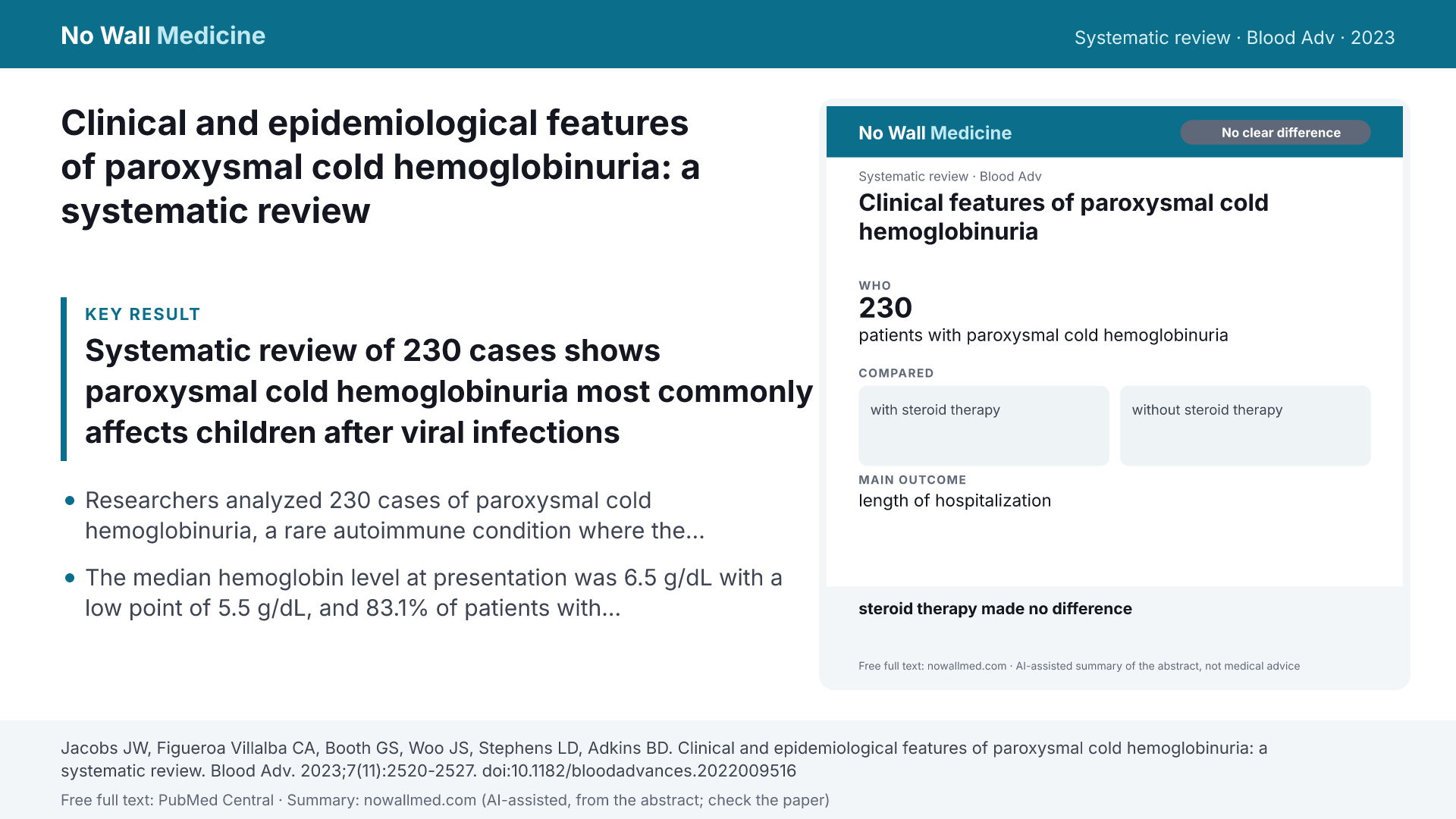
Clinical and epidemiological features of paroxysmal cold hemoglobinuria: a systematic review
Key result: Systematic review of 230 cases shows paroxysmal cold hemoglobinuria most commonly affects children after viral infections
Key points
- Researchers analyzed 230 cases of paroxysmal cold hemoglobinuria, a rare autoimmune condition where the immune system destroys red blood cells.
- The median hemoglobin level at presentation was 6.5 g/dL with a low point of 5.5 g/dL, and 83.1% of patients with reported antibody data had IgG anti-P.
- Among patients with follow-up, 99% (213 of 216) were alive at the time of reporting.
Why it matters: The clinical, laboratory, and treatment characteristics of paroxysmal cold hemoglobinuria are often overlooked or difficult to diagnose due to complicated testing methods.
Discussion prompts
- Would these patients look like yours? Who was left out?
- Is the main outcome one that matters to patients?
- Is the difference large enough to change what you do?
Cite: Jacobs JW, Figueroa Villalba CA, Booth GS, Woo JS, Stephens LD, Adkins BD. Clinical and epidemiological features of paroxysmal cold hemoglobinuria: a systematic review. Blood Adv. 2023;7(11):2520-2527. doi:10.1182/bloodadvances.2022009516
Free full text: PubMed Central · Summary and visual abstract: nowallmed.com/a/clinical-and-epidemiological-features-of-paroxysmal-cold-1xtg1pj/ (AI-assisted from the abstract; check the paper before relying on it).