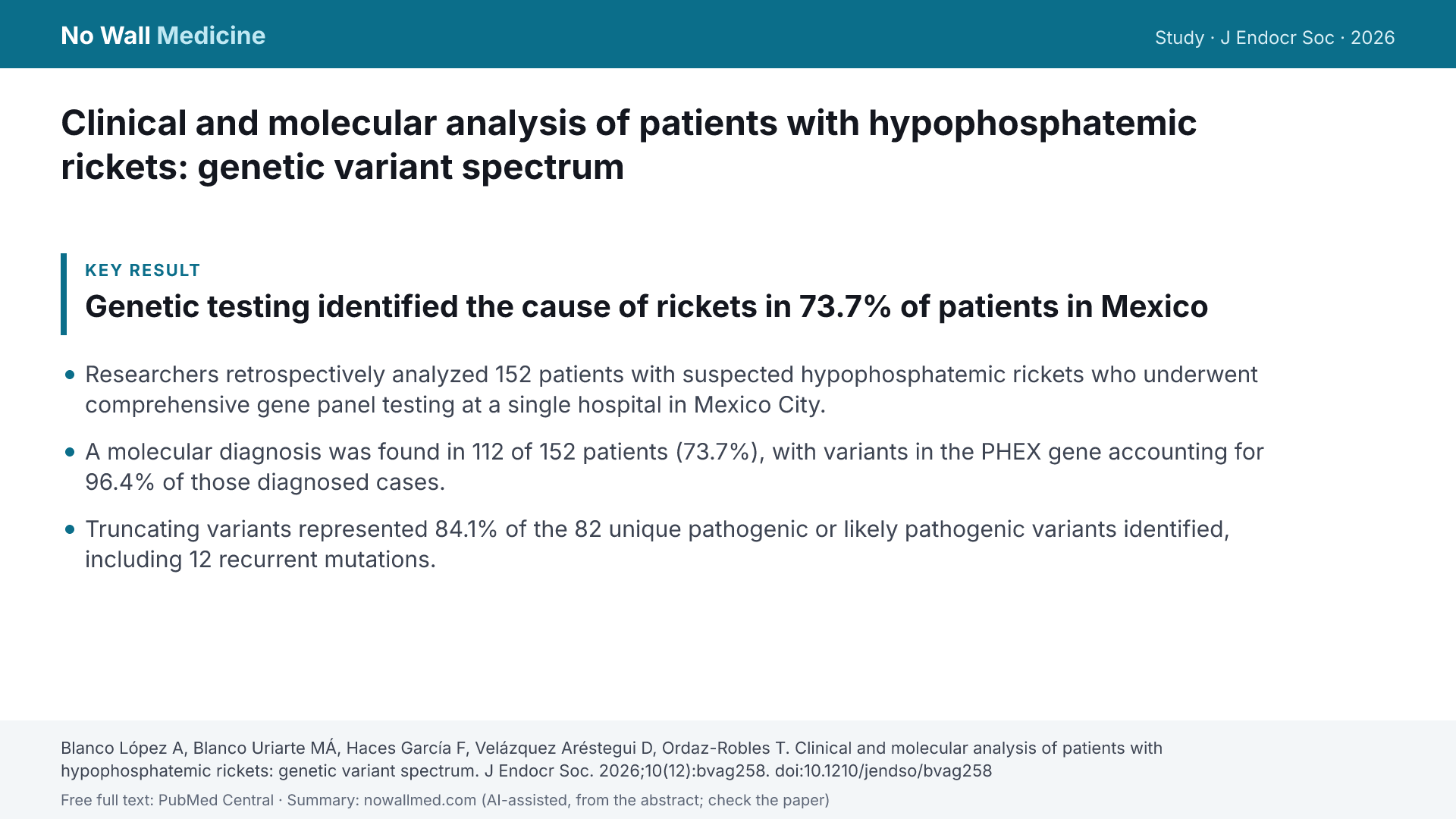
Genetic testing identified the cause of rickets in 73.7% of patients in Mexico
Clinical and molecular analysis of patients with hypophosphatemic rickets: genetic variant spectrum
Why it matters: Limited data exist on genetic testing outcomes for hypophosphatemic rickets in Latin American populations, where genetic confirmation is increasingly important for treatment eligibility.
Key points
- Researchers retrospectively analyzed 152 patients with suspected hypophosphatemic rickets who underwent comprehensive gene panel testing at a single hospital in Mexico City.
- A molecular diagnosis was found in 112 of 152 patients (73.7%), with variants in the PHEX gene accounting for 96.4% of those diagnosed cases.
- Truncating variants represented 84.1% of the 82 unique pathogenic or likely pathogenic variants identified, including 12 recurrent mutations.
Limitation the authors note: The study was a retrospective cohort conducted at a single center, Shriners Hospitals for Children in Mexico City.
Study type: Observational study: it can show a link, but not prove that one thing causes another.
Headline and key points written with AI from the paper’s abstract, with every number checked against it. Read the paper before relying on them.
Was this summary helpful?
Headline, design, result, key points, caveat and citation as plain text.
Cite this article
Blanco López A, Blanco Uriarte MÁ, Haces García F, Velázquez Aréstegui D, Ordaz-Robles T. Clinical and molecular analysis of patients with hypophosphatemic rickets: genetic variant spectrum. J Endocr Soc. 2026;10(12):bvag258. doi:10.1210/jendso/bvag258
Spotted a mistake? Suggest a correction