Clinical and vessel characteristics were associated with cardiac death or heart attack after stent implantation
Clinical and Vessel Characteristics Associated With Hard Outcomes After PCI and Their Combined Prognostic Implications
Individual patient data meta-analysisBenefit found
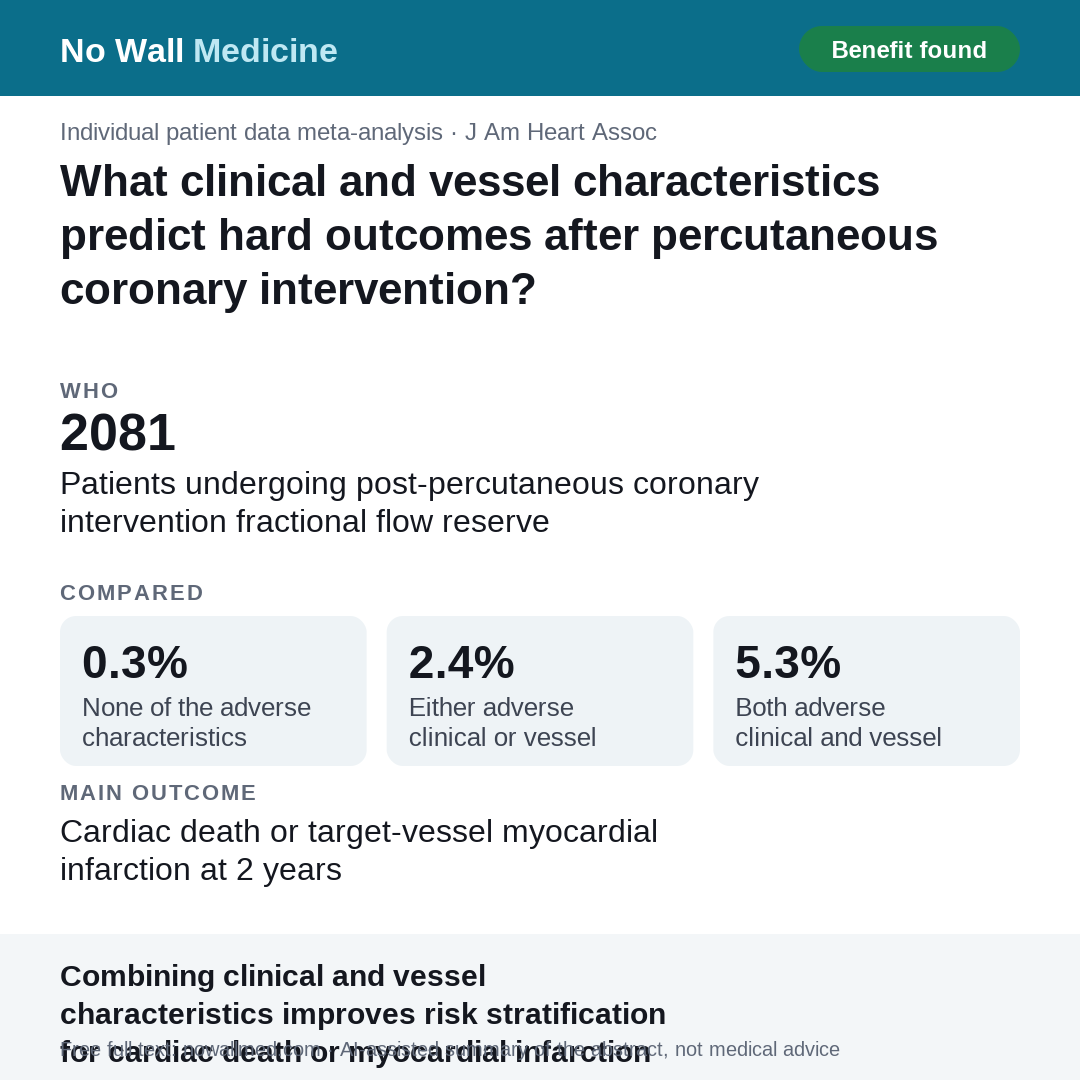
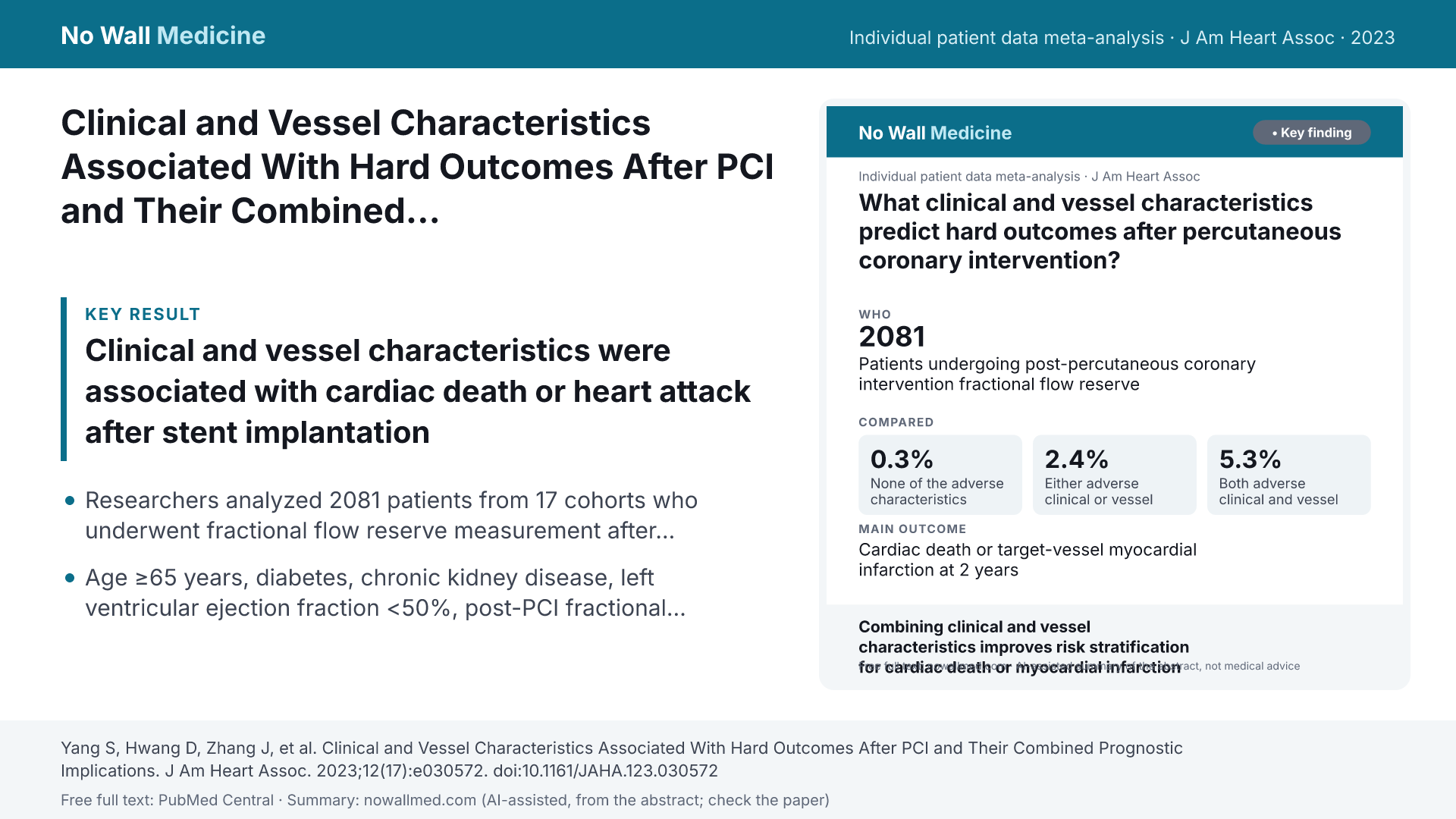
What clinical and vessel characteristics predict hard outcomes after percutaneous coronary intervention?
Who
2081
Patients undergoing post-percutaneous coronary intervention fractional flow reserve measurement
Compared
0.3%None of the adverse characteristics
2.4%Either adverse clinical or vessel characteristics
5.3%Both adverse clinical and vessel characteristics
Main outcome
Cardiac death or target-vessel myocardial infarction at 2 years
Bottom line: Combining clinical and vessel characteristics improves risk stratification for cardiac death or myocardial infarction after percutaneous coronary intervention.
J Am Heart Assoc · 2023-08-29Download image
Clinical question: What clinical and vessel characteristics predict hard outcomes after percutaneous coronary intervention?
Why it matters: It was unknown which specific clinical and vessel characteristics independently predict cardiac death or heart attack after percutaneous coronary intervention.
Key points
- Researchers analyzed 2081 patients from 17 cohorts who underwent fractional flow reserve measurement after receiving drug-eluting stents.
- Age ≥65 years, diabetes, chronic kidney disease, left ventricular ejection fraction <50%, post-PCI fractional flow reserve ≤0.80, and total stent length ≥54 mm were independently linked to the primary outcome.
- The cumulative event rate for cardiac death or target-vessel myocardial infarction was 0.3%, 2.4%, or 5.3% depending on the number of adverse characteristics present.
Headline and key points written with AI from the paper’s abstract, with every number checked against it. Read the paper before relying on them.
Was this summary helpful?
Subject terms
Cite this article
Yang S, Hwang D, Zhang J, et al. Clinical and Vessel Characteristics Associated With Hard Outcomes After PCI and Their Combined Prognostic Implications. J Am Heart Assoc. 2023. doi:10.1161/JAHA.123.030572
Spotted a mistake? Suggest a correction