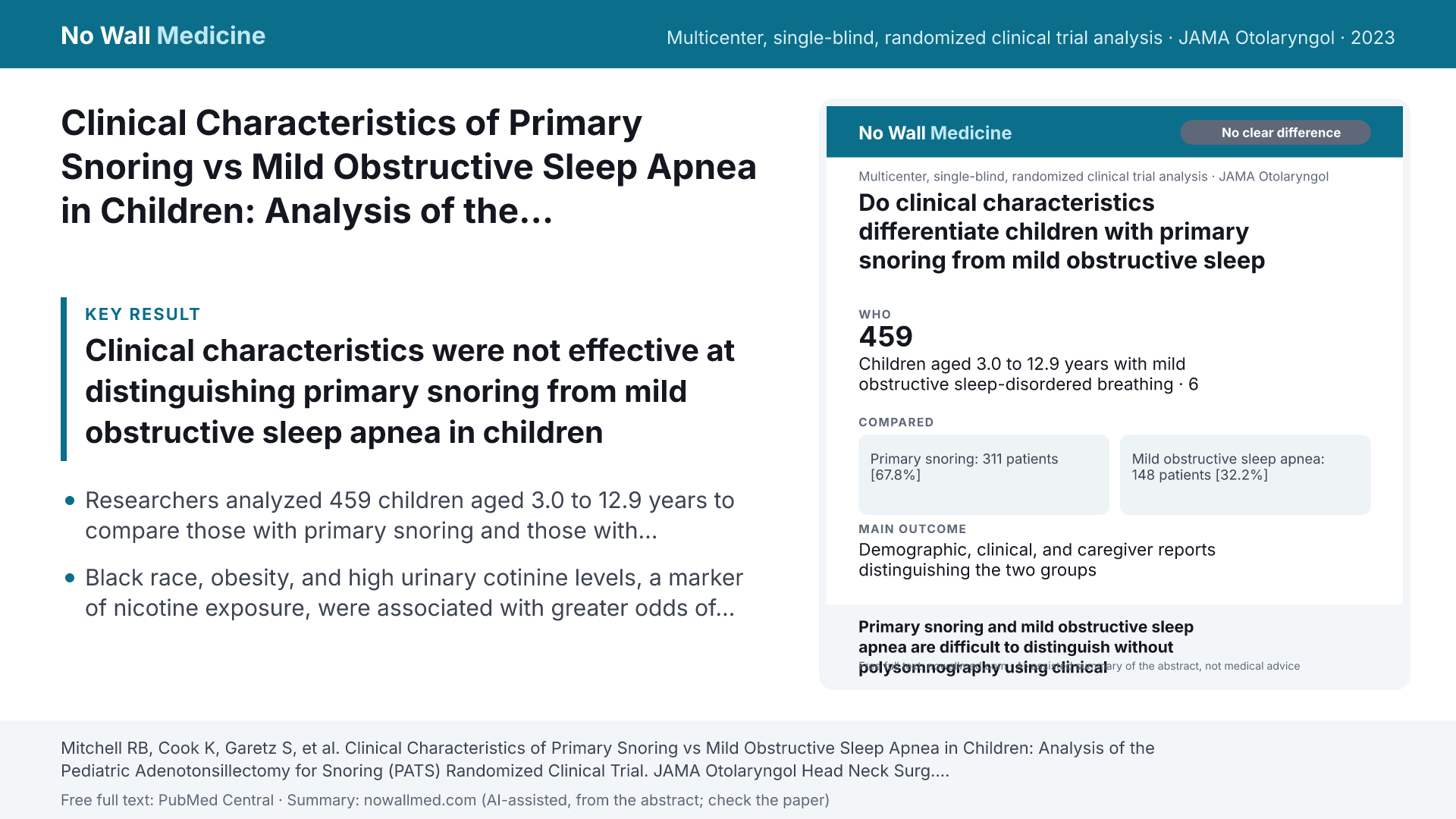
Clinical Characteristics of Primary Snoring vs Mild Obstructive Sleep Apnea in Children: Analysis of the Pediatric Adenotonsillectomy for Snoring (PATS) Randomized Clinical Trial
Key result: Clinical characteristics were not effective at distinguishing primary snoring from mild obstructive sleep apnea in children
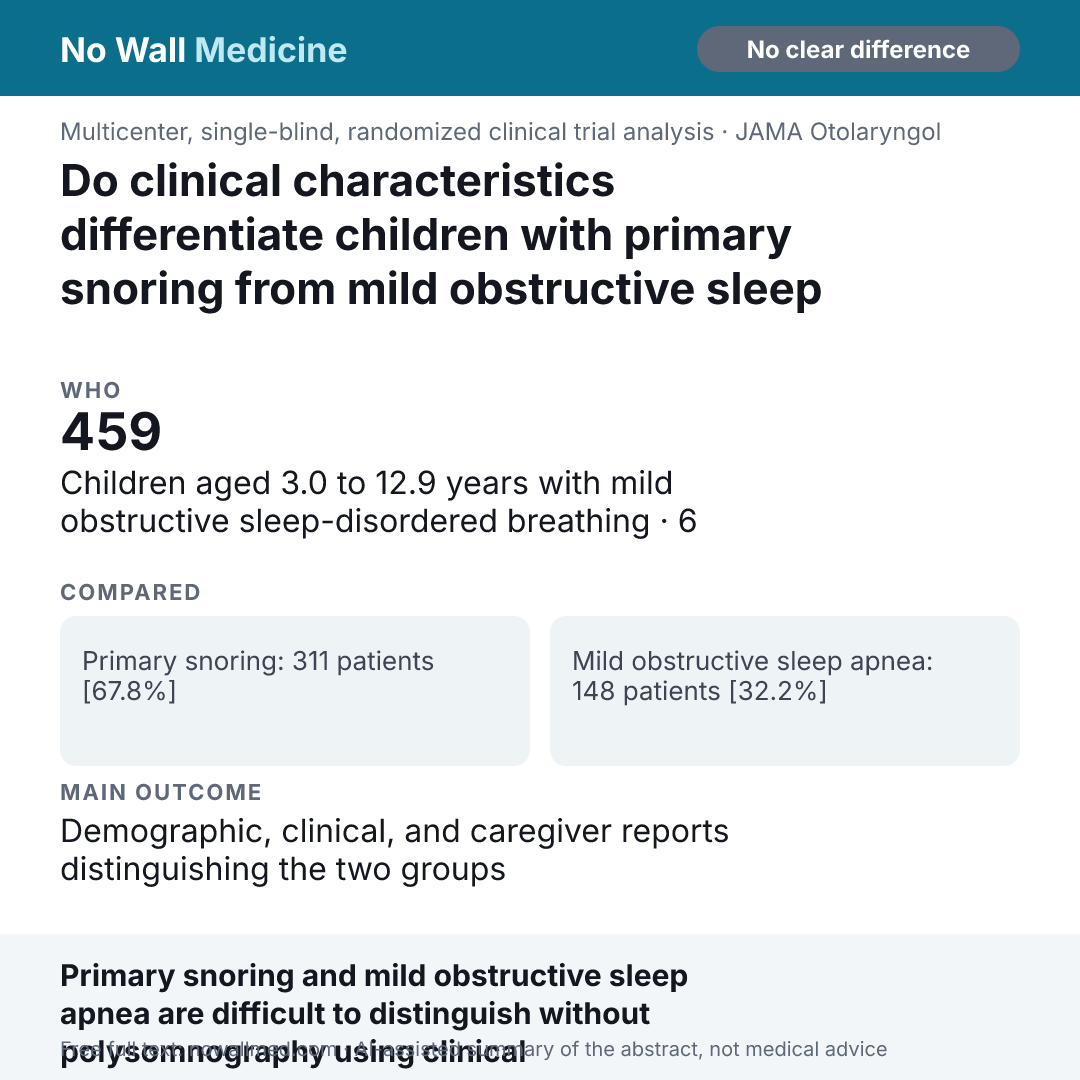
Multicenter, single-blind, randomized clinical trial analysisNo clear difference
Do clinical characteristics differentiate children with primary snoring from mild obstructive sleep apnea?
Who
459
Children aged 3.0 to 12.9 years with mild obstructive sleep-disordered breathing · 6 academic sleep centers
Compared
Primary snoring: 311 patients [67.8%]
Mild obstructive sleep apnea: 148 patients [32.2%]
Main outcome
Demographic, clinical, and caregiver reports distinguishing the two groups
Bottom line: Primary snoring and mild obstructive sleep apnea are difficult to distinguish without polysomnography using clinical characteristics alone.
Limitation: A weighted combination of significant clinical predictors had limited ability to differentiate the groups.
JAMA Otolaryngol · 2023-12-14 · Save PNG
Key points
- Researchers analyzed 459 children aged 3.0 to 12.9 years to compare those with primary snoring and those with mild obstructive sleep apnea, which is breathing disruption during sleep.
- Black race, obesity, and high urinary cotinine levels, a marker of nicotine exposure, were associated with greater odds of mild obstructive sleep apnea compared to primary snoring.
- A weighted combination of significant predictors had limited ability to differentiate between the two groups of children.
Discussion prompts
- Would these patients look like yours? Who was left out?
- Is the main outcome one that matters to patients?
- Is the difference large enough to change what you do?
Cite: Mitchell RB, Cook K, Garetz S, et al. Clinical Characteristics of Primary Snoring vs Mild Obstructive Sleep Apnea in Children: Analysis of the Pediatric Adenotonsillectomy for Snoring (PATS) Randomized Clinical Trial. JAMA Otolaryngol Head Neck Surg. 2024;150(2):99-106. doi:10.1001/jamaoto.2023.3816
Free full text: PubMed Central · Summary and visual abstract: nowallmed.com/a/clinical-characteristics-of-primary-snoring-vs-mild-obstructive-sleep-fpjyc5/ (AI-assisted from the abstract; check the paper before relying on it).