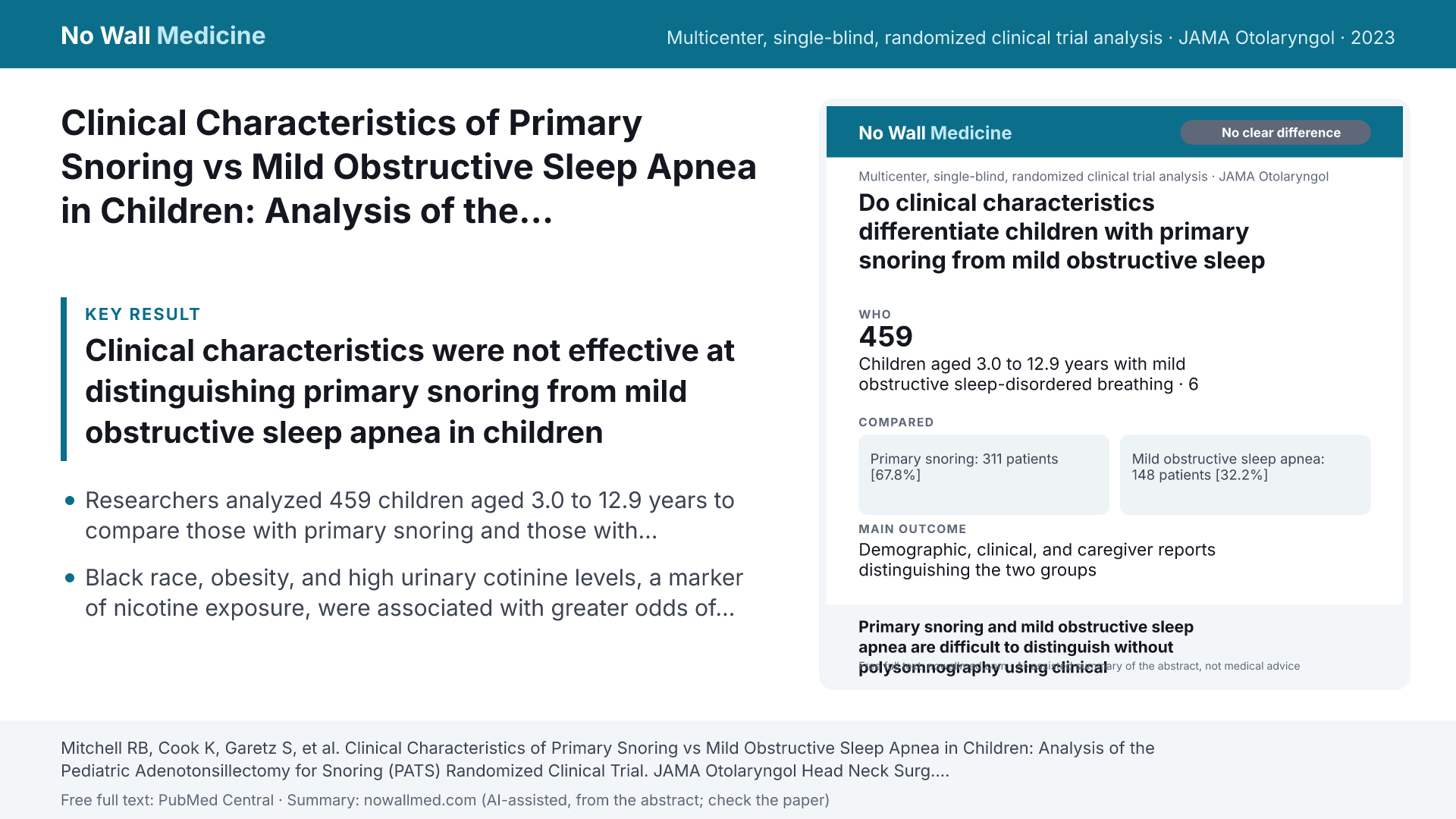
Clinical characteristics were not effective at distinguishing primary snoring from mild obstructive sleep apnea in children
Clinical Characteristics of Primary Snoring vs Mild Obstructive Sleep Apnea in Children: Analysis of the Pediatric Adenotonsillectomy for Snoring (PATS) Randomized Clinical Trial
Multicenter, single-blind, randomized clinical trial analysisNo clear difference
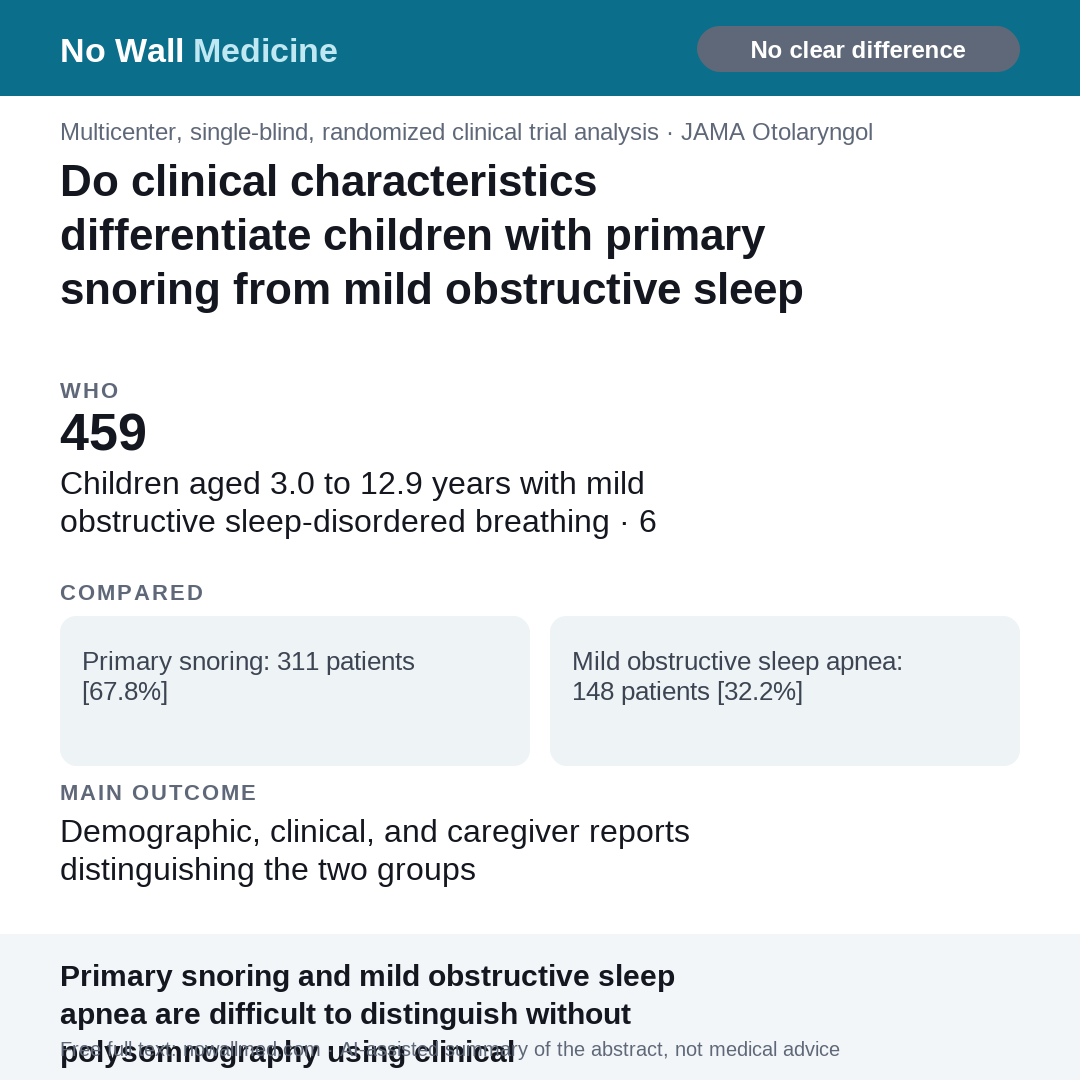
Do clinical characteristics differentiate children with primary snoring from mild obstructive sleep apnea?
Who
459
Children aged 3.0 to 12.9 years with mild obstructive sleep-disordered breathing · 6 academic sleep centers
Compared
Primary snoring: 311 patients [67.8%]
Mild obstructive sleep apnea: 148 patients [32.2%]
Main outcome
Demographic, clinical, and caregiver reports distinguishing the two groups
Bottom line: Primary snoring and mild obstructive sleep apnea are difficult to distinguish without polysomnography using clinical characteristics alone.
Limitation: A weighted combination of significant clinical predictors had limited ability to differentiate the groups.
JAMA Otolaryngol · 2023-12-14Download image
Clinical question: Do clinical characteristics differentiate children with primary snoring from mild obstructive sleep apnea?
Why it matters: It is unknown if children with primary snoring and children with mild obstructive sleep apnea have substantially different clinical characteristics.
Key points
- Researchers analyzed 459 children aged 3.0 to 12.9 years to compare those with primary snoring and those with mild obstructive sleep apnea, which is breathing disruption during sleep.
- Black race, obesity, and high urinary cotinine levels, a marker of nicotine exposure, were associated with greater odds of mild obstructive sleep apnea compared to primary snoring.
- A weighted combination of significant predictors had limited ability to differentiate between the two groups of children.
Headline and key points written with AI from the paper’s abstract, with every number checked against it. Read the paper before relying on them.
Was this summary helpful?
Subject terms
Cite this article
Mitchell RB, Cook K, Garetz S, Tapia IE, Elden LM, Kirkham EM. Clinical Characteristics of Primary Snoring vs Mild Obstructive Sleep Apnea in Children: Analysis of the Pediatric Adenotonsillectomy for Snoring (PATS) Randomized Clinical Trial. JAMA Otolaryngol. 2023. doi:10.1001/jamaoto.2023.3816
Spotted a mistake? Suggest a correction
Top studies every Monday
The week’s key trials and guidelines in your specialties, plus any topics you follow. By email, free.
Get the weekly digest