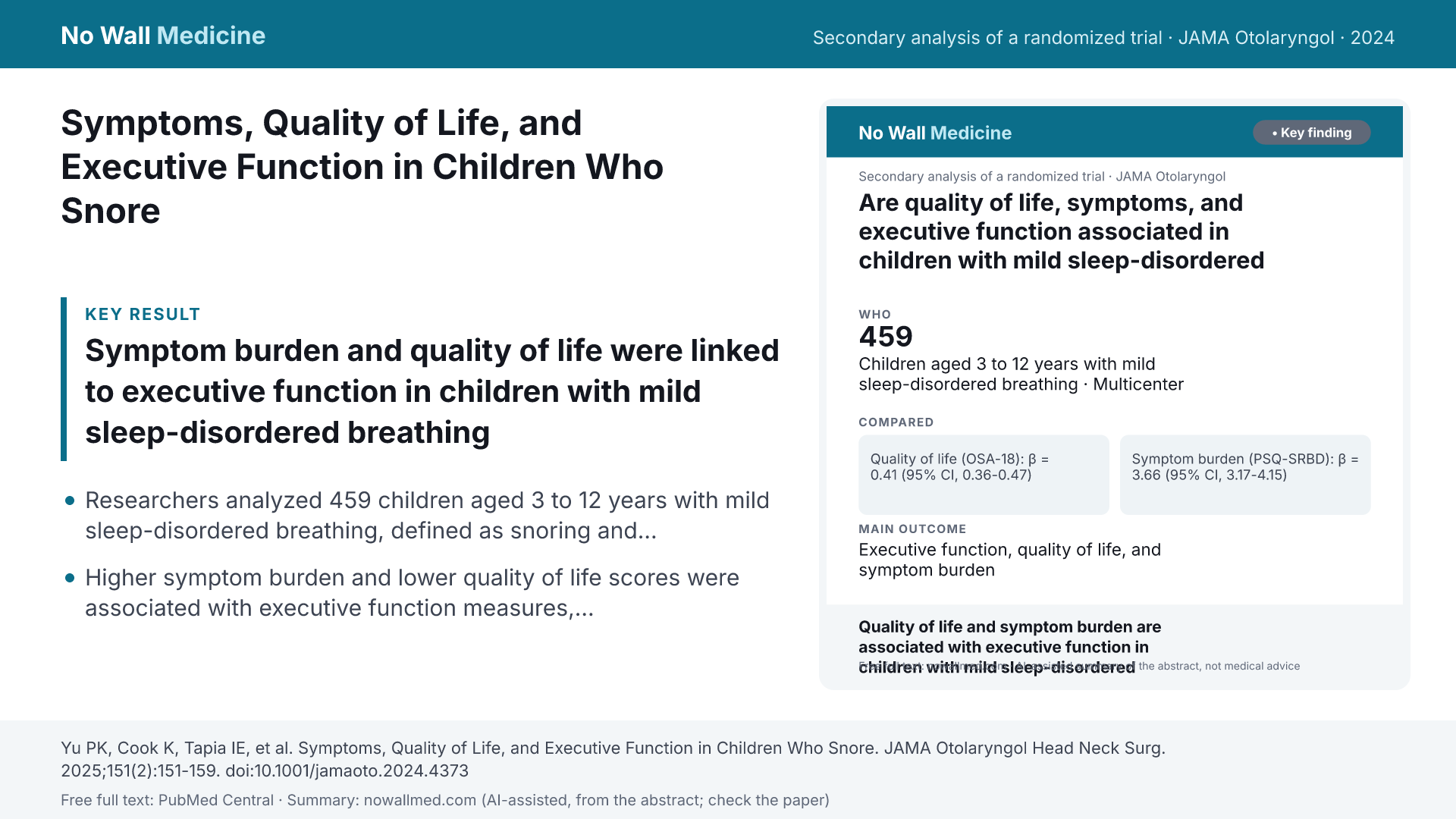
Symptom burden and quality of life were linked to executive function in children with mild sleep-disordered breathing
Symptoms, Quality of Life, and Executive Function in Children Who Snore
Secondary analysis of a randomized trialBenefit found
Are quality of life, symptoms, and executive function associated in children with mild sleep-disordered breathing?
Who
459
Children aged 3 to 12 years with mild sleep-disordered breathing · Multicenter
Compared
Quality of life (OSA-18): β = 0.41 (95% CI, 0.36-0.47)
Symptom burden (PSQ-SRBD): β = 3.66 (95% CI, 3.17-4.15)
Main outcome
Executive function, quality of life, and symptom burden
Bottom line: Quality of life and symptom burden are associated with executive function in children with mild sleep-disordered breathing.
JAMA Otolaryngol · 2024-12-19Download image
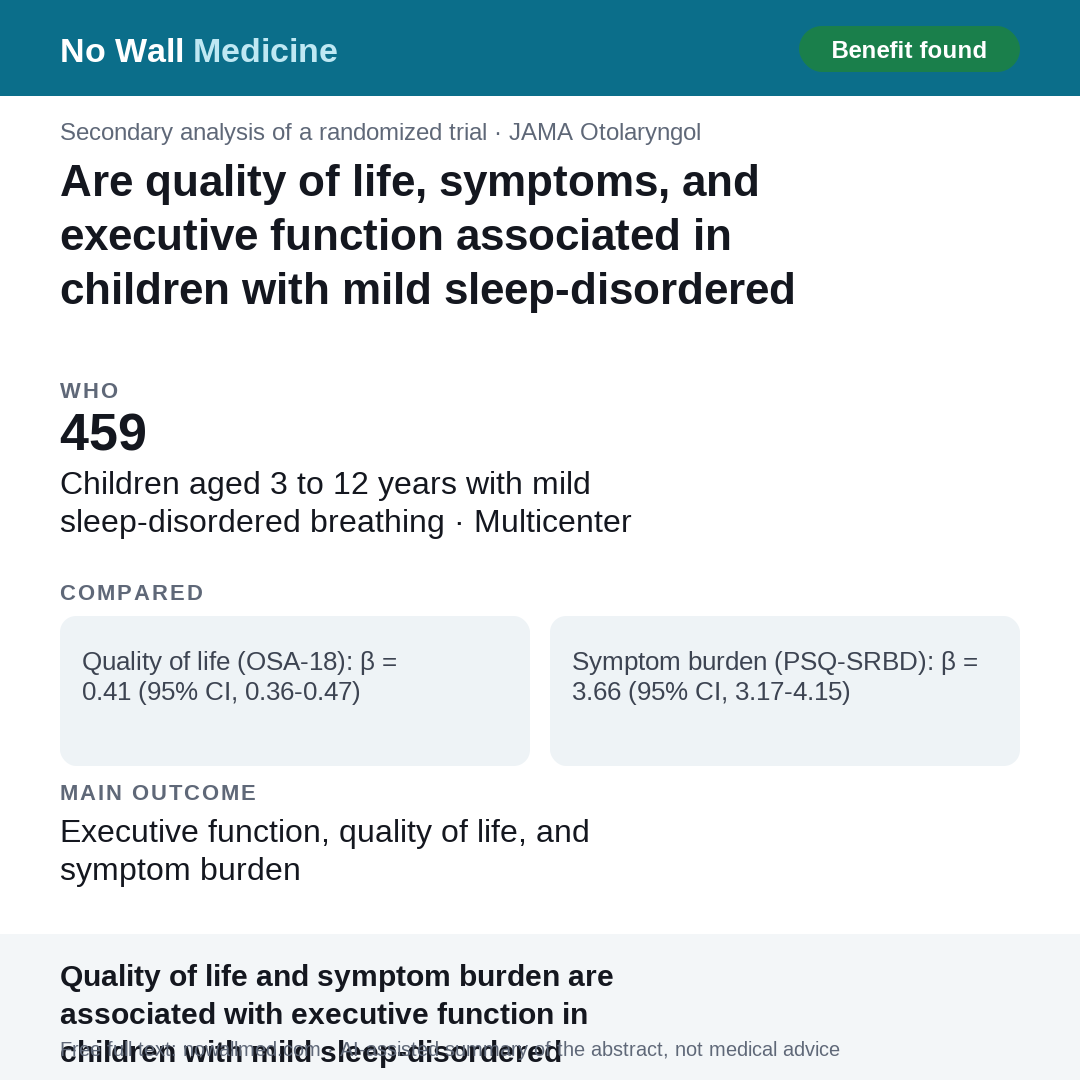
Clinical question: Are quality of life, symptoms, and executive function associated in children with mild sleep-disordered breathing?
Why it matters: It was not well understood how symptom burden and quality of life relate to executive function or if they can help identify children with neurocognitive dysfunction.
Key points
- Researchers analyzed 459 children aged 3 to 12 years with mild sleep-disordered breathing, defined as snoring and an obstructive apnea-hypopnea index under 3.
- Higher symptom burden and lower quality of life scores were associated with executive function measures, including self-control and working memory.
- Symptom burden was also associated with inhibitory control and sustained attention in the fully adjusted model.
Headline and key points written with AI from the paper’s abstract, with every number checked against it. Read the paper before relying on them.
Was this summary helpful?
Subject terms
Cite this article
Yu PK, Cook K, Tapia IE, et al. Symptoms, Quality of Life, and Executive Function in Children Who Snore. JAMA Otolaryngol Head Neck Surg. 2025;151(2):151-159. doi:10.1001/jamaoto.2024.4373
Spotted a mistake? Suggest a correction