Symptoms, Quality of Life, and Executive Function in Children Who Snore
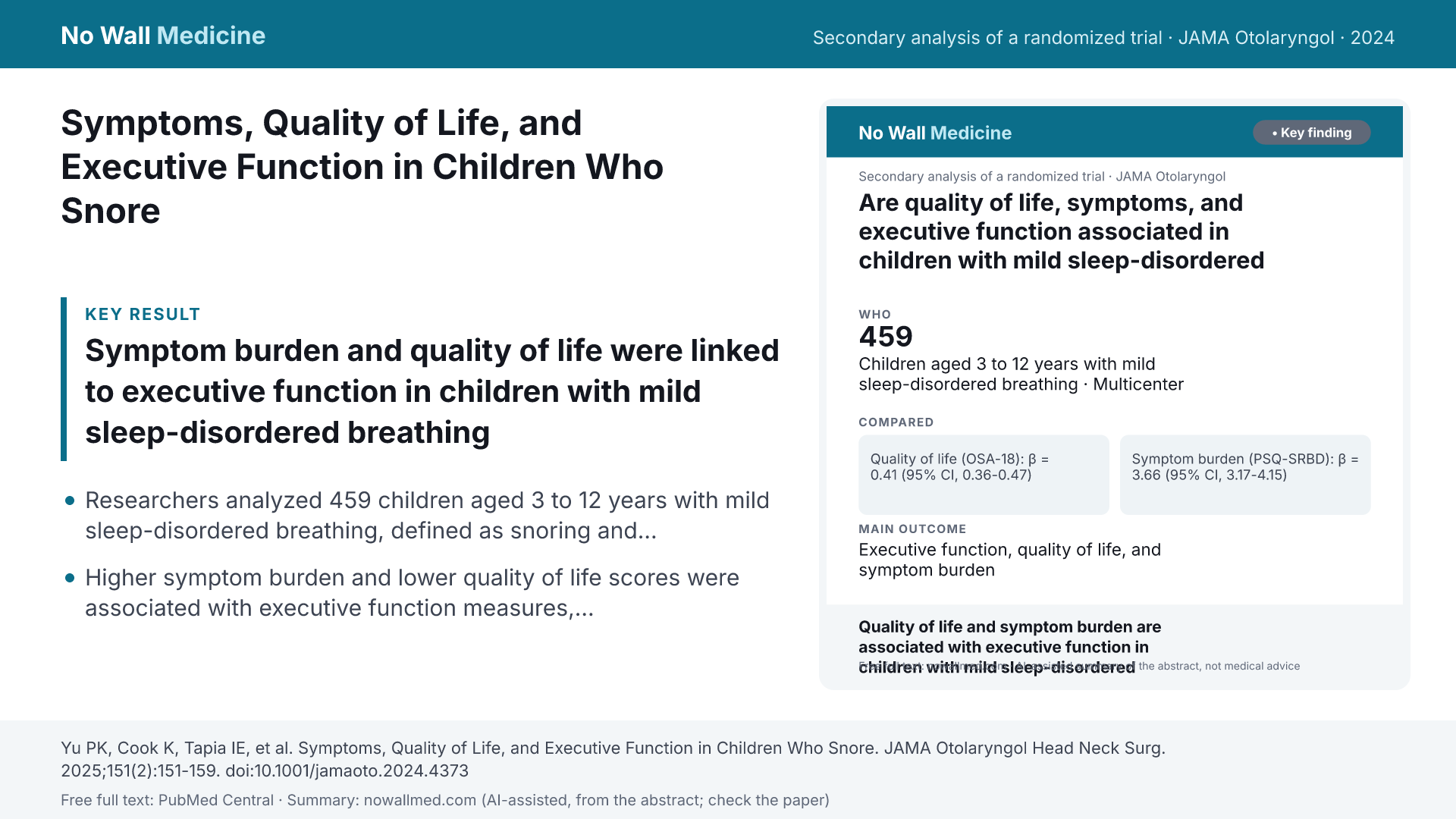
Key result: Symptom burden and quality of life were linked to executive function in children with mild sleep-disordered breathing
Secondary analysis of a randomized trialKey finding
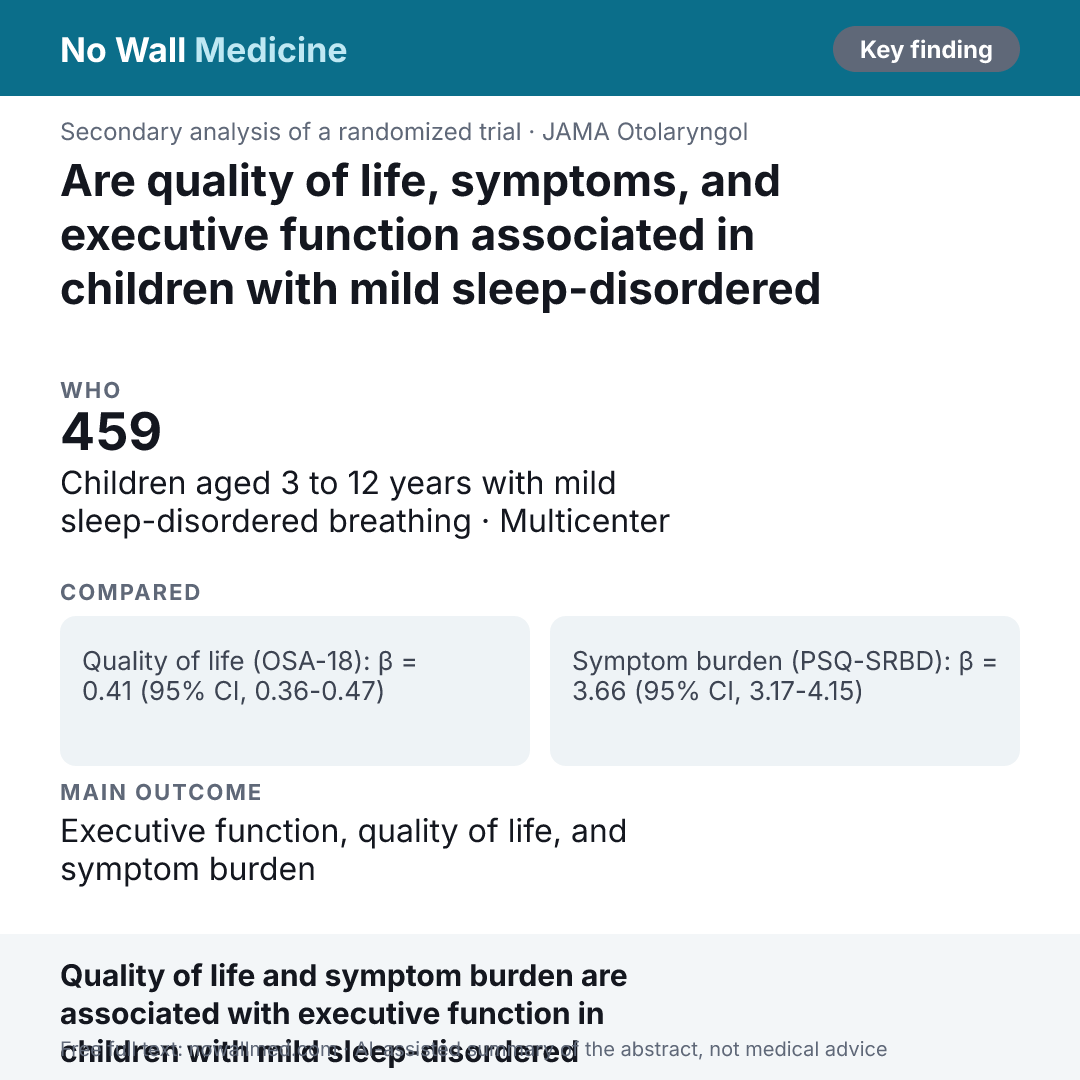
Are quality of life, symptoms, and executive function associated in children with mild sleep-disordered breathing?
Who
459
Children aged 3 to 12 years with mild sleep-disordered breathing · Multicenter
Compared
Quality of life (OSA-18): β = 0.41 (95% CI, 0.36-0.47)
Symptom burden (PSQ-SRBD): β = 3.66 (95% CI, 3.17-4.15)
Main outcome
Executive function, quality of life, and symptom burden
Bottom line: Quality of life and symptom burden are associated with executive function in children with mild sleep-disordered breathing.
JAMA Otolaryngol · 2024-12-19 · Save PNG
Key points
- Researchers analyzed 459 children aged 3 to 12 years with mild sleep-disordered breathing, defined as snoring and an obstructive apnea-hypopnea index under 3.
- Higher symptom burden and lower quality of life scores were associated with executive function measures, including self-control and working memory.
- Symptom burden was also associated with inhibitory control and sustained attention in the fully adjusted model.
Why it matters: It was not well understood how symptom burden and quality of life relate to executive function or if they can help identify children with neurocognitive dysfunction.
Discussion prompts
- Would these patients look like yours? Who was left out?
- Is the main outcome one that matters to patients?
- Is the difference large enough to change what you do?
Cite: Yu PK, Cook K, Tapia IE, et al. Symptoms, Quality of Life, and Executive Function in Children Who Snore. JAMA Otolaryngol Head Neck Surg. 2025;151(2):151-159. doi:10.1001/jamaoto.2024.4373
Free full text: PubMed Central · Summary and visual abstract: nowallmed.com/a/symptoms-quality-of-life-and-executive-function-in-children-who-b2mb9x/ (AI-assisted from the abstract; check the paper before relying on it).