Clinical characteristics, surveillance, treatment allocation, and outcomes of non-alcoholic fatty liver disease-related hepatocellular carcinoma: a systematic review and meta-analysis
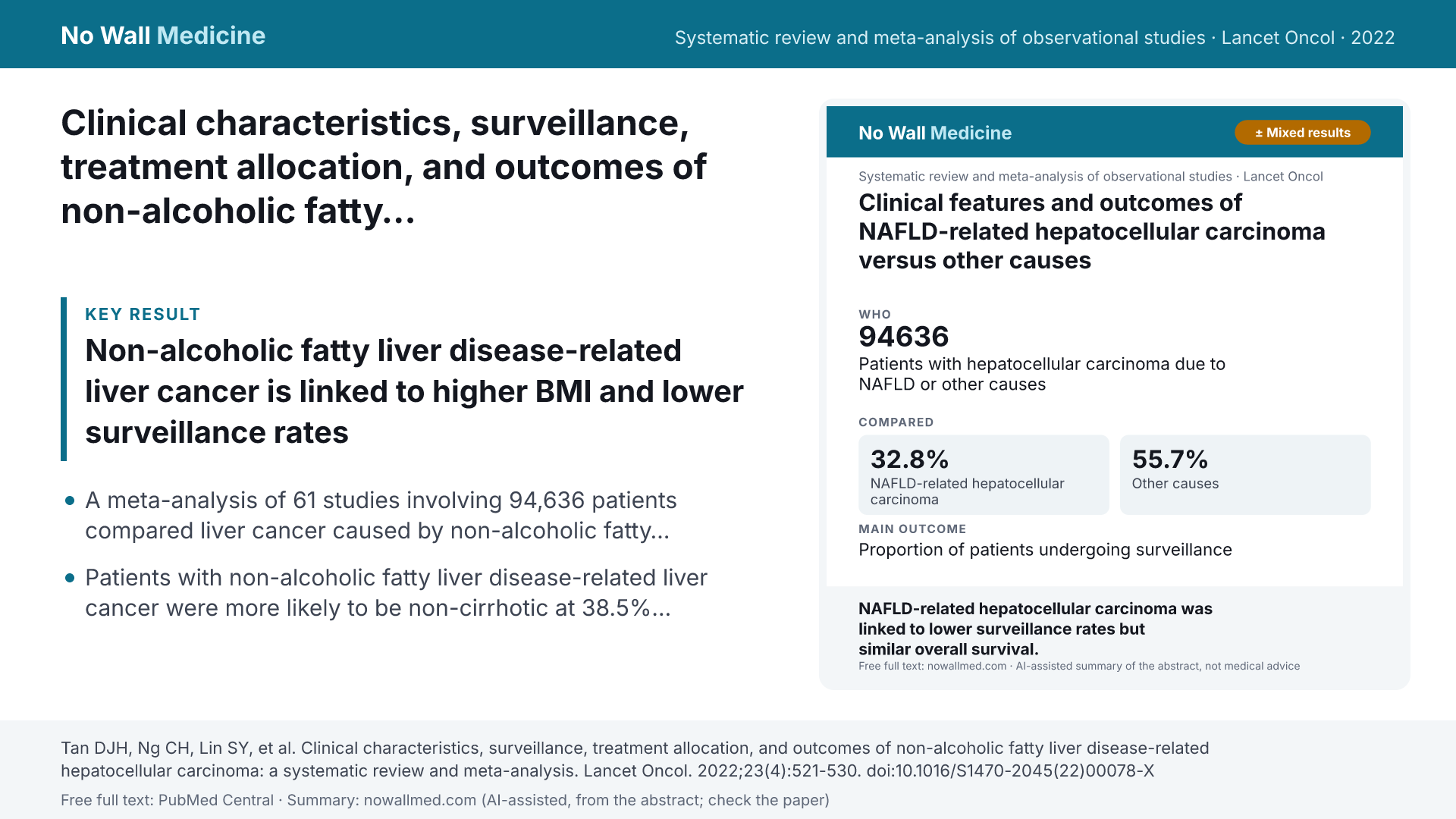
Key result: Non-alcoholic fatty liver disease-related liver cancer is linked to higher BMI and lower surveillance rates
Systematic review and meta-analysis of observational studiesMixed results
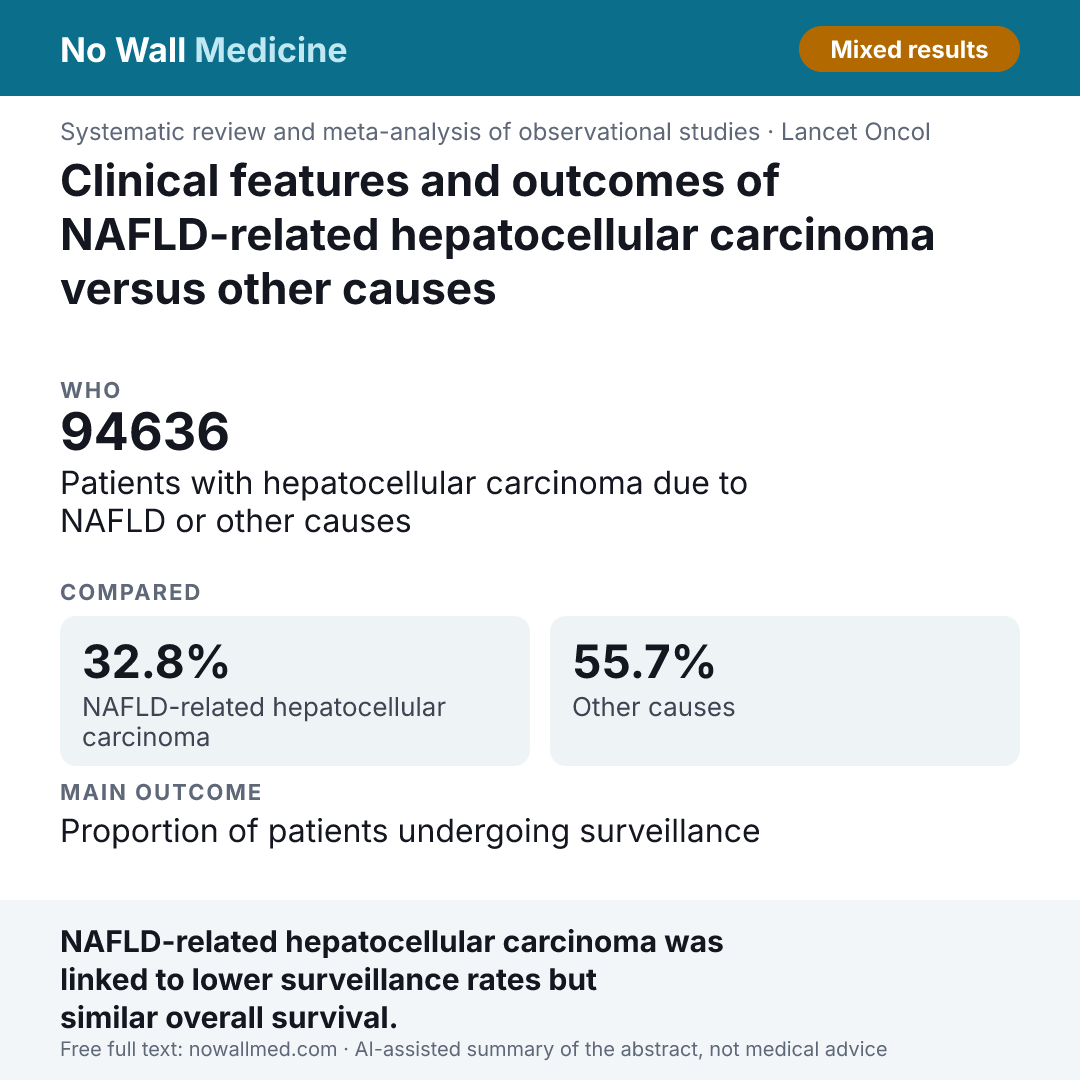
Clinical features and outcomes of NAFLD-related hepatocellular carcinoma versus other causes
Who
94636
Patients with hepatocellular carcinoma due to NAFLD or other causes
Compared
32.8%NAFLD-related hepatocellular carcinoma (12.0-63.7)
55.7%Other causes (24.0-83.3)
Main outcome
Proportion of patients undergoing surveillance
Result: hazard ratio 1.05 (95% CI 0.92-1.20)
Bottom line: NAFLD-related hepatocellular carcinoma was linked to lower surveillance rates but similar overall survival.
Limitation: Substantial heterogeneity in most analyses and low-to-moderate risk of bias
Lancet Oncol · 2022-03-04 · Save PNG
Key points
- A meta-analysis of 61 studies involving 94,636 patients compared liver cancer caused by non-alcoholic fatty liver disease to cancer caused by other factors.
- Patients with non-alcoholic fatty liver disease-related liver cancer were more likely to be non-cirrhotic at 38.5% compared to 14.6% for other causes.
- Surveillance rates were lower in the non-alcoholic fatty liver disease group at 32.8% compared to 55.7% for other causes, though overall survival did not differ.
Limitation the authors note: There was substantial heterogeneity in most analyses (I2>75%).
Discussion prompts
- Would these patients look like yours? Who was left out?
- Is the main outcome one that matters to patients?
- Is the difference large enough to change what you do?
Cite: Tan DJH, Ng CH, Lin SY, et al. Clinical characteristics, surveillance, treatment allocation, and outcomes of non-alcoholic fatty liver disease-related hepatocellular carcinoma: a systematic review and meta-analysis. Lancet Oncol. 2022;23(4):521-530. doi:10.1016/S1470-2045(22)00078-X
Free full text: PubMed Central · Summary and visual abstract: nowallmed.com/a/clinical-characteristics-surveillance-treatment-allocation-and-1rgu8id/ (AI-assisted from the abstract; check the paper before relying on it).