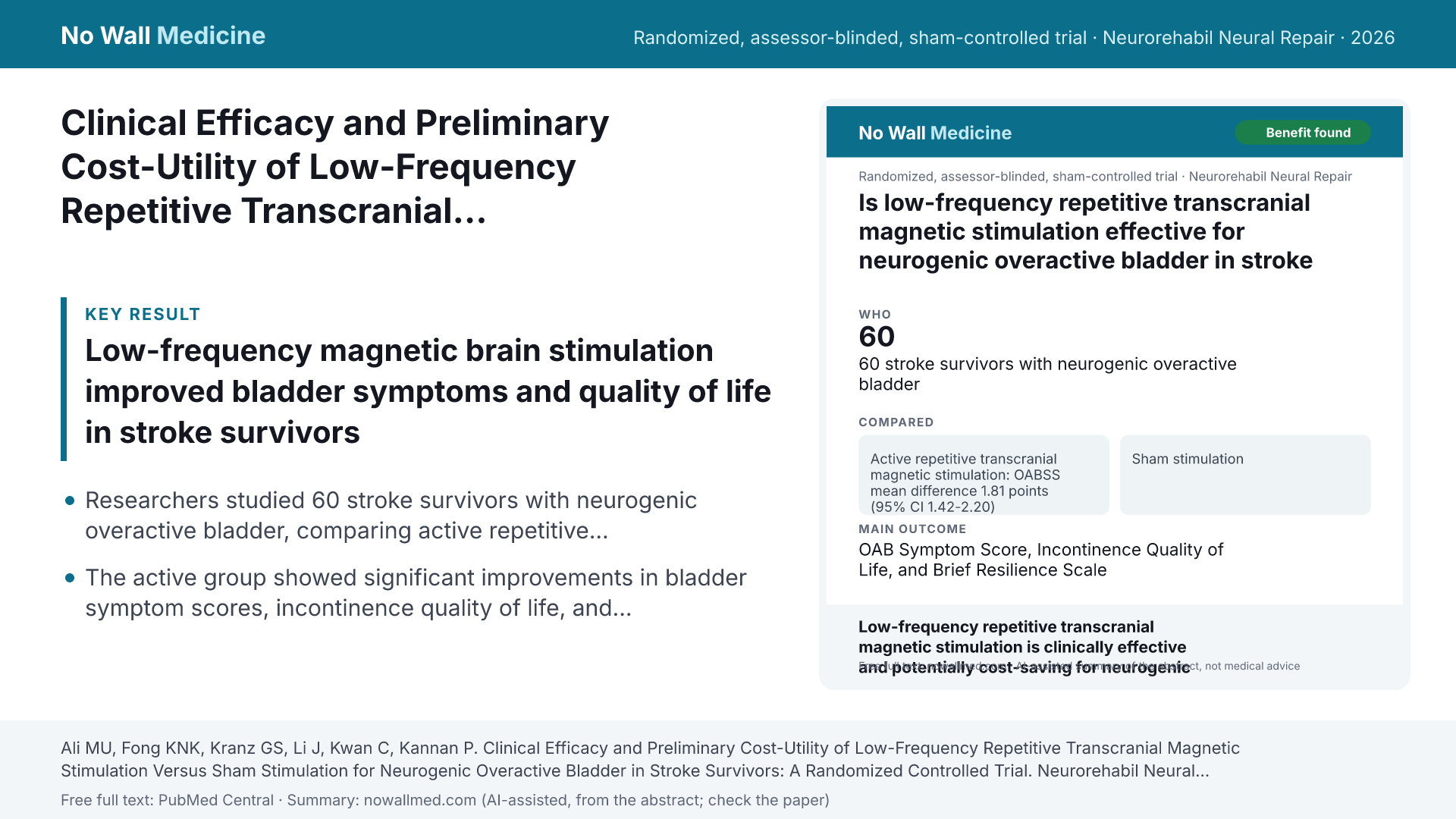
Low-frequency magnetic brain stimulation improved bladder symptoms and quality of life in stroke survivors
Clinical Efficacy and Preliminary Cost-Utility of Low-Frequency Repetitive Transcranial Magnetic Stimulation Versus Sham Stimulation for Neurogenic Overactive Bladder in Stroke Survivors: A Randomized Controlled Trial
Randomized, assessor-blinded, sham-controlled trialBenefit found
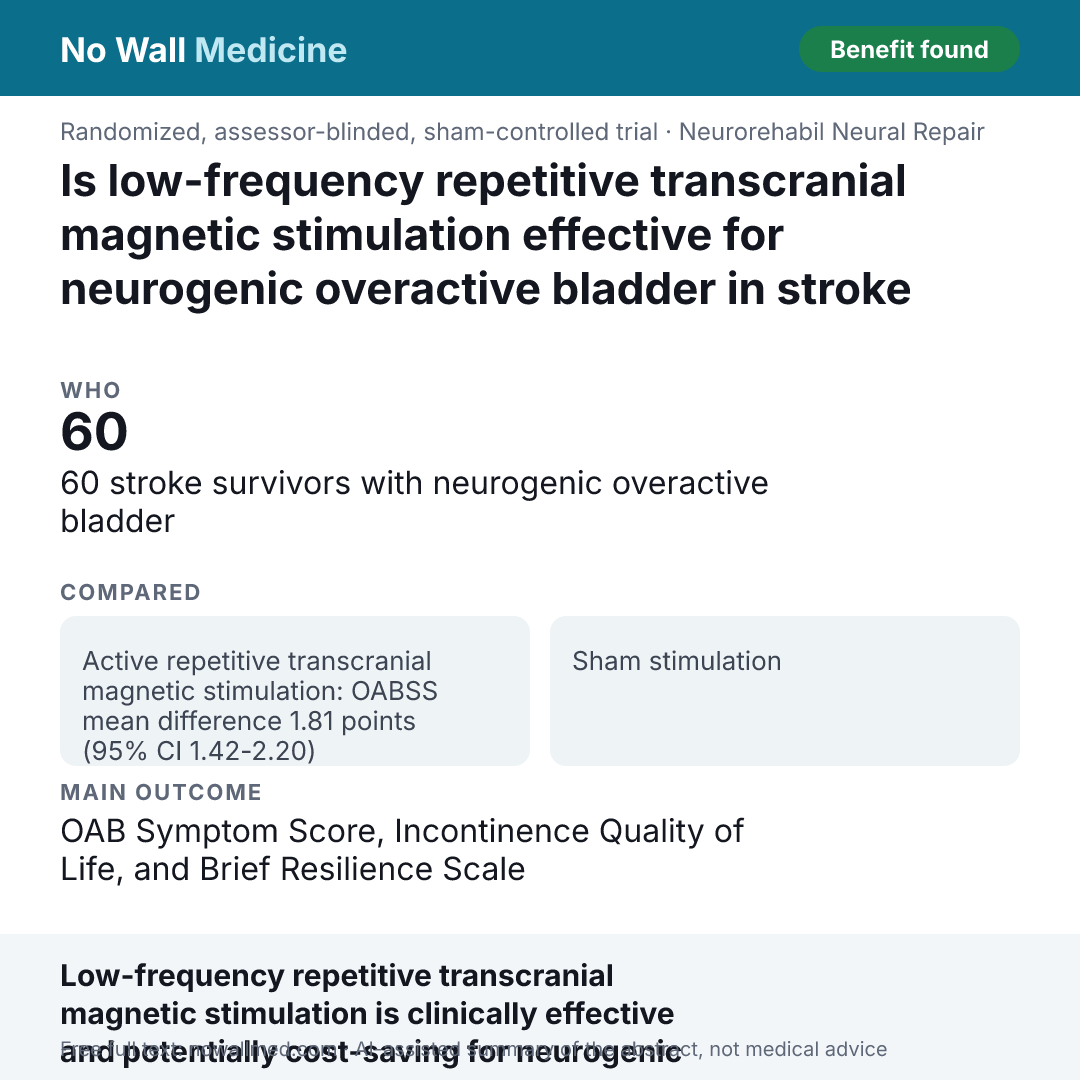
Is low-frequency repetitive transcranial magnetic stimulation effective for neurogenic overactive bladder in stroke survivors?
Who
60
60 stroke survivors with neurogenic overactive bladder
Compared
Active repetitive transcranial magnetic stimulation: OABSS mean difference 1.81 points (95% CI 1.42-2.20)
Sham stimulation
Main outcome
OAB Symptom Score, Incontinence Quality of Life, and Brief Resilience Scale
Result: mean difference 1.81 points (95% CI 1.42-2.20) for OABSS
Bottom line: Low-frequency repetitive transcranial magnetic stimulation is clinically effective and potentially cost-saving for neurogenic overactive bladder in stroke survivors.
Neurorehabil Neural Repair · 2026-04-29 · Save PNG
Clinical question: Is low-frequency repetitive transcranial magnetic stimulation effective for neurogenic overactive bladder in stroke survivors?
Why it matters: The clinical and economic impact of using low-frequency repetitive transcranial magnetic stimulation for neurogenic overactive bladder in stroke survivors requires comprehensive evaluation.
Key points
- Researchers studied 60 stroke survivors with neurogenic overactive bladder, comparing active repetitive transcranial magnetic stimulation to a sham stimulation group.
- The active group showed significant improvements in bladder symptom scores, incontinence quality of life, and resilience scores at weeks 4 and 8.
- Active magnetic stimulation was associated with lower societal costs of HK$1267.3 compared to HK$1839.0 for the sham group.
Headline and key points written with AI from the paper’s abstract, with every number checked against it. Read the paper before relying on them.
Was this summary helpful?
Subject terms
Headline, design, result, key points, caveat and citation as plain text.
Cite this article
Ali MU, Fong KNK, Kranz GS, Li J, Kwan C, Kannan P. Clinical Efficacy and Preliminary Cost-Utility of Low-Frequency Repetitive Transcranial Magnetic Stimulation Versus Sham Stimulation for Neurogenic Overactive Bladder in Stroke Survivors: A Randomized Controlled Trial. Neurorehabil Neural Repair. 2026;40(8):603-614. doi:10.1177/15459683261432087
Spotted a mistake? Suggest a correction