Effects of electrical and magnetic stimulation on upper extremity function after stroke: A systematic review and network meta-analysis
Systematic review and network meta-analysisBenefit found
What are the effects of various stimulation therapies on stroke recovery?
Who
1476
Patients after stroke
Compared
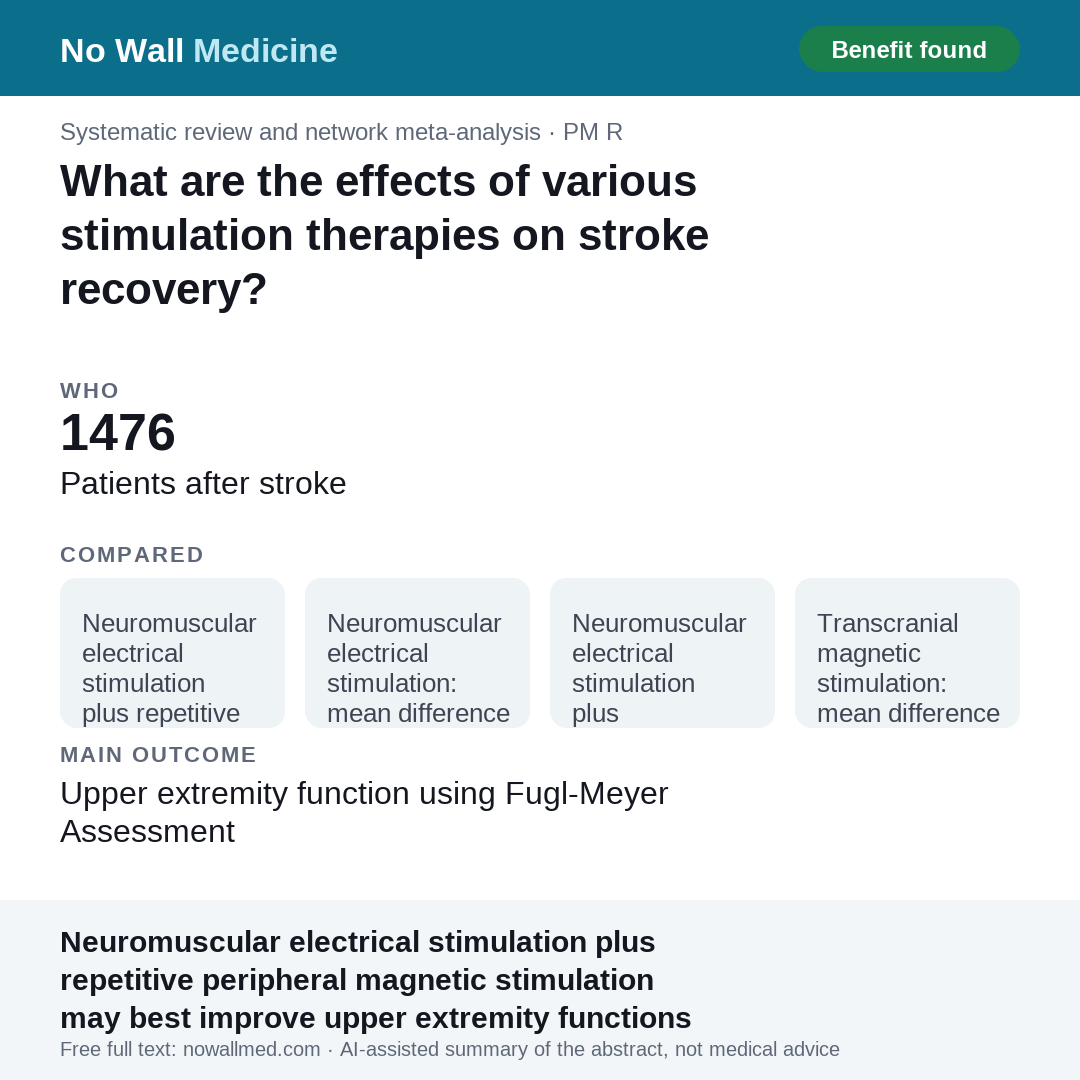
Neuromuscular electrical stimulation plus repetitive peripheral magnetic stimulation: mean difference 14.69 (9.94-19.45)
Neuromuscular electrical stimulation: mean difference 9.09 (6.01-12.18)
Neuromuscular electrical stimulation plus transcranial magnetic stimulation: mean difference 6.10 (2.51-9.69)
Transcranial magnetic stimulation: mean difference 4.07 (0.33-7.81)
Main outcome
Upper extremity function using Fugl-Meyer Assessment
Bottom line: Neuromuscular electrical stimulation plus repetitive peripheral magnetic stimulation may best improve upper extremity functions after stroke.
PM R · 2025-05-21Download image
Clinical question: What are the effects of various stimulation therapies on stroke recovery?
Abstract
Objectives
To pool and rank the efficacy of various stimulation therapies, including repetitive peripheral magnetic stimulation (rPMS), neuromuscular electrical stimulation (NMES), functional electrical stimulation (FES), transcranial magnetic stimulation (TMS), and combinations of these interventions on upper extremity function, activities of daily living (ADL), and spasticity after stroke relative to sham/conventional rehabilitation. Literature survey
MEDLINE, Scopus, Physiotherapy Evidence Database, Cochrane Central Register of Controlled Clinical Trials, and Google Scholar were searched from inception to July 2022. Methodology
Randomized controlled trials comparing any of the interventions mentioned above (rPMS, NMES, FES, TMS, NMES+rPMS, NMES+TMS, FES+TMS, and conventional rehabilitation) on upper extremity function, ADL, or spasticity from five databases were systematically reviewed and collected. Two-stage network meta-analysis was applied. Synthesis
Thirty-four studies involving 1476 patients reporting upper extremity function with the Fugl-Meyer Assessment were pooled. NMES combined with rPMS, NMES, NMES combined with TMS, TMS, and FES showed significantly higher improvement than conventional rehabilitation, with pooled mean differences (95% confidence intervals) of 14.69 (9.94-19.45), 9.09 (6.01-12.18), 6.10 (2.51-9.69), 4.07 (0.33-7.81), and 3.61 (0.14-7.07) respectively. NMES combined with rPMS had the highest probability for improving upper extremity function. NMES plus TMS had the highest probability for improving ADL, but none of the interventions showed significant differences in spasticity. Conclusions
NMES plus rPMS might be the best intervention to improve upper extremity functions, with NMES plus TMS most likely to lead to improved ADL but the quality of the evidence is low.
Subject terms
Cite this article
Keesukphan A, Suntipap M, Thadanipon K, Boonmanunt S, Numthavaj P, McKay GJ. Effects of electrical and magnetic stimulation on upper extremity function after stroke: A systematic review and network meta-analysis. PM R. 2025. doi:10.1002/pmrj.13356
Spotted a mistake? Suggest a correction
Top studies every Monday
The week’s key trials and guidelines in your specialties, plus any topics you follow. By email, free.
Get the weekly digest