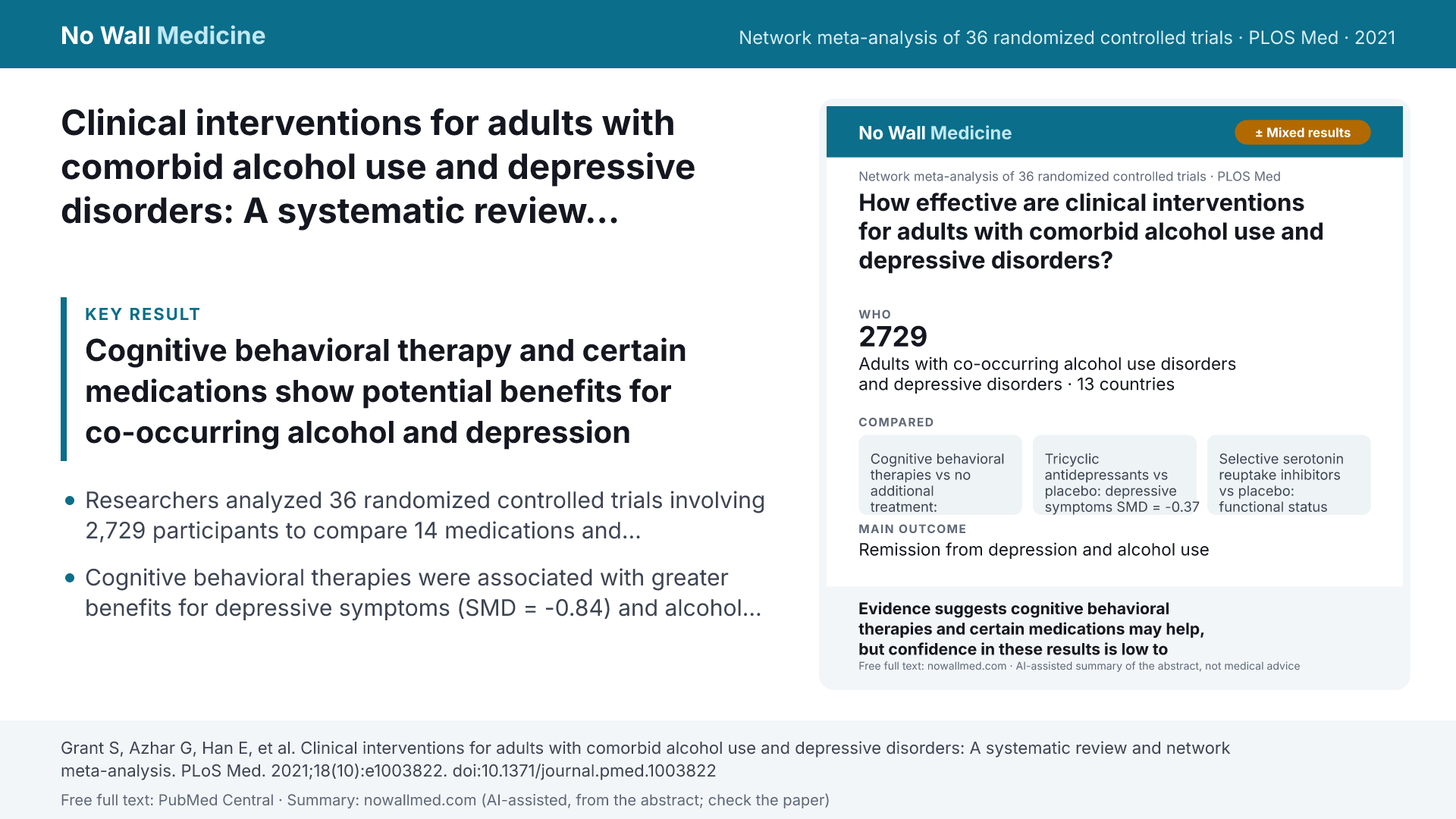
Cognitive behavioral therapy and certain medications show potential benefits for co-occurring alcohol and depression
Clinical interventions for adults with comorbid alcohol use and depressive disorders: A systematic review and network meta-analysis
Network meta-analysis of 36 randomized controlled trialsMixed results
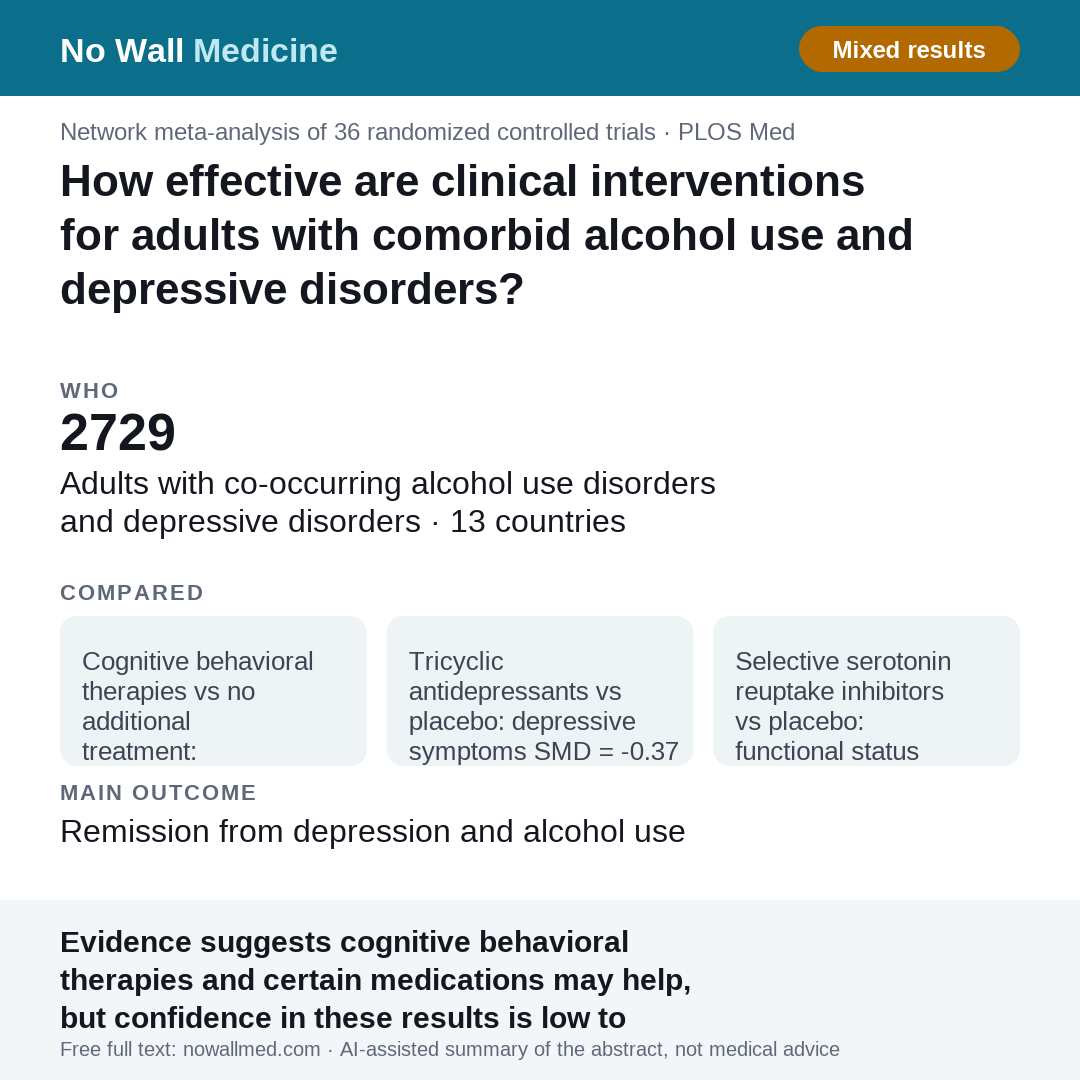
How effective are clinical interventions for adults with comorbid alcohol use and depressive disorders?
Who
2729
Adults with co-occurring alcohol use disorders and depressive disorders · 13 countries
Compared
Cognitive behavioral therapies vs no additional treatment: depressive symptoms SMD = -0.84 (95% CI, -1.05 to -0.63)
Tricyclic antidepressants vs placebo: depressive symptoms SMD = -0.37 (95% CI, -0.72 to -0.02)
Selective serotonin reuptake inhibitors vs placebo: functional status SMD = -0.92 (95% CI, -1.36 to -0.47)
Main outcome
Remission from depression and alcohol use
Bottom line: Evidence suggests cognitive behavioral therapies and certain medications may help, but confidence in these results is low to very low.
Limitation: Sparsity of long term evidence, attrition bias risks, and heterogeneous definitions of adverse events.
PLOS Med · 2021-10-08Download image
Clinical question: How effective are clinical interventions for adults with comorbid alcohol use and depressive disorders?
Why it matters: It is uncertain which clinical interventions are most effective for treating adults who have both an alcohol use disorder and a depressive disorder.
Key points
- Researchers analyzed 36 randomized controlled trials involving 2,729 participants to compare 14 medications and 4 psychological therapies for adults with alcohol use disorder and depressive disorder.
- Cognitive behavioral therapies were associated with greater benefits for depressive symptoms (SMD = -0.84) and alcohol use (SMD = -0.25) compared to no additional treatment.
- Selective serotonin reuptake inhibitors were associated with greater functional status (SMD = -0.92) but were also associated with a higher likelihood of adverse events (OR = 2.20).
Limitation the authors note: The authors noted a sparsity of evidence regarding long-term effects, risks of attrition bias, and inconsistent definitions of adverse events.
Headline and key points written with AI from the paper’s abstract, with every number checked against it. Read the paper before relying on them.
Was this summary helpful?
Subject terms
Cite this article
Grant S, Azhar G, Han E, et al. Clinical interventions for adults with comorbid alcohol use and depressive disorders: A systematic review and network meta-analysis. PLOS Med. 2021. doi:10.1371/journal.pmed.1003822
Spotted a mistake? Suggest a correction