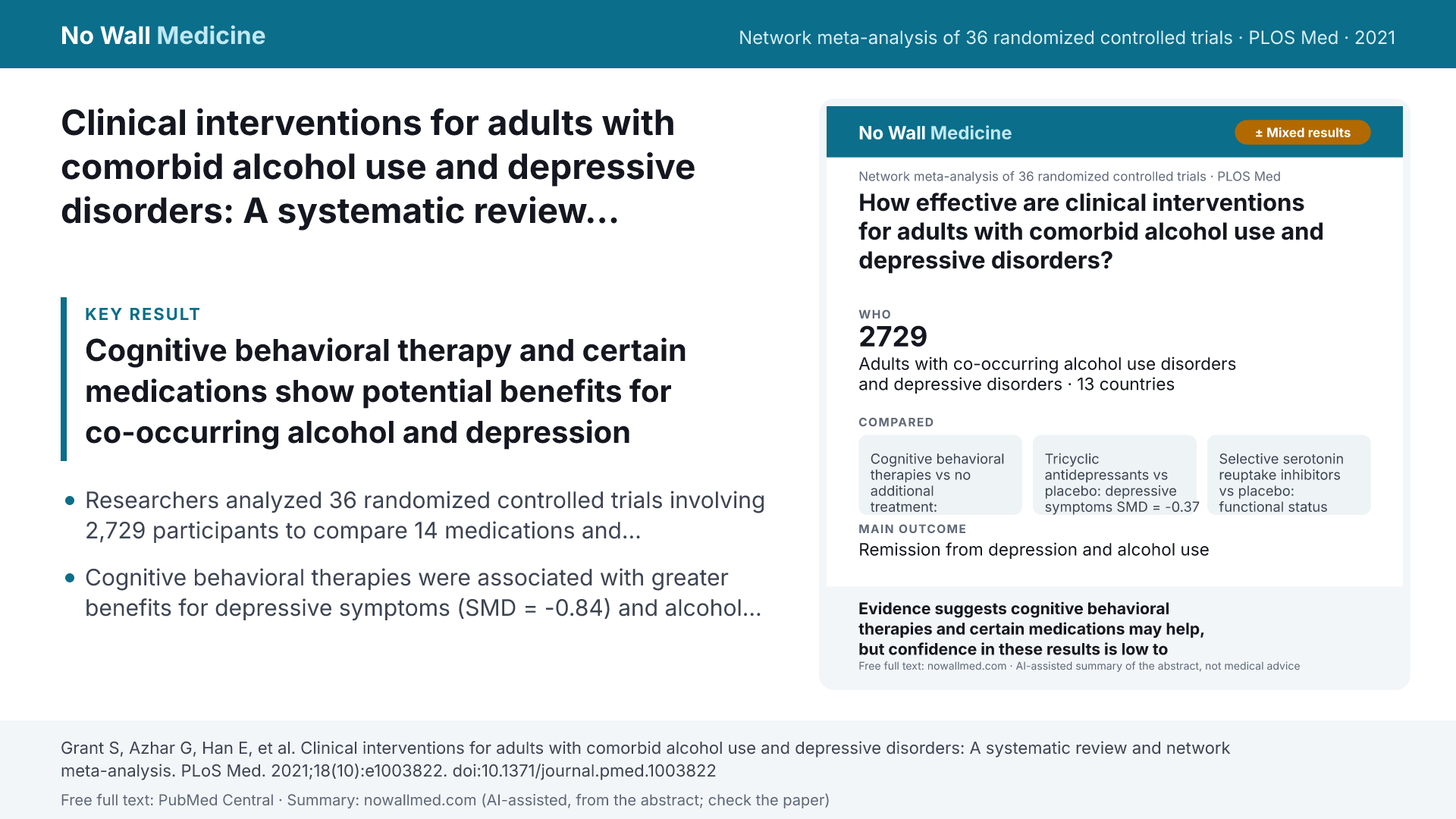
Clinical interventions for adults with comorbid alcohol use and depressive disorders: A systematic review and network meta-analysis
Key result: Cognitive behavioral therapy and certain medications show potential benefits for co-occurring alcohol and depression
Key points
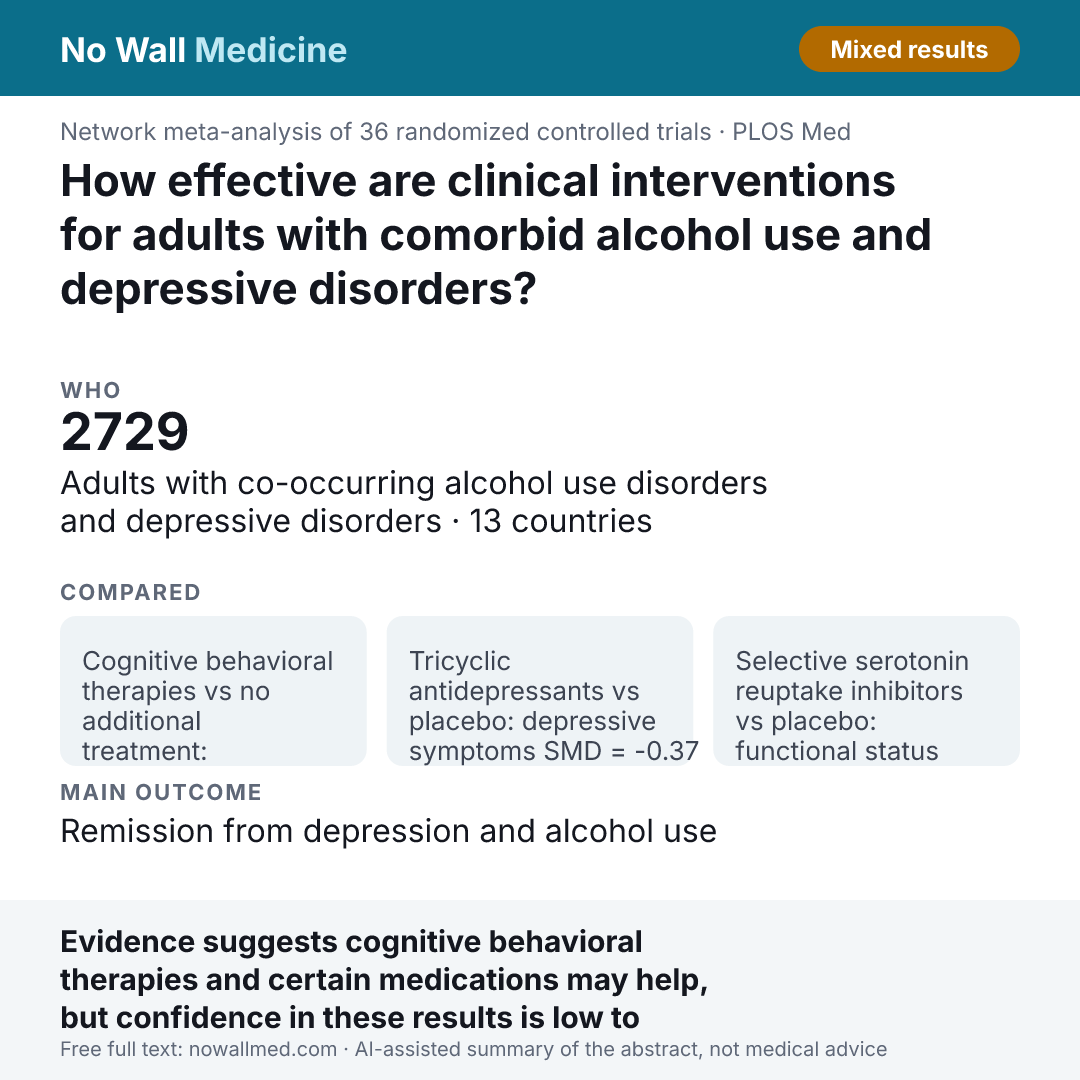
- Researchers analyzed 36 randomized controlled trials involving 2,729 participants to compare 14 medications and 4 psychological therapies for adults with alcohol use disorder and depressive disorder.
- Cognitive behavioral therapies were associated with greater benefits for depressive symptoms (SMD = -0.84) and alcohol use (SMD = -0.25) compared to no additional treatment.
- Selective serotonin reuptake inhibitors were associated with greater functional status (SMD = -0.92) but were also associated with a higher likelihood of adverse events (OR = 2.20).
Limitation the authors note: The authors noted a sparsity of evidence regarding long-term effects, risks of attrition bias, and inconsistent definitions of adverse events.
Discussion prompts
- Would these patients look like yours? Who was left out?
- Is the main outcome one that matters to patients?
- Is the difference large enough to change what you do?
Cite: Grant S, Azhar G, Han E, et al. Clinical interventions for adults with comorbid alcohol use and depressive disorders: A systematic review and network meta-analysis. PLoS Med. 2021;18(10):e1003822. doi:10.1371/journal.pmed.1003822
Free full text: PubMed Central · Summary and visual abstract: nowallmed.com/a/clinical-interventions-for-adults-with-comorbid-alcohol-use-and-1nvxid0/ (AI-assisted from the abstract; check the paper before relying on it).