Conduction system pacing was associated with fewer clinical complications than right ventricular septal pacing
Clinical Outcomes of Conduction System Pacing vs Right Ventricular Septal Pacing in Atrioventricular Block: The CSPACE Randomized Controlled Trial
Randomized controlled trialBenefit found
Are conduction system pacing or right ventricular septal pacing better for atrioventricular block?
Who
202
Patients with atrioventricular block without cardiac resynchronization therapy indication
Compared
Conduction system pacing: 7.17 events per 100 person-years
Right ventricular septal pacing: 20.69 events per 100 person-years
Main outcome
Composite of pacing-induced cardiomyopathy, biventricular cardiac resynchronization therapy upgrade, heart failure hospitalization, and mortality
Result: hazard ratio 0.35 (95% CI 0.19-0.64)
Bottom line: Conduction system pacing was superior to right ventricular septal pacing for reducing composite clinical outcomes in atrioventricular block.
JACC · 2025-08-21Download image
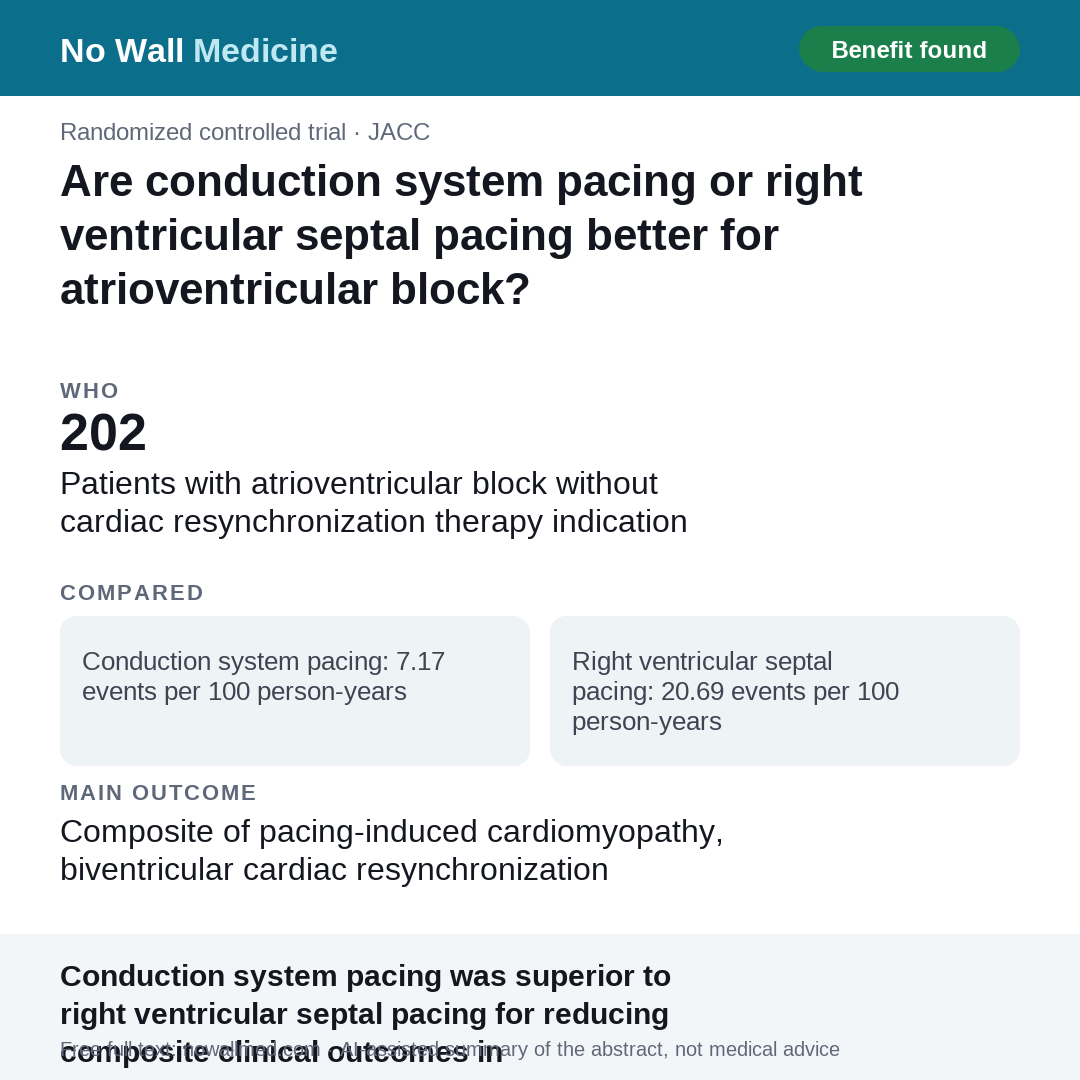
Clinical question: Are conduction system pacing or right ventricular septal pacing better for atrioventricular block?
Why it matters: Patients receiving right ventricular pacing are at risk of pacing-induced cardiomyopathy, heart failure hospitalization, and the need for biventricular cardiac resynchronization therapy upgrades.
Key points
- Researchers conducted a randomized controlled trial with 202 patients with atrioventricular block, comparing conduction system pacing to right ventricular septal pacing.
- Conduction system pacing was associated with a lower composite endpoint of 7.17 vs 20.69 events per 100 person-years, driven by lower pacing-induced cardiomyopathy and fewer biventricular cardiac resynchronization therapy upgrades.
- Lead revision occurred more frequently in the conduction system pacing group (7.9%) compared to the right ventricular septal pacing group (1.0%).
Headline and key points written with AI from the paper’s abstract, with every number checked against it. Read the paper before relying on them.
Was this summary helpful?
Subject terms
Cite this article
Chow CLD, Wong C, Sutherland N, Obeyesekere MN, Wong GR, Eastwood CM. Clinical Outcomes of Conduction System Pacing vs Right Ventricular Septal Pacing in Atrioventricular Block: The CSPACE Randomized Controlled Trial. JACC. 2025. doi:10.1016/j.jacc.2025.06.043
Spotted a mistake? Suggest a correction
Top studies every Monday
The week’s key trials and guidelines in your specialties, plus any topics you follow. By email, free.
Get the weekly digest