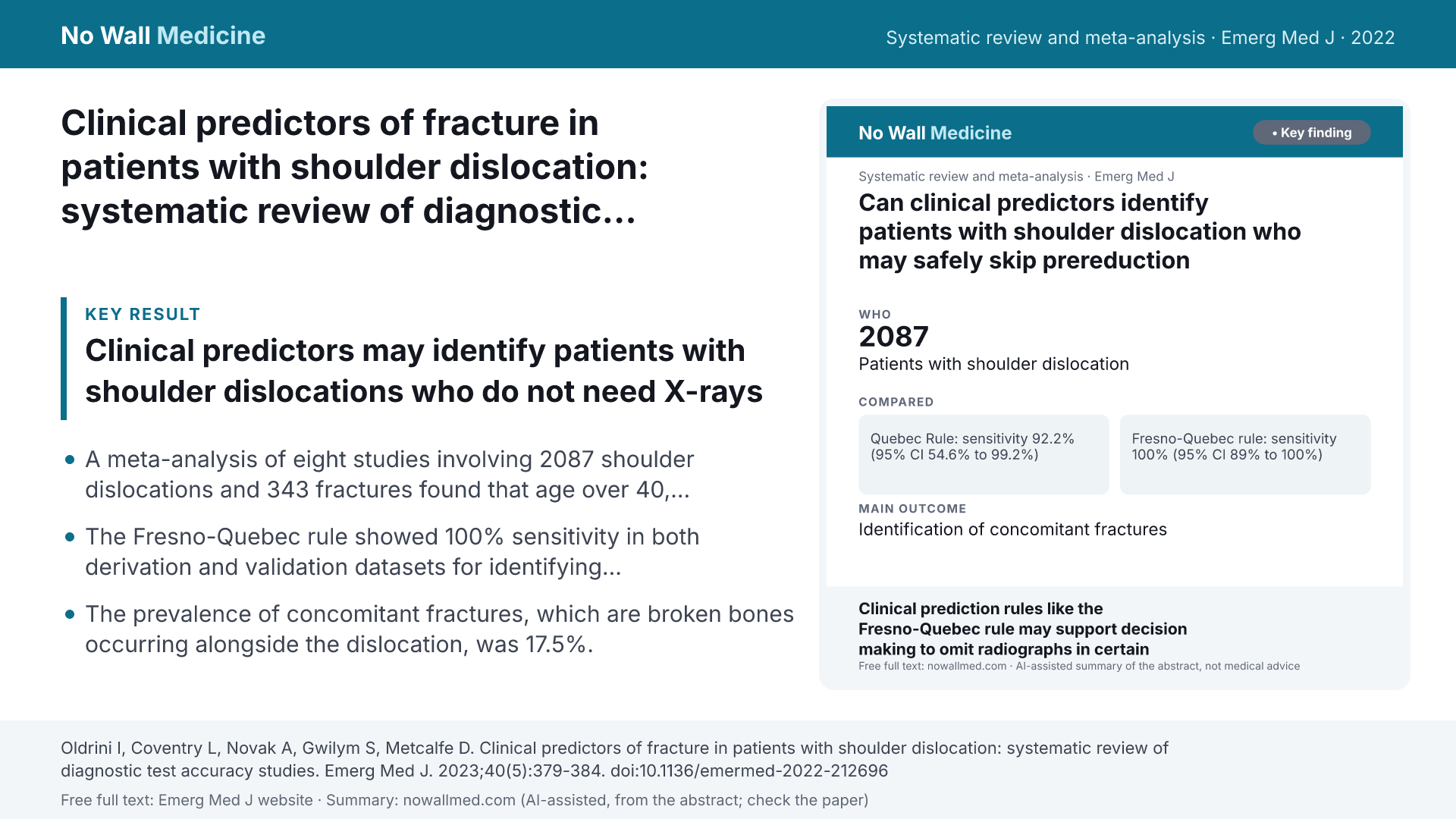
Clinical predictors may identify patients with shoulder dislocations who do not need X-rays
Clinical predictors of fracture in patients with shoulder dislocation: systematic review of diagnostic test accuracy studies
Systematic review and meta-analysisKey finding
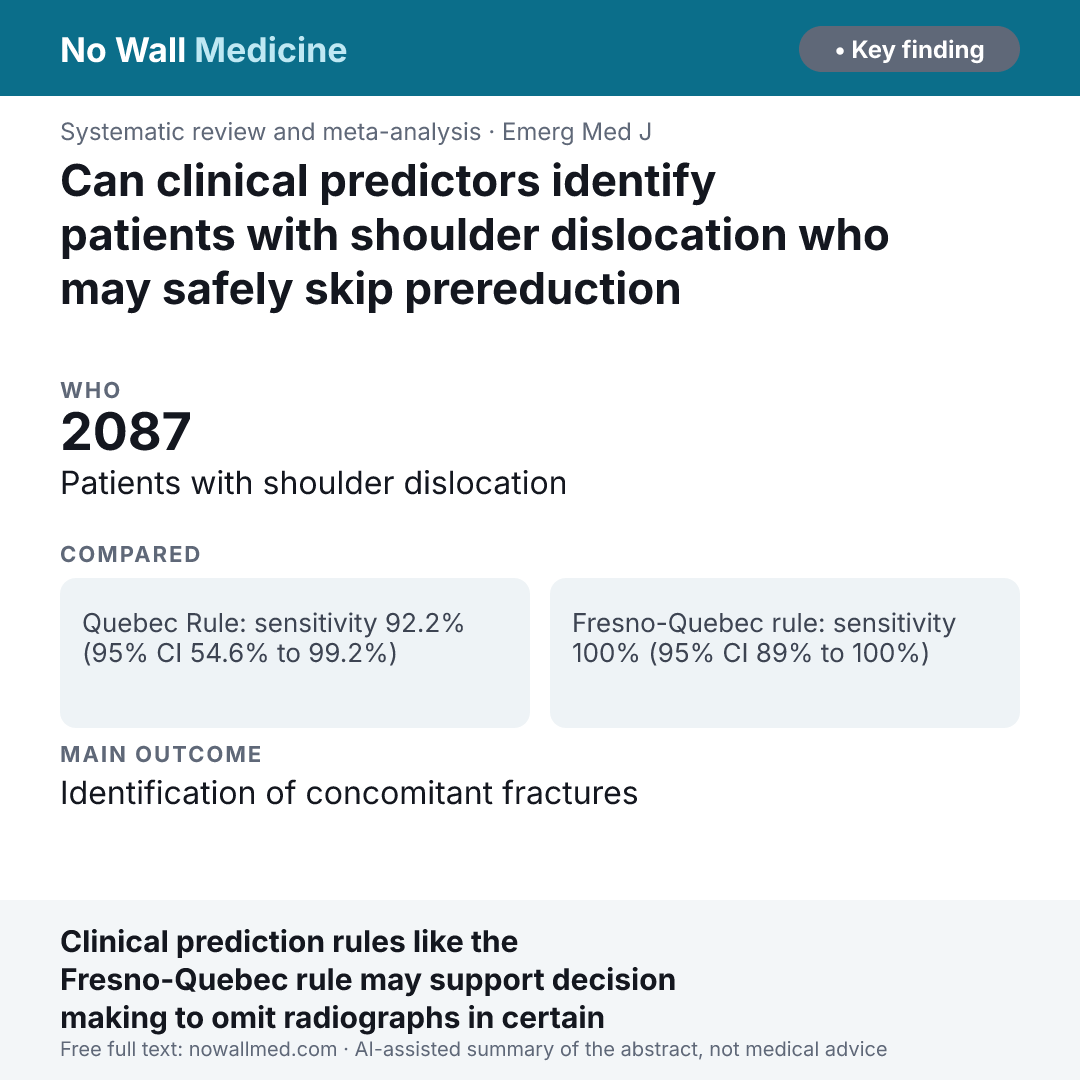
Can clinical predictors identify patients with shoulder dislocation who may safely skip prereduction radiographs?
Who
2087
Patients with shoulder dislocation
Compared
Quebec Rule: sensitivity 92.2% (95% CI 54.6% to 99.2%)
Fresno-Quebec rule: sensitivity 100% (95% CI 89% to 100%)
Main outcome
Identification of concomitant fractures
Bottom line: Clinical prediction rules like the Fresno-Quebec rule may support decision making to omit radiographs in certain shoulder dislocation cases.
Limitation: Unclear blinding of clinical and radiographic assessments in most studies.
Emerg Med J · 2022-11-30 · Save PNG
Clinical question: Can clinical predictors identify patients with shoulder dislocation who may safely skip prereduction radiographs?
Key points
- A meta-analysis of eight studies involving 2087 shoulder dislocations and 343 fractures found that age over 40, female sex, and first-time dislocation were accurate predictors.
- The Fresno-Quebec rule showed 100% sensitivity in both derivation and validation datasets for identifying clinically important fractures.
- The prevalence of concomitant fractures, which are broken bones occurring alongside the dislocation, was 17.5%.
Limitation the authors note: The most important potential sources of bias were unclear blinding of those performing the clinical and radiographic assessments.
Headline and key points written with AI from the paper’s abstract, with every number checked against it. Read the paper before relying on them.
Was this summary helpful?
Subject terms
Headline, design, result, key points, caveat and citation as plain text.
Cite this article
Oldrini I, Coventry L, Novak A, Gwilym S, Metcalfe D. Clinical predictors of fracture in patients with shoulder dislocation: systematic review of diagnostic test accuracy studies. Emerg Med J. 2023;40(5):379-384. doi:10.1136/emermed-2022-212696
Spotted a mistake? Suggest a correction