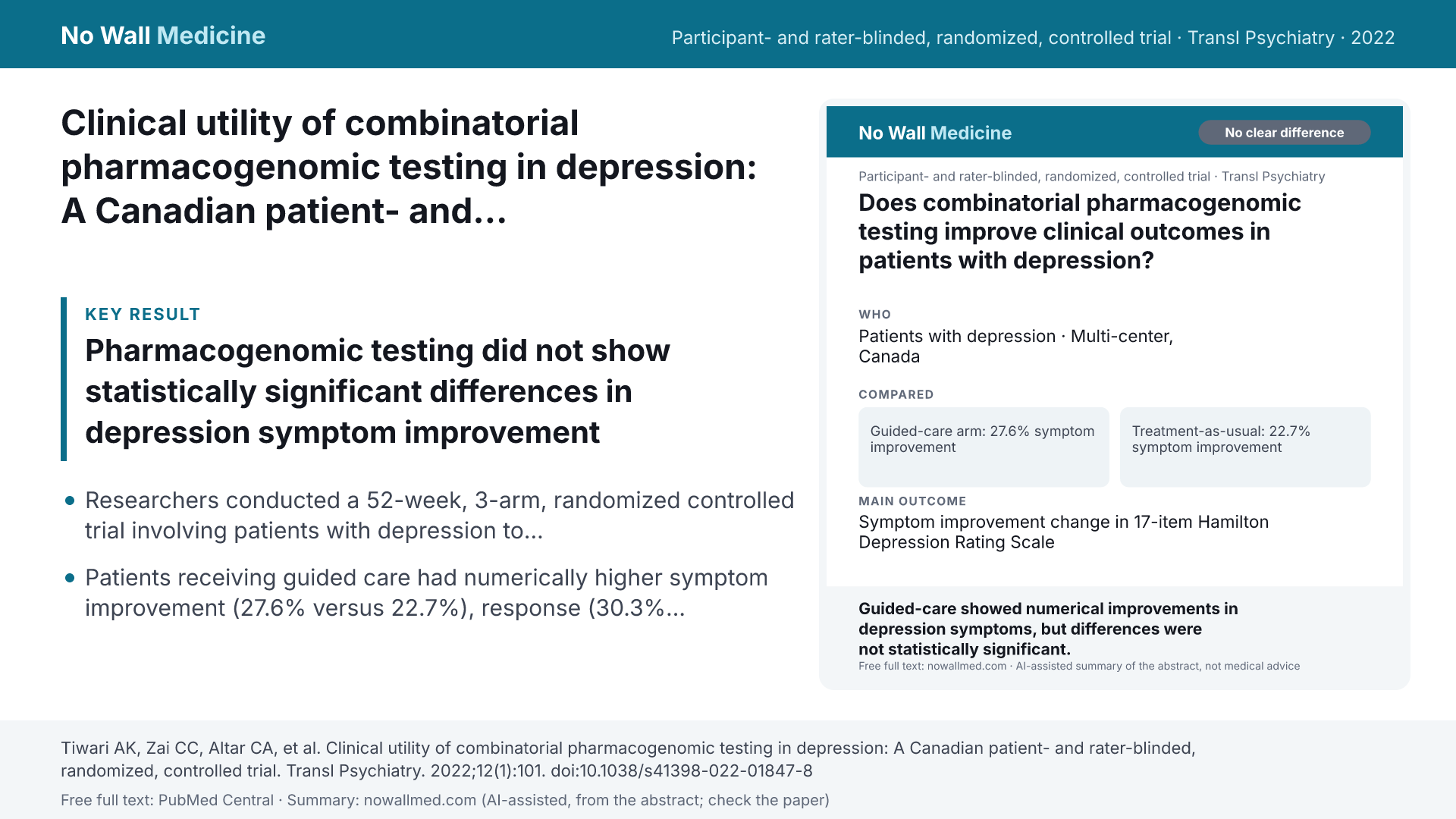
Clinical utility of combinatorial pharmacogenomic testing in depression: A Canadian patient- and rater-blinded, randomized, controlled trial
Key result: Pharmacogenomic testing did not show statistically significant differences in depression symptom improvement
Key points
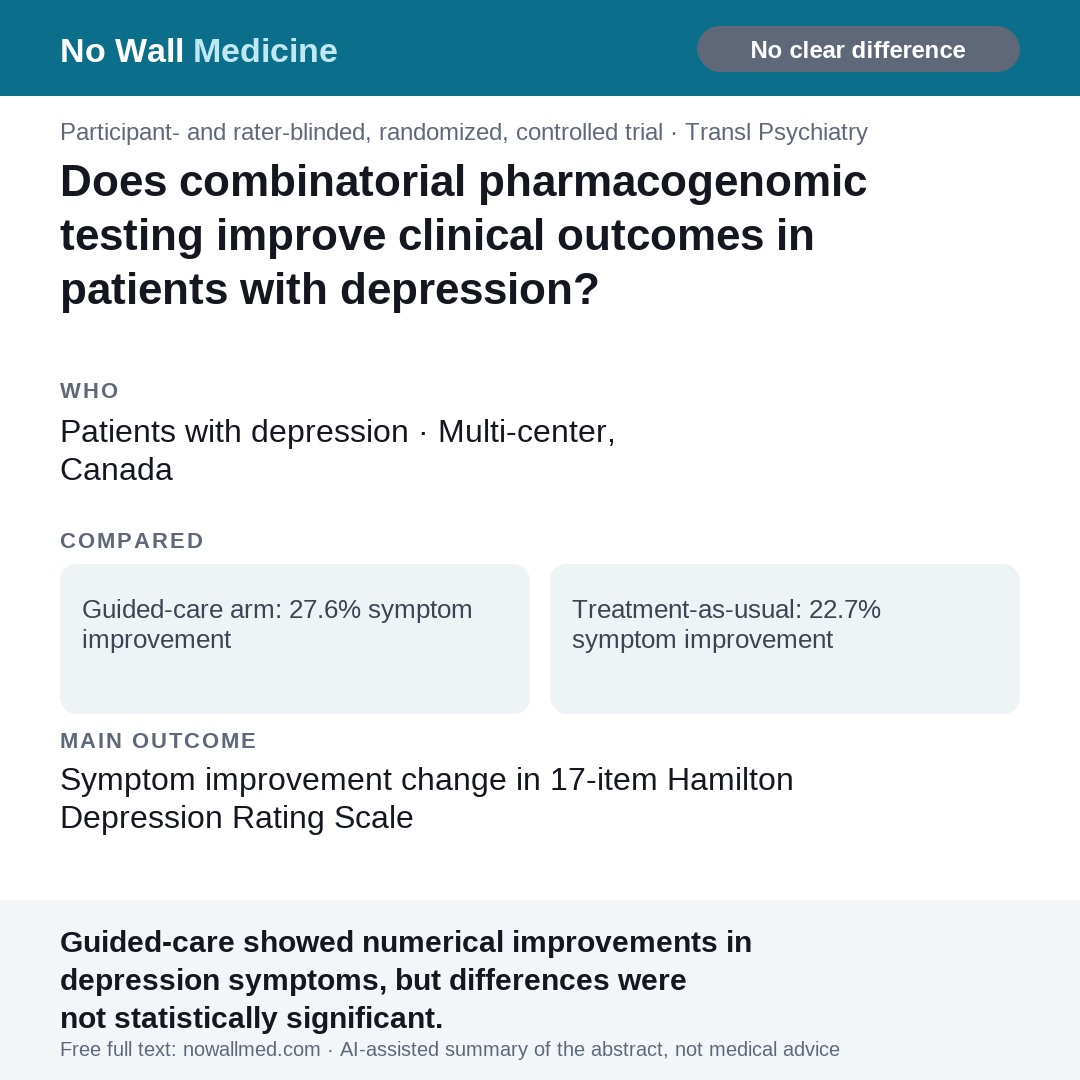
- Researchers conducted a 52-week, 3-arm, randomized controlled trial involving patients with depression to compare combinatorial pharmacogenomic testing against treatment-as-usual.
- Patients receiving guided care had numerically higher symptom improvement (27.6% versus 22.7%), response (30.3% versus 22.7%), and remission rates (15.7% versus 8.3%), but differences were not statistically significant.
- The GAPP-MDD trial showed response and remission rates of 33.0% and 89.0% respectively, which were consistent with the larger GUIDED trial.
Why it matters: It was unknown if combinatorial pharmacogenomic testing, which uses genetic information to guide medication selection, provides significant clinical benefits in a Canadian healthcare setting.
Discussion prompts
- Would these patients look like yours? Who was left out?
- Is the main outcome one that matters to patients?
- Is the difference large enough to change what you do?
Cite: Tiwari AK, Zai CC, Altar CA, Tanner JA, Davies PE, Traxler P. Clinical utility of combinatorial pharmacogenomic testing in depression: A Canadian patient- and rater-blinded, randomized, controlled trial. Transl Psychiatry. 2022. doi:10.1038/s41398-022-01847-8
Free full text: PubMed Central · Summary and visual abstract: nowallmed.com/a/clinical-utility-of-combinatorial-pharmacogenomic-testing-in-12d7z5q/ (AI-assisted from the abstract; check the paper before relying on it).