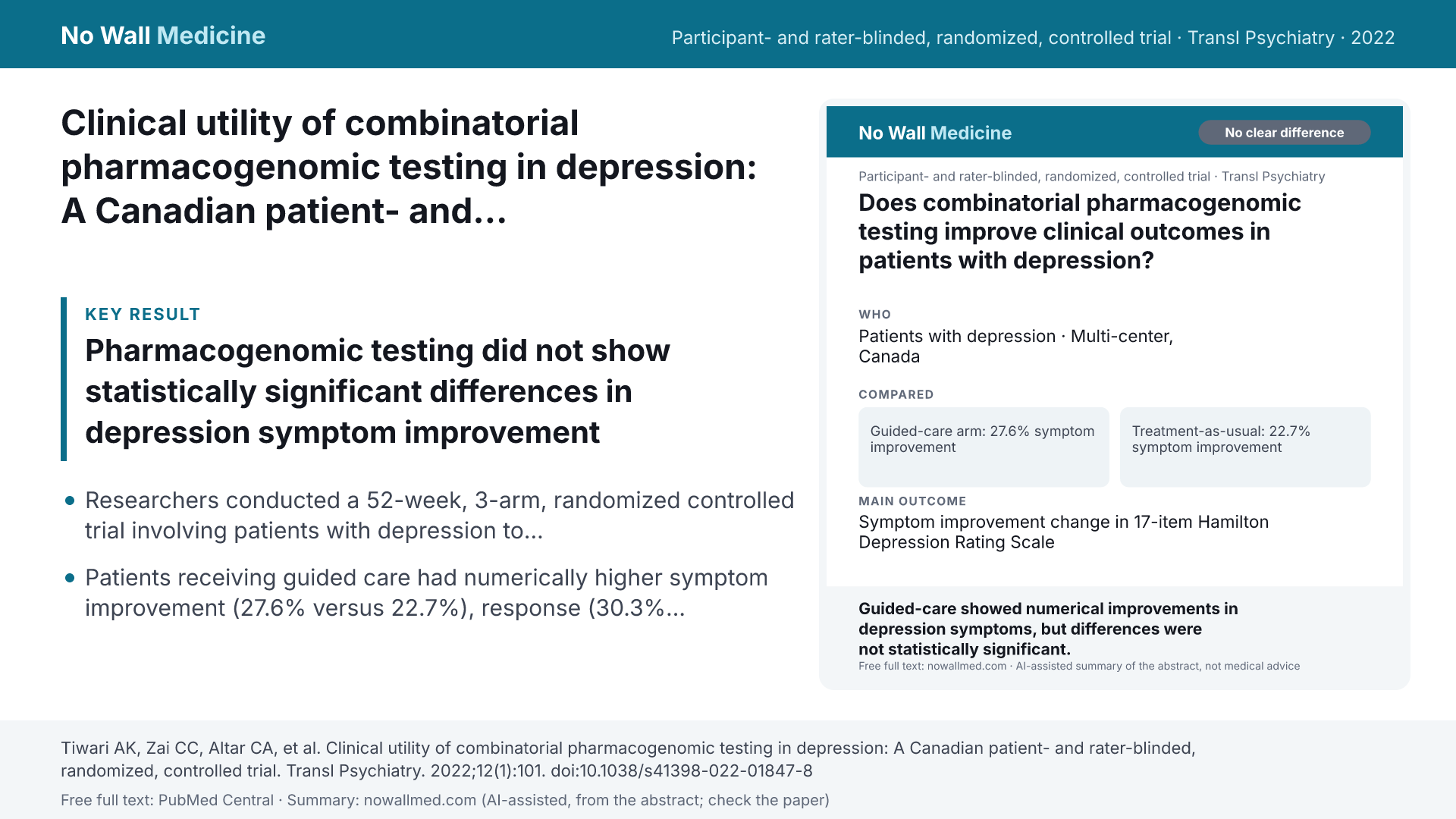
Pharmacogenomic testing did not show statistically significant differences in depression symptom improvement
Clinical utility of combinatorial pharmacogenomic testing in depression: A Canadian patient- and rater-blinded, randomized, controlled trial
Participant- and rater-blinded, randomized, controlled trialNo clear difference
Does combinatorial pharmacogenomic testing improve clinical outcomes in patients with depression?
Who
Patients with depression · Multi-center, Canada
Compared
Guided-care arm: 27.6% symptom improvement
Treatment-as-usual: 22.7% symptom improvement
Main outcome
Symptom improvement change in 17-item Hamilton Depression Rating Scale
Bottom line: Guided-care showed numerical improvements in depression symptoms, but differences were not statistically significant.
Limitation: The trial was ultimately underpowered to detect statistically significant differences in patient outcomes.
Transl Psychiatry · 2022-03-14Download image
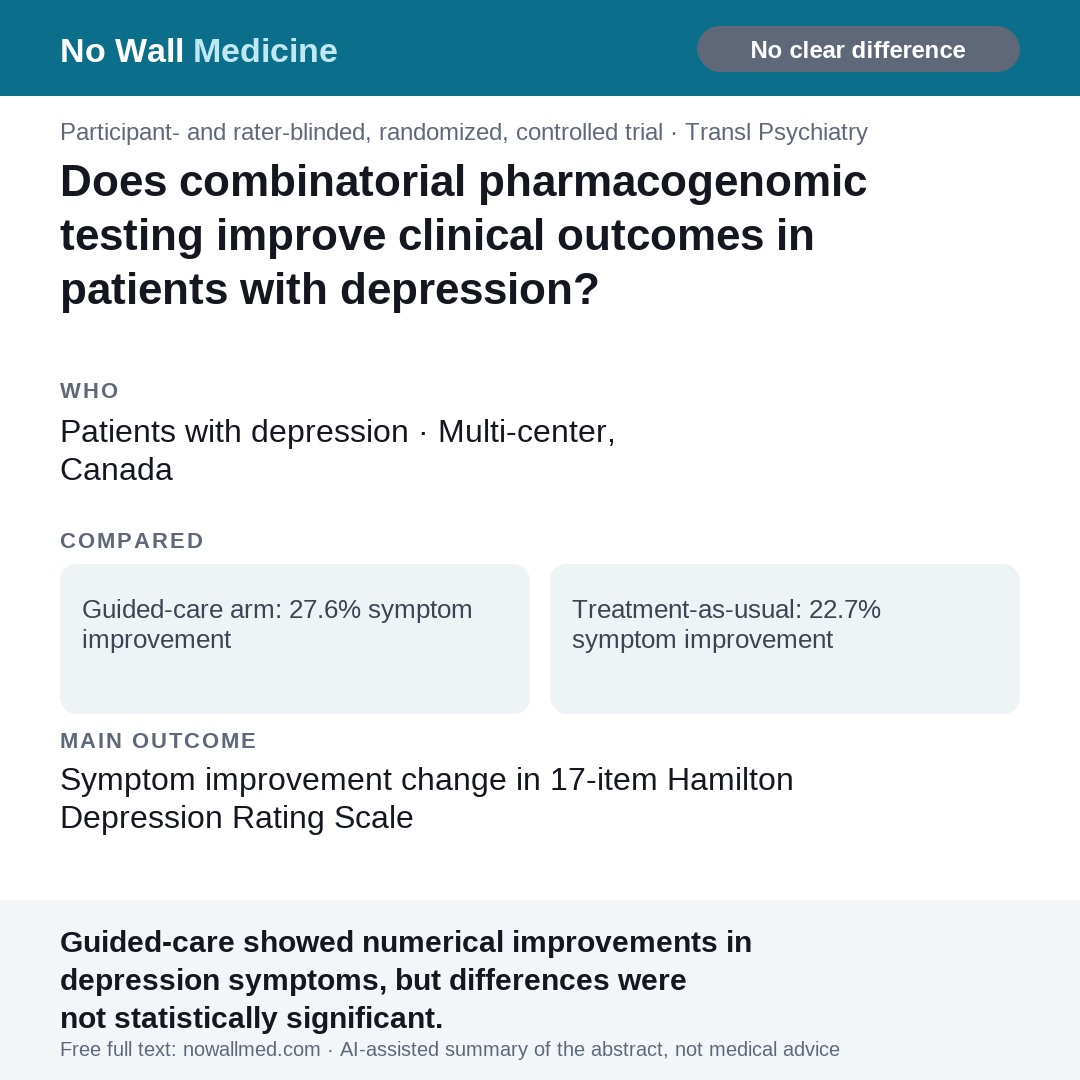
Clinical question: Does combinatorial pharmacogenomic testing improve clinical outcomes in patients with depression?
Why it matters: It was unknown if combinatorial pharmacogenomic testing, which uses genetic information to guide medication selection, provides significant clinical benefits in a Canadian healthcare setting.
Key points
- Researchers conducted a 52-week, 3-arm, randomized controlled trial involving patients with depression to compare combinatorial pharmacogenomic testing against treatment-as-usual.
- Patients receiving guided care had numerically higher symptom improvement (27.6% versus 22.7%), response (30.3% versus 22.7%), and remission rates (15.7% versus 8.3%), but differences were not statistically significant.
- The GAPP-MDD trial showed response and remission rates of 33.0% and 89.0% respectively, which were consistent with the larger GUIDED trial.
Headline and key points written with AI from the paper’s abstract, with every number checked against it. Read the paper before relying on them.
Was this summary helpful?
Subject terms
Cite this article
Tiwari AK, Zai CC, Altar CA, Tanner JA, Davies PE, Traxler P. Clinical utility of combinatorial pharmacogenomic testing in depression: A Canadian patient- and rater-blinded, randomized, controlled trial. Transl Psychiatry. 2022. doi:10.1038/s41398-022-01847-8
Spotted a mistake? Suggest a correction
Top studies every Monday
The week’s key trials and guidelines in your specialties, plus any topics you follow. By email, free.
Get the weekly digest