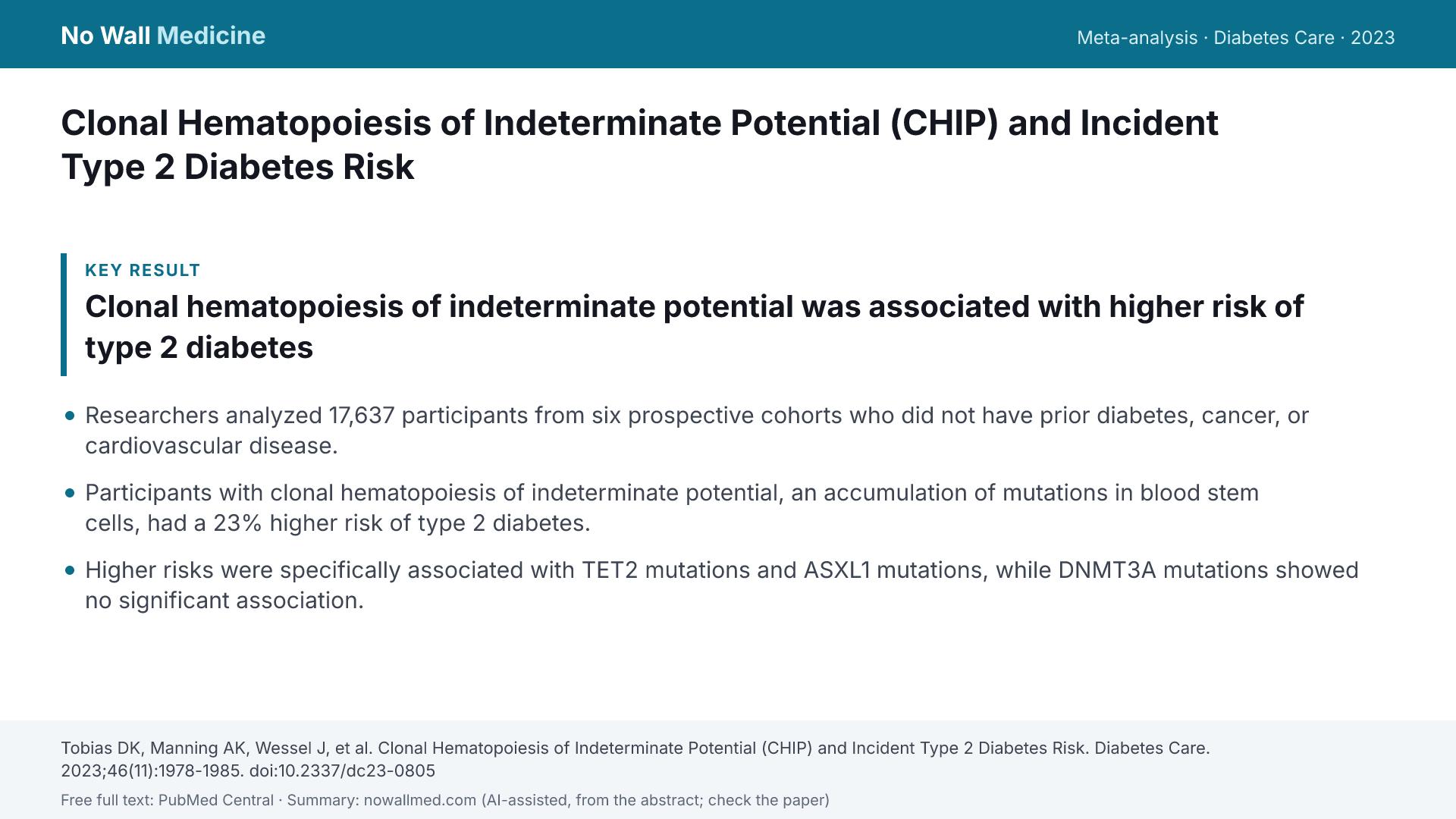
Clonal Hematopoiesis of Indeterminate Potential (CHIP) and Incident Type 2 Diabetes Risk
Key result: Clonal hematopoiesis of indeterminate potential was associated with higher risk of type 2 diabetes
Key points
- Researchers analyzed 17,637 participants from six prospective cohorts who did not have prior diabetes, cancer, or cardiovascular disease.
- Participants with clonal hematopoiesis of indeterminate potential, an accumulation of mutations in blood stem cells, had a 23% higher risk of type 2 diabetes.
- Higher risks were specifically associated with TET2 mutations and ASXL1 mutations, while DNMT3A mutations showed no significant association.
Limitation the authors note: Statistical power was limited for JAK2 and TP53 analyses.
Discussion prompts
- Would these patients look like yours? Who was left out?
- Is the main outcome one that matters to patients?
- Is the difference large enough to change what you do?
Cite: Tobias DK, Manning AK, Wessel J, et al. Clonal Hematopoiesis of Indeterminate Potential (CHIP) and Incident Type 2 Diabetes Risk. Diabetes Care. 2023;46(11):1978-1985. doi:10.2337/dc23-0805
Free full text: PubMed Central · Summary and visual abstract: nowallmed.com/a/clonal-hematopoiesis-of-indeterminate-potential-chip-and-incident-efol8u/ (AI-assisted from the abstract; check the paper before relying on it).