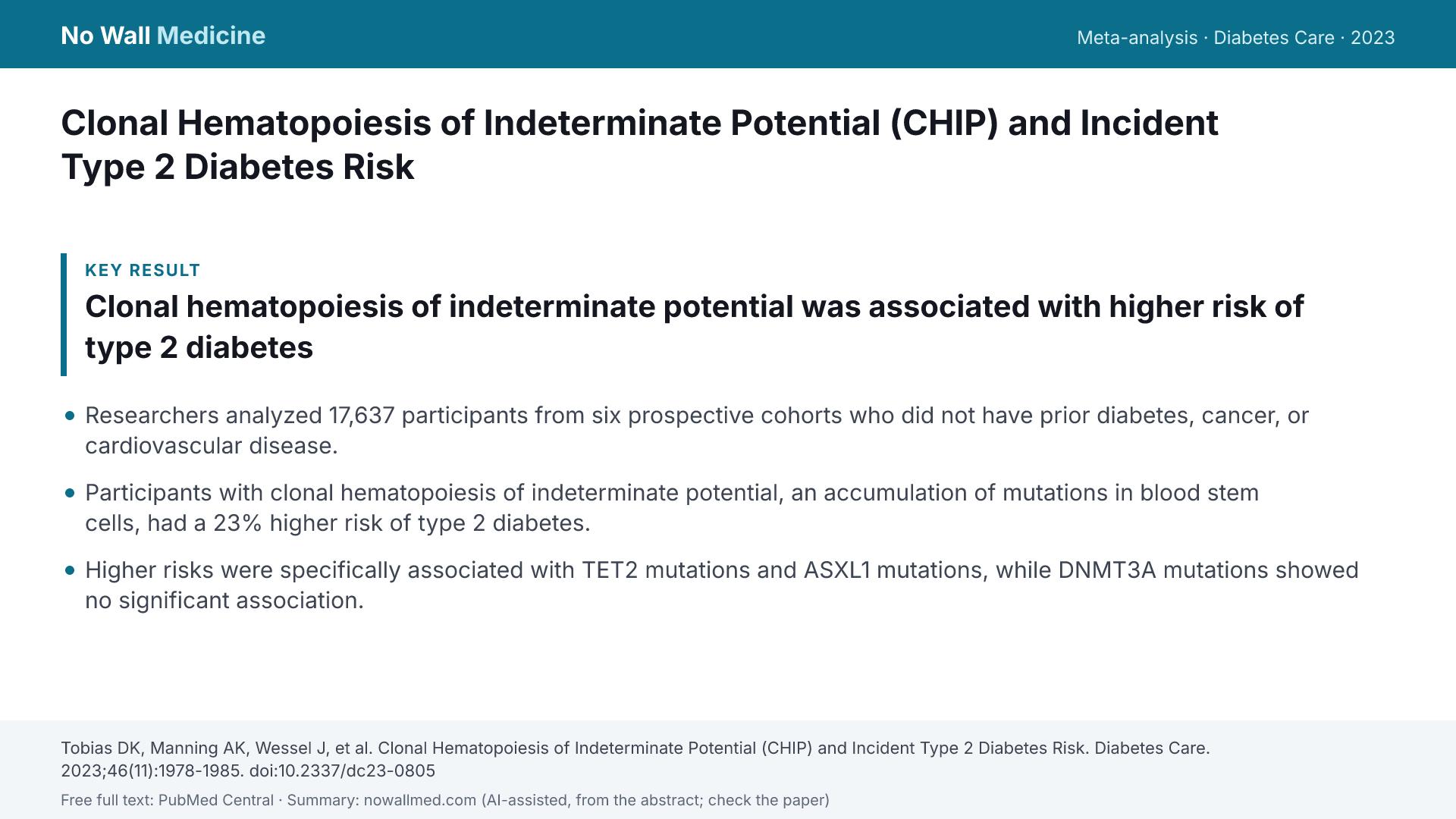
Clonal hematopoiesis of indeterminate potential was associated with higher risk of type 2 diabetes
Clonal Hematopoiesis of Indeterminate Potential (CHIP) and Incident Type 2 Diabetes Risk
Why it matters: The association between clonal hematopoiesis of indeterminate potential and the development of type 2 diabetes was unknown.
Key points
- Researchers analyzed 17,637 participants from six prospective cohorts who did not have prior diabetes, cancer, or cardiovascular disease.
- Participants with clonal hematopoiesis of indeterminate potential, an accumulation of mutations in blood stem cells, had a 23% higher risk of type 2 diabetes.
- Higher risks were specifically associated with TET2 mutations and ASXL1 mutations, while DNMT3A mutations showed no significant association.
Limitation the authors note: Statistical power was limited for JAK2 and TP53 analyses.
Headline and key points written with AI from the paper’s abstract, with every number checked against it. Read the paper before relying on them.
Was this summary helpful?
Subject terms
Cite this article
Tobias DK, Manning AK, Wessel J, Raghavan S, Westerman KE, Bick AG. Clonal Hematopoiesis of Indeterminate Potential (CHIP) and Incident Type 2 Diabetes Risk. Diabetes Care. 2023. doi:10.2337/dc23-0805
Spotted a mistake? Suggest a correction