Cognitive Behavioral Therapy and Lisdexamfetamine, Alone and Combined, for Binge-Eating Disorder With Obesity: A Randomized Controlled Trial
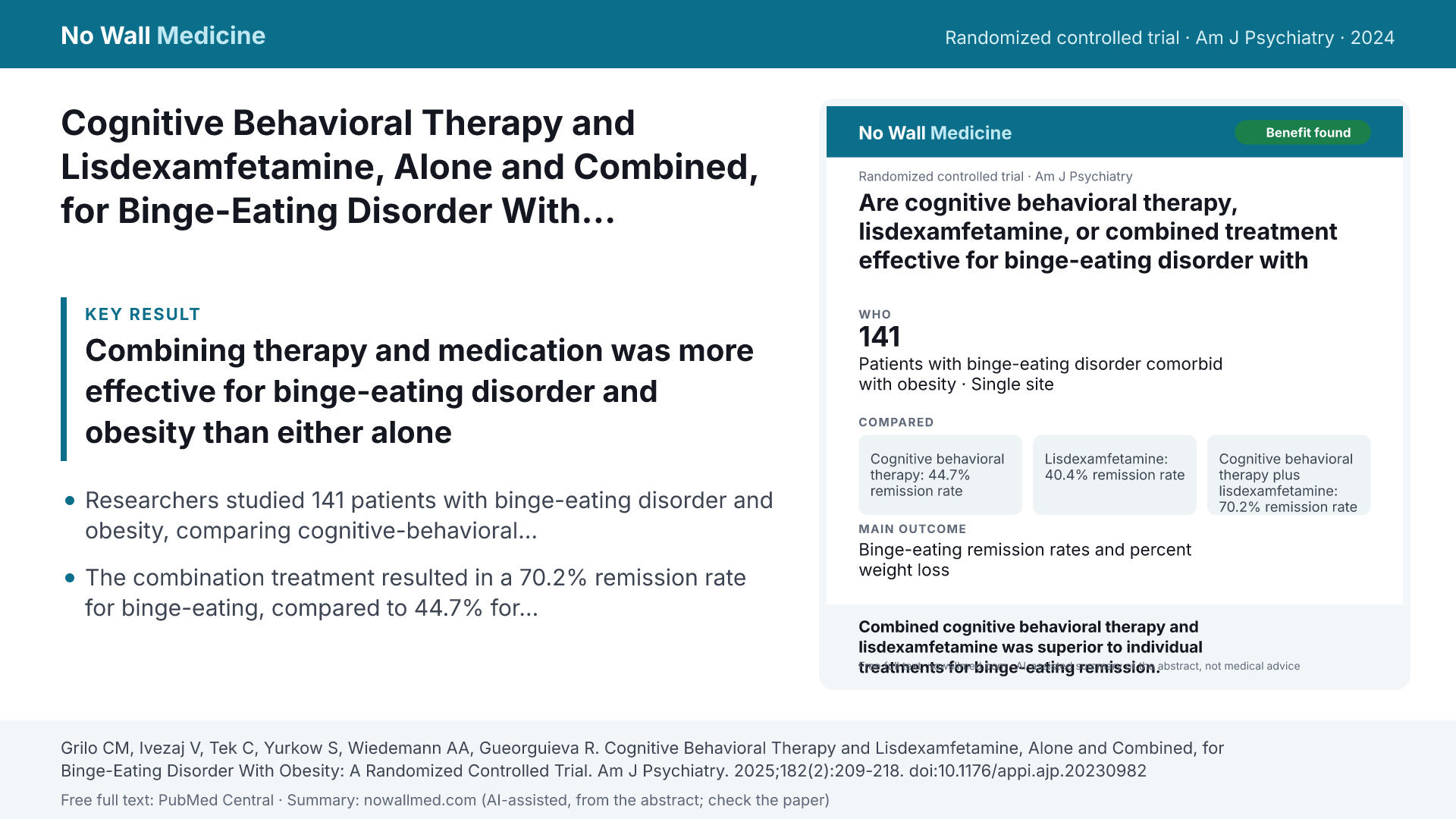
Key result: Combining therapy and medication was more effective for binge-eating disorder and obesity than either alone
Key points
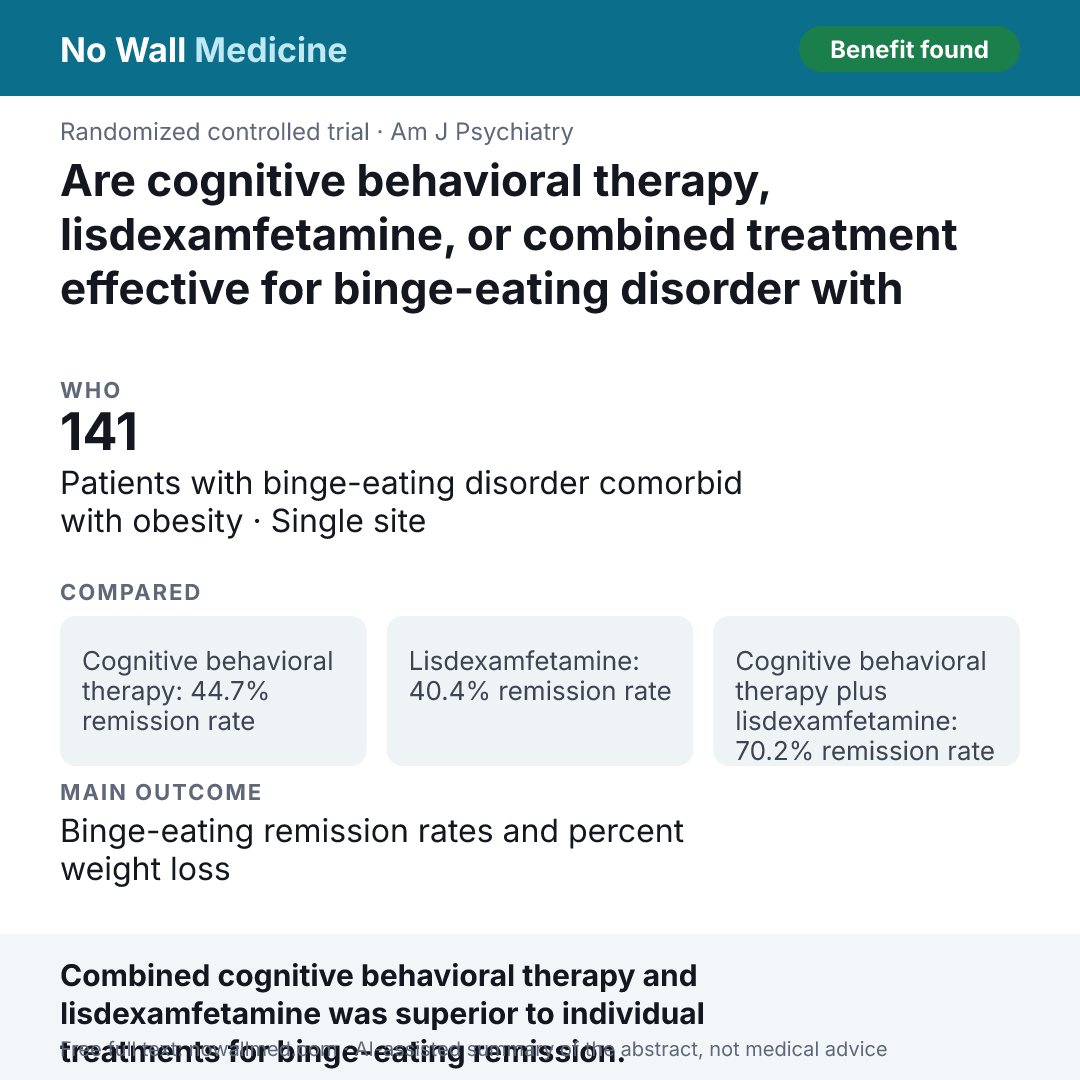
- Researchers studied 141 patients with binge-eating disorder and obesity, comparing cognitive-behavioral therapy, lisdexamfetamine, or a combination of both over 12 weeks.
- The combination treatment resulted in a 70.2% remission rate for binge-eating, compared to 44.7% for cognitive-behavioral therapy and 40.4% for lisdexamfetamine.
- While lisdexamfetamine and the combination therapy were associated with increased weight loss, lisdexamfetamine had the highest rate of achieving at least 5% weight loss at 53.2%.
Why it matters: Few evidence-based treatments are currently available for binge-eating disorder that is comorbid with obesity.
Discussion prompts
- Would these patients look like yours? Who was left out?
- Is the main outcome one that matters to patients?
- Is the difference large enough to change what you do?
Cite: Grilo CM, Ivezaj V, Tek C, Yurkow S, Wiedemann AA, Gueorguieva R. Cognitive Behavioral Therapy and Lisdexamfetamine, Alone and Combined, for Binge-Eating Disorder With Obesity: A Randomized Controlled Trial. Am J Psychiatry. 2025;182(2):209-218. doi:10.1176/appi.ajp.20230982
Free full text: PubMed Central · Summary and visual abstract: nowallmed.com/a/cognitive-behavioral-therapy-and-lisdexamfetamine-alone-and-combined-zewmdv/ (AI-assisted from the abstract; check the paper before relying on it).