Adding insomnia therapy to pain management did not further reduce pain intensity in spinal pain patients
Cognitive Behavioral Therapy for Insomnia in Pain Management for Nonspecific Chronic Spinal Pain: A Randomized Clinical Trial
Randomized clinical trialNo clear difference
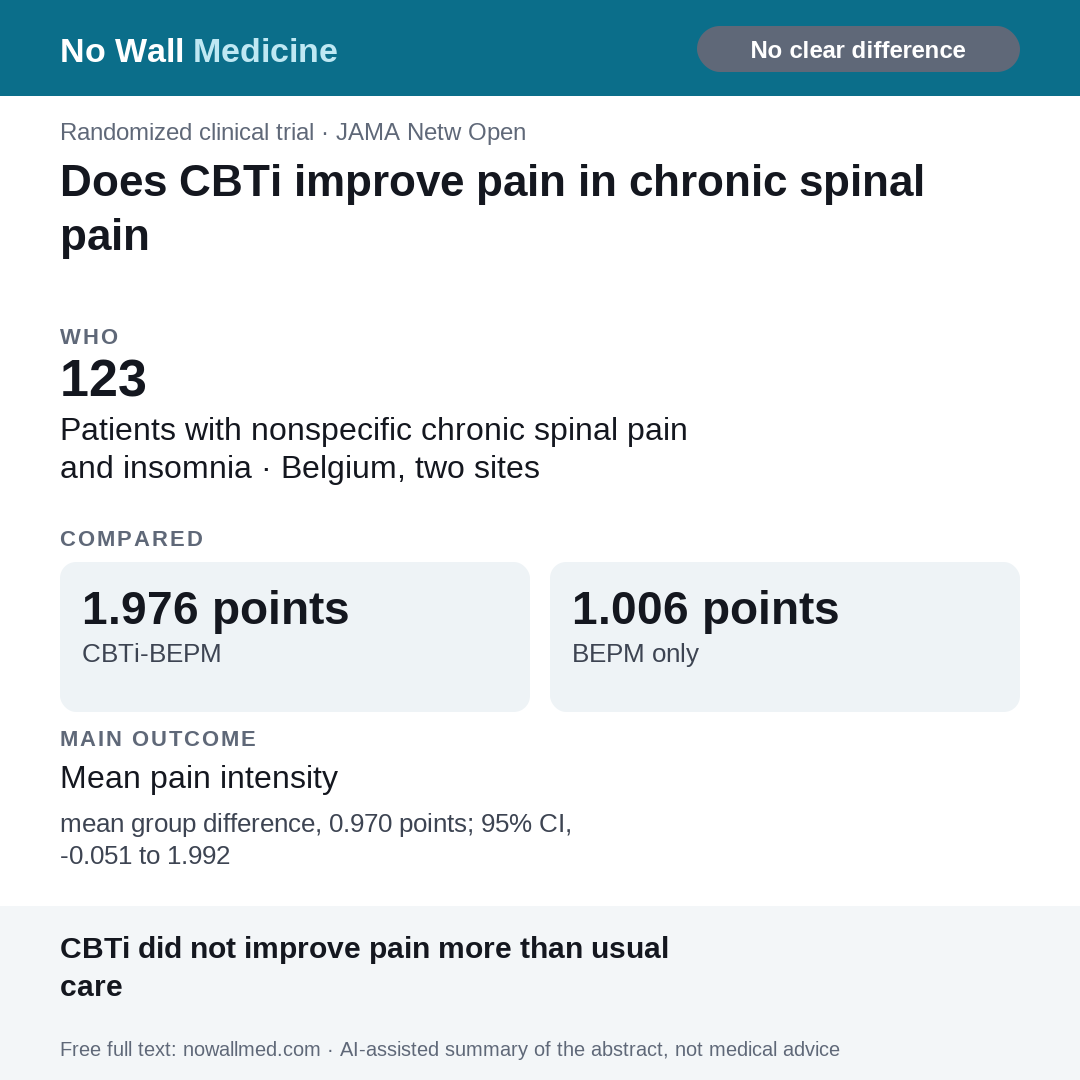
Does CBTi improve pain in chronic spinal pain
Who
123
Patients with nonspecific chronic spinal pain and insomnia · Belgium, two sites
Compared
1.976 pointsCBTi-BEPM
1.006 pointsBEPM only
Main outcome
Mean pain intensity
Result: mean group difference, 0.970 points; 95% CI, -0.051 to 1.992
Bottom line: CBTi did not improve pain more than usual care
JAMA Netw Open · 2024-08-01Download image
Why it matters: It is unknown whether adding cognitive behavioral therapy for insomnia to standard pain management improves pain outcomes for people with chronic spinal pain and sleep problems.
Key points
- Researchers studied 123 patients with nonspecific chronic spinal pain and insomnia, comparing best-evidence pain management alone to a program including cognitive behavioral therapy for insomnia.
- At 12 months, the group receiving both therapies saw a 1.976 point (40%) decrease in pain intensity, while the pain management only group saw a 1.006 point (24%) decrease.
- There was no significant difference in pain intensity change between the two groups, though the combined therapy was more effective for improving insomnia severity and sleep quality.
Headline and key points written with AI from the paper’s abstract, with every number checked against it. Read the paper before relying on them.
Was this summary helpful?
Subject terms
Cite this article
Malfliet A, De Baets L, Bilterys T, Van Looveren E, Mairesse O, Cagnie B. Cognitive Behavioral Therapy for Insomnia in Pain Management for Nonspecific Chronic Spinal Pain: A Randomized Clinical Trial. JAMA Netw Open. 2024. doi:10.1001/jamanetworkopen.2024.25856
Spotted a mistake? Suggest a correction
Top studies every Monday
The week’s key trials and guidelines in your specialties, plus any topics you follow. By email, free.
Get the weekly digest