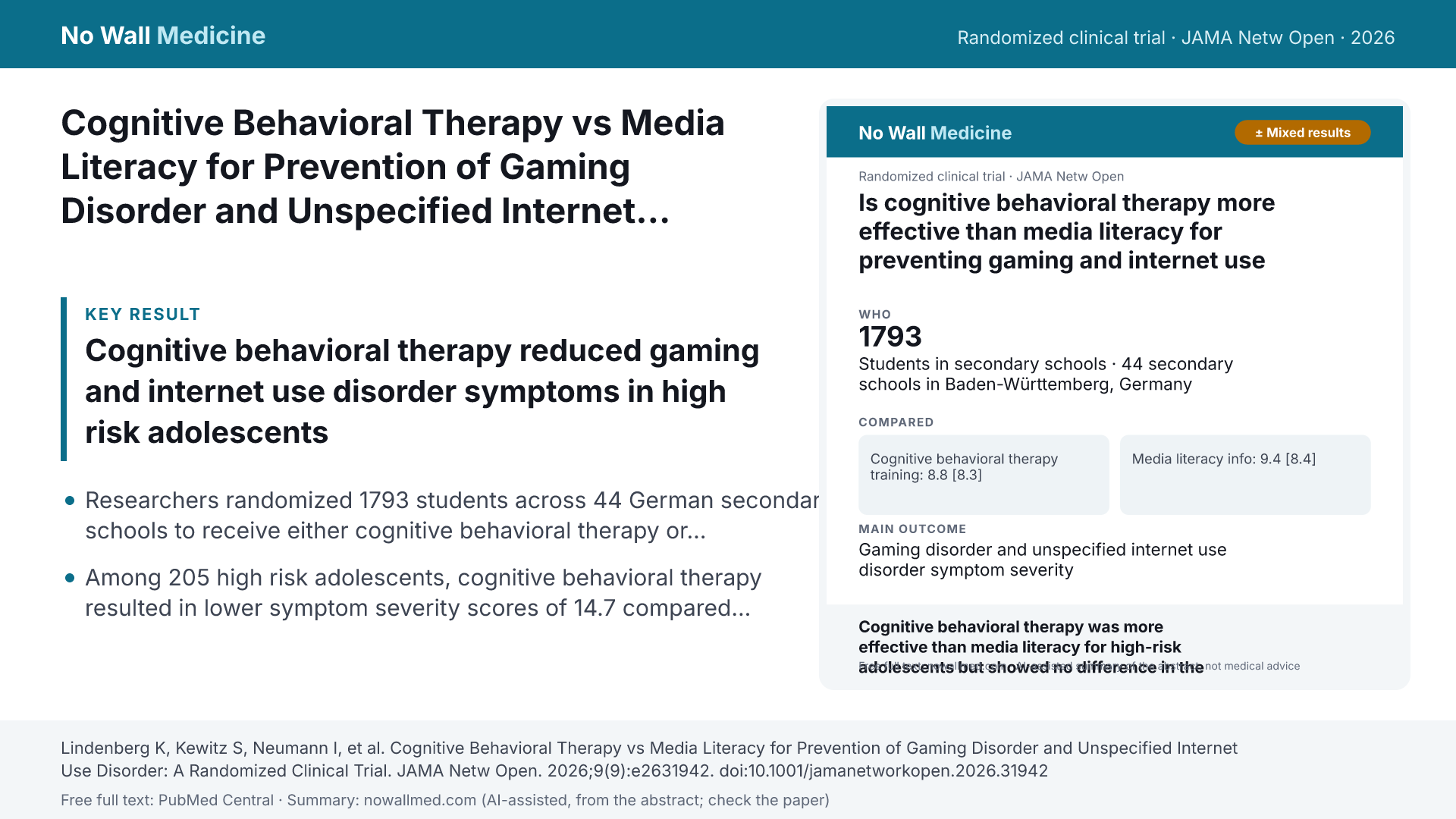
Cognitive behavioral therapy reduced gaming and internet use disorder symptoms in high risk adolescents
Cognitive Behavioral Therapy vs Media Literacy for Prevention of Gaming Disorder and Unspecified Internet Use Disorder: A Randomized Clinical Trial
Randomized clinical trialMixed results
Is cognitive behavioral therapy more effective than media literacy for preventing gaming and internet use disorders?
Who
1793
Students in secondary schools · 44 secondary schools in Baden-Württemberg, Germany
Compared
Cognitive behavioral therapy training: 8.8 [8.3]
Media literacy info: 9.4 [8.4]
Main outcome
Gaming disorder and unspecified internet use disorder symptom severity
Result: between-group Cohen d -0.07 (95% CI, -0.16 to 0.01)
Bottom line: Cognitive behavioral therapy was more effective than media literacy for high-risk adolescents but showed no difference in the total sample.
JAMA Netw Open · 2026-09-01 · Save PNG
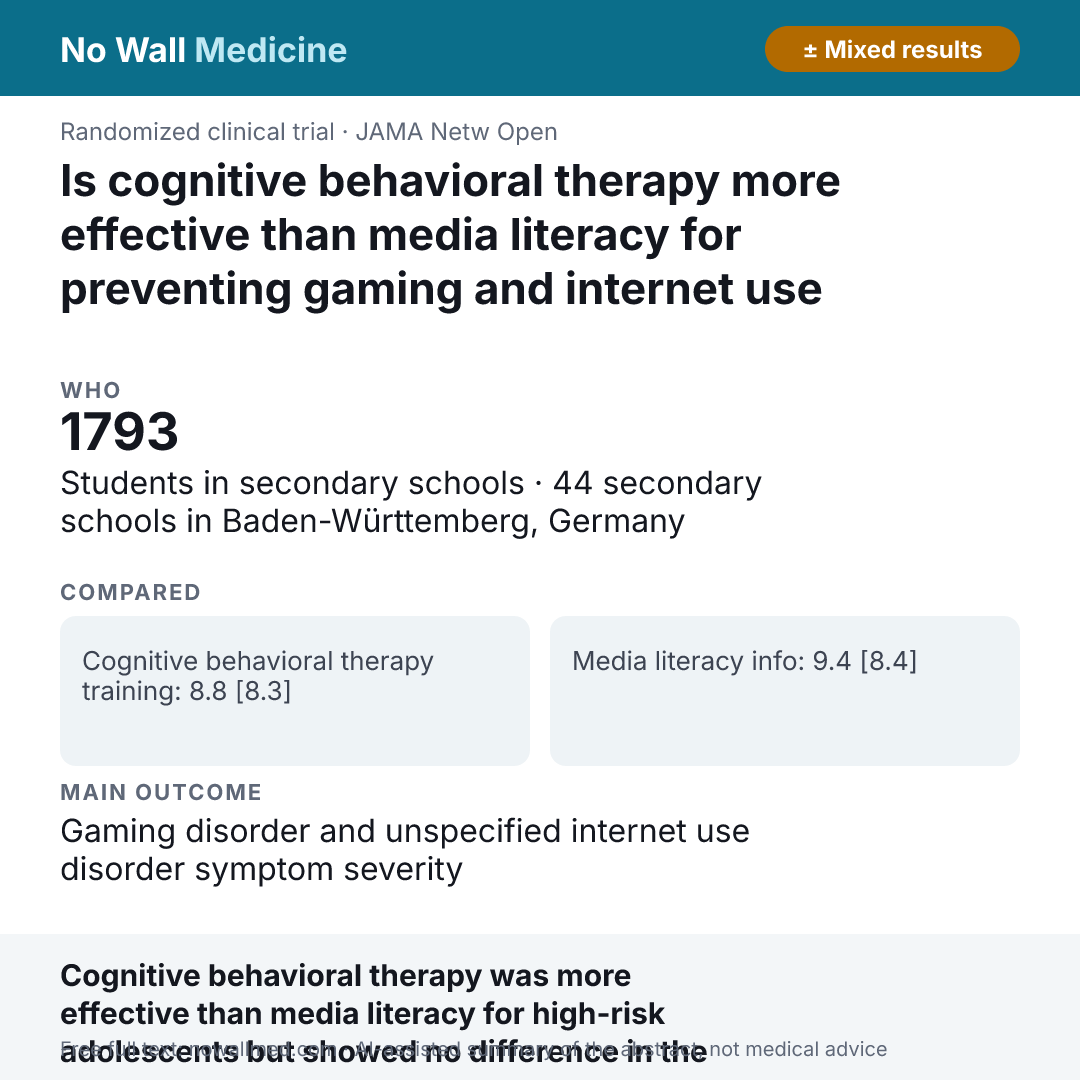
Clinical question: Is cognitive behavioral therapy more effective than media literacy for preventing gaming and internet use disorders?
Key points
- Researchers randomized 1793 students across 44 German secondary schools to receive either cognitive behavioral therapy or a media literacy program.
- Among 205 high risk adolescents, cognitive behavioral therapy resulted in lower symptom severity scores of 14.7 compared to 17.7 for media literacy.
- In the total sample of students, there was no significant difference in symptom severity between the cognitive behavioral therapy and media literacy groups.
Headline and key points written with AI from the paper’s abstract, with every number checked against it. Read the paper before relying on them.
Was this summary helpful?
Subject terms
Headline, design, result, key points, caveat and citation as plain text.
Cite this article
Lindenberg K, Kewitz S, Neumann I, et al. Cognitive Behavioral Therapy vs Media Literacy for Prevention of Gaming Disorder and Unspecified Internet Use Disorder: A Randomized Clinical Trial. JAMA Netw Open. 2026;9(9):e2631942. doi:10.1001/jamanetworkopen.2026.31942
Spotted a mistake? Suggest a correction