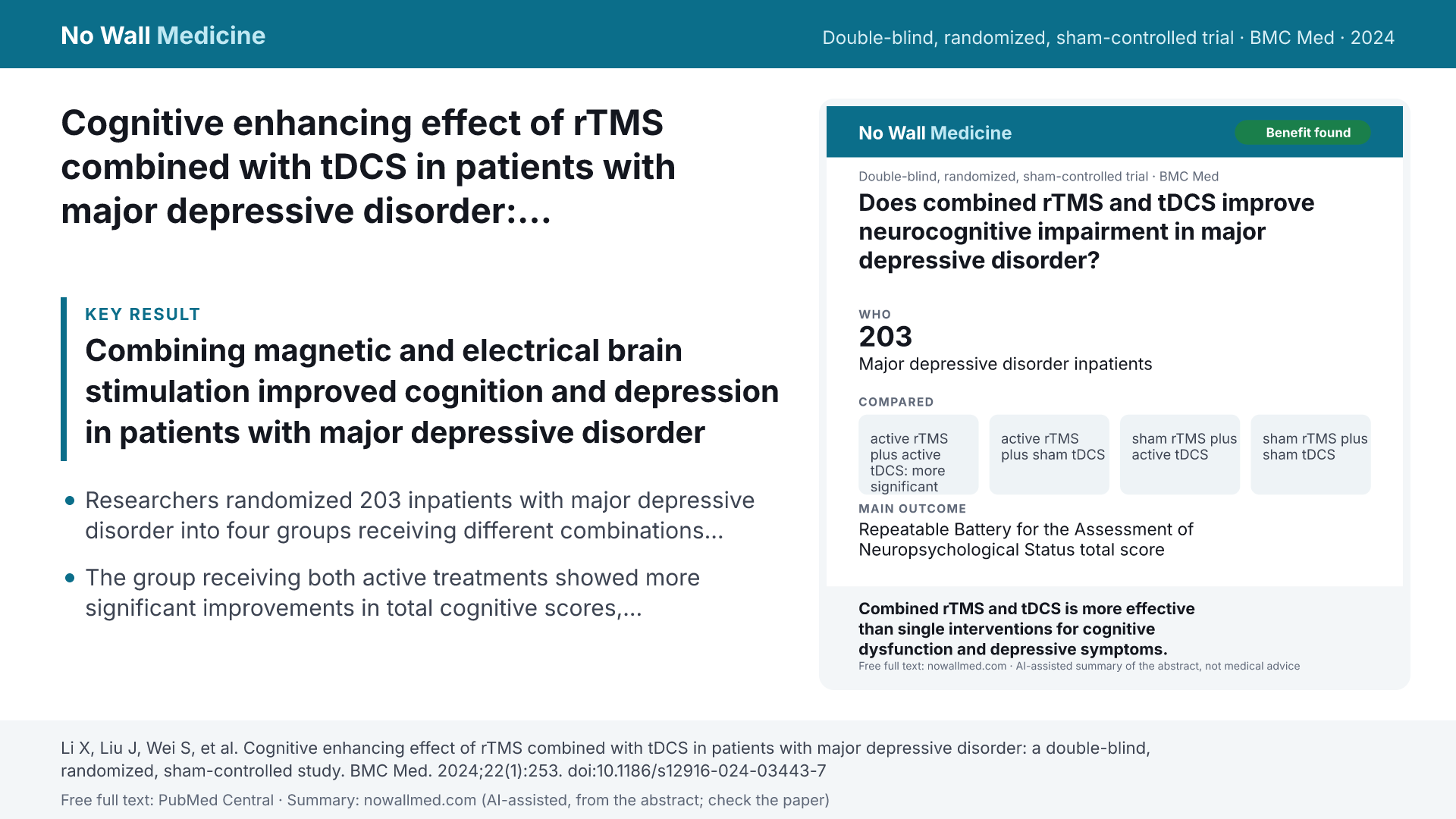
Combining magnetic and electrical brain stimulation improved cognition and depression in patients with major depressive disorder
Cognitive enhancing effect of rTMS combined with tDCS in patients with major depressive disorder: a double-blind, randomized, sham-controlled study
Double-blind, randomized, sham-controlled trialBenefit found
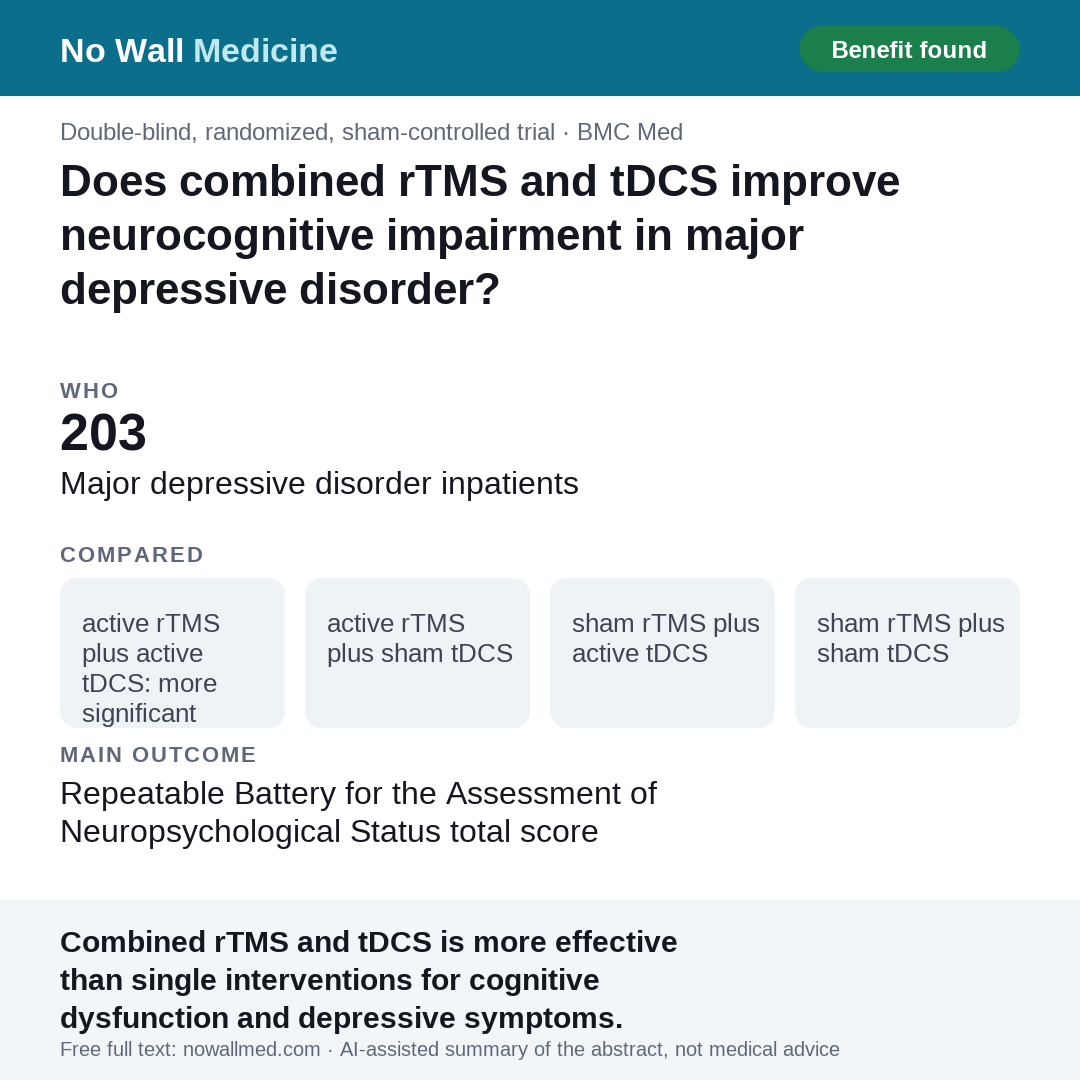
Does combined rTMS and tDCS improve neurocognitive impairment in major depressive disorder?
Who
203
Major depressive disorder inpatients
Compared
active rTMS plus active tDCS: more significant improvements in RBANS total score, immediate memory, and visuospatial/constructional index score
active rTMS plus sham tDCS
sham rTMS plus active tDCS
sham rTMS plus sham tDCS
Main outcome
Repeatable Battery for the Assessment of Neuropsychological Status total score
Bottom line: Combined rTMS and tDCS is more effective than single interventions for cognitive dysfunction and depressive symptoms.
BMC Med · 2024-06-20Download image
Clinical question: Does combined rTMS and tDCS improve neurocognitive impairment in major depressive disorder?
Why it matters: It was unknown if combining repetitive transcranial magnetic stimulation and transcranial direct current stimulation is more effective than using either method alone for cognitive dysfunction in major depressive disorder.
Key points
- Researchers randomized 203 inpatients with major depressive disorder into four groups receiving different combinations of repetitive transcranial magnetic stimulation and transcranial direct current stimulation.
- The group receiving both active treatments showed more significant improvements in total cognitive scores, immediate memory, and visuospatial/constructional index scores compared to other groups.
- The combined treatment group also showed a greater reduction in the 24-item Hamilton Depression Rating Scale total score and a better depression response rate.
Headline and key points written with AI from the paper’s abstract, with every number checked against it. Read the paper before relying on them.
Was this summary helpful?
Subject terms
Cite this article
Li X, Liu J, Wei S, Yu C, Wang D, Li Y. Cognitive enhancing effect of rTMS combined with tDCS in patients with major depressive disorder: a double-blind, randomized, sham-controlled study. BMC Med. 2024. doi:10.1186/s12916-024-03443-7
Spotted a mistake? Suggest a correction
Top studies every Monday
The week’s key trials and guidelines in your specialties, plus any topics you follow. By email, free.
Get the weekly digest