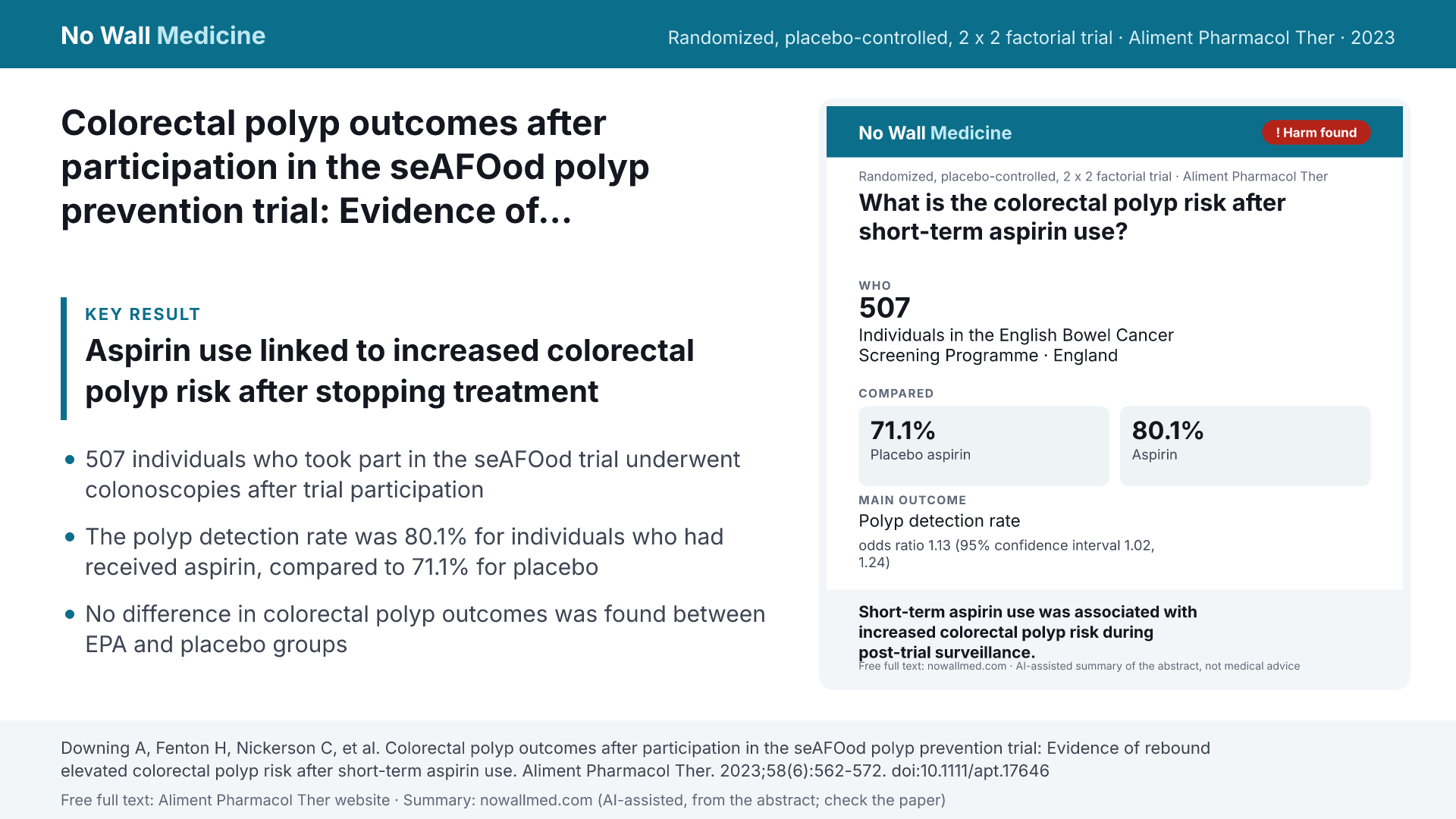
Aspirin use linked to increased colorectal polyp risk after stopping treatment
Colorectal polyp outcomes after participation in the seAFOod polyp prevention trial: Evidence of rebound elevated colorectal polyp risk after short-term aspirin use
Randomized, placebo-controlled, 2 x 2 factorial trialHarm found
What is the colorectal polyp risk after short-term aspirin use?
Who
507
Individuals in the English Bowel Cancer Screening Programme · England
Compared
71.1%Placebo aspirin
80.1%Aspirin
Main outcome
Polyp detection rate
Result: odds ratio 1.13 (95% confidence interval 1.02, 1.24)
Bottom line: Short-term aspirin use was associated with increased colorectal polyp risk during post-trial surveillance.
Aliment Pharmacol Ther · 2023-07-30Download image
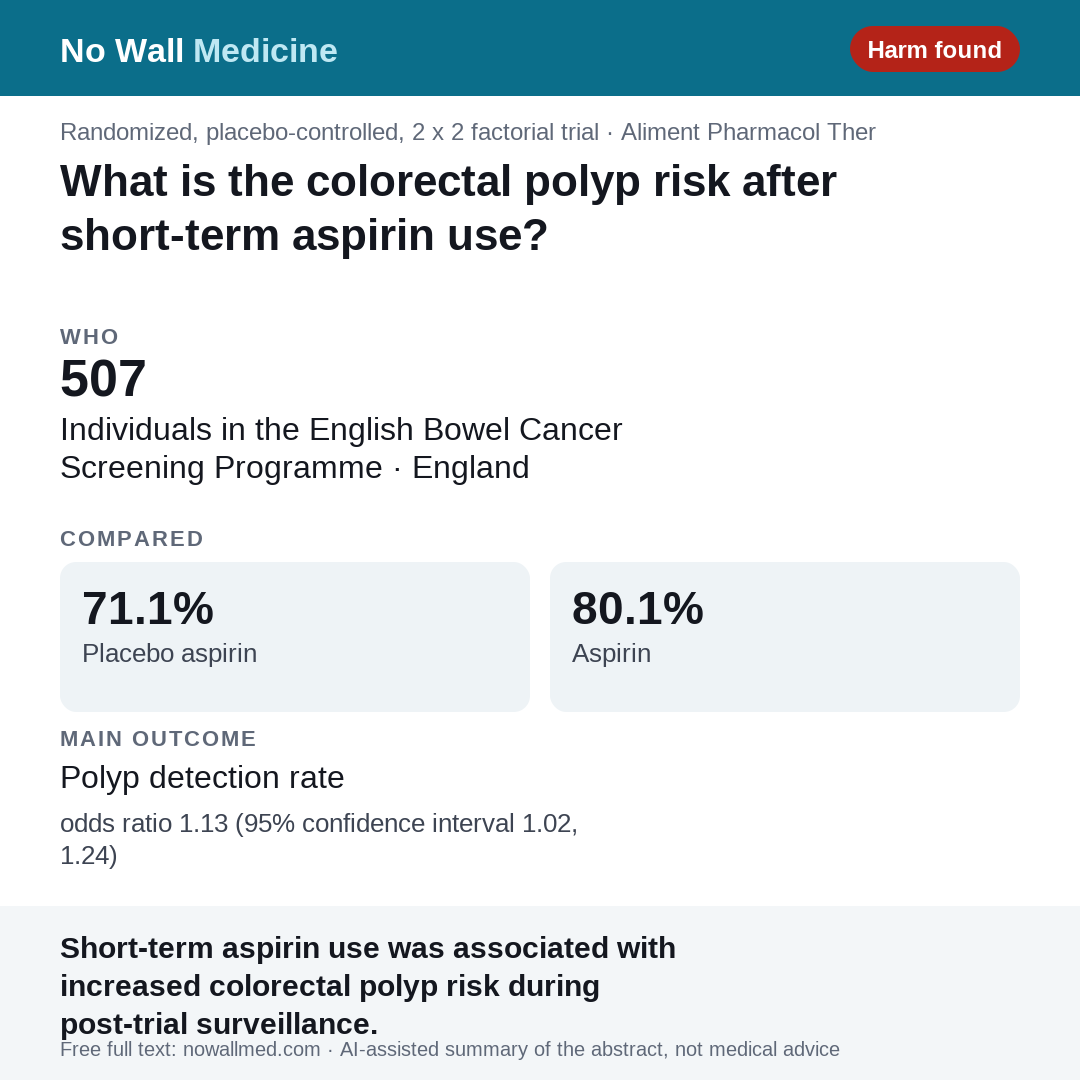
Clinical question: What is the colorectal polyp risk after short-term aspirin use?
In absolute numbers
Placebo aspirin: 71.1% · Aspirin: 80.1% → a difference of 9 percentage points, so about 12 people would receive it for 1 more to be harmed (number needed to harm) over the trial’s follow-up.
Worked out by us from the two group results above, not reported by the authors. Check the paper for the exact outcome and timing.
Key points
- 507 individuals who took part in the seAFOod trial underwent colonoscopies after trial participation.
- The polyp detection rate was 80.1% for individuals who had received aspirin, compared to 71.1% for placebo.
- No difference in colorectal polyp outcomes was found between EPA and placebo groups.
Headline and key points written with AI from the paper’s abstract, with every number checked against it. Read the paper before relying on them.
Was this summary helpful?
Subject terms
Cite this article
Downing A, Fenton H, Nickerson C, et al. Colorectal polyp outcomes after participation in the seAFOod polyp prevention trial: Evidence of rebound elevated colorectal polyp risk after short-term aspirin use. Aliment Pharmacol Ther. 2023. doi:10.1111/apt.17646
Spotted a mistake? Suggest a correction