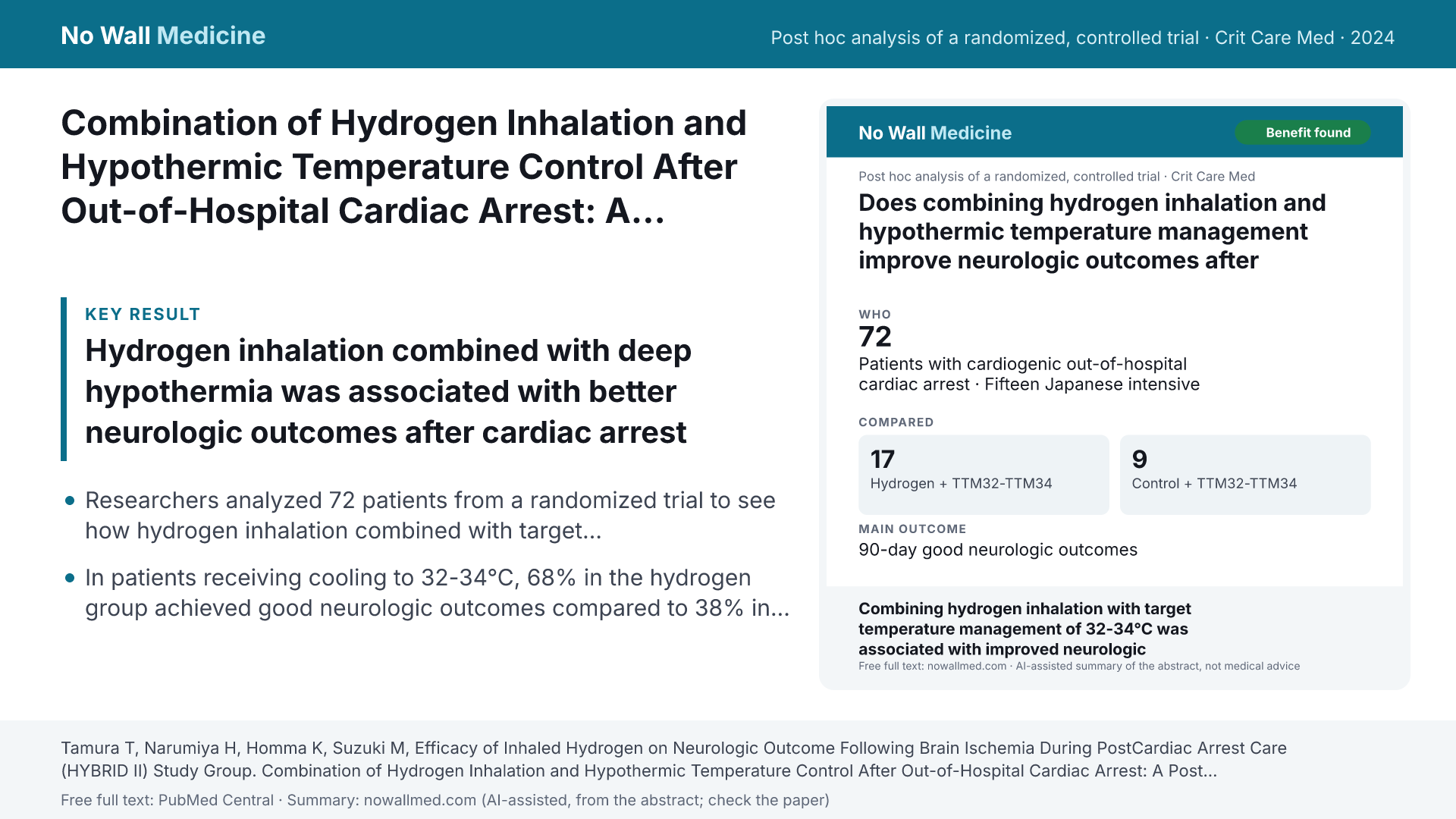
Hydrogen inhalation combined with deep hypothermia was associated with better neurologic outcomes after cardiac arrest
Combination of Hydrogen Inhalation and Hypothermic Temperature Control After Out-of-Hospital Cardiac Arrest: A Post hoc Analysis of the Efficacy of Inhaled Hydrogen on Neurologic Outcome Following Brain Ischemia During PostCardiac Arrest Care II Trial
Post hoc analysis of a randomized, controlled trialBenefit found
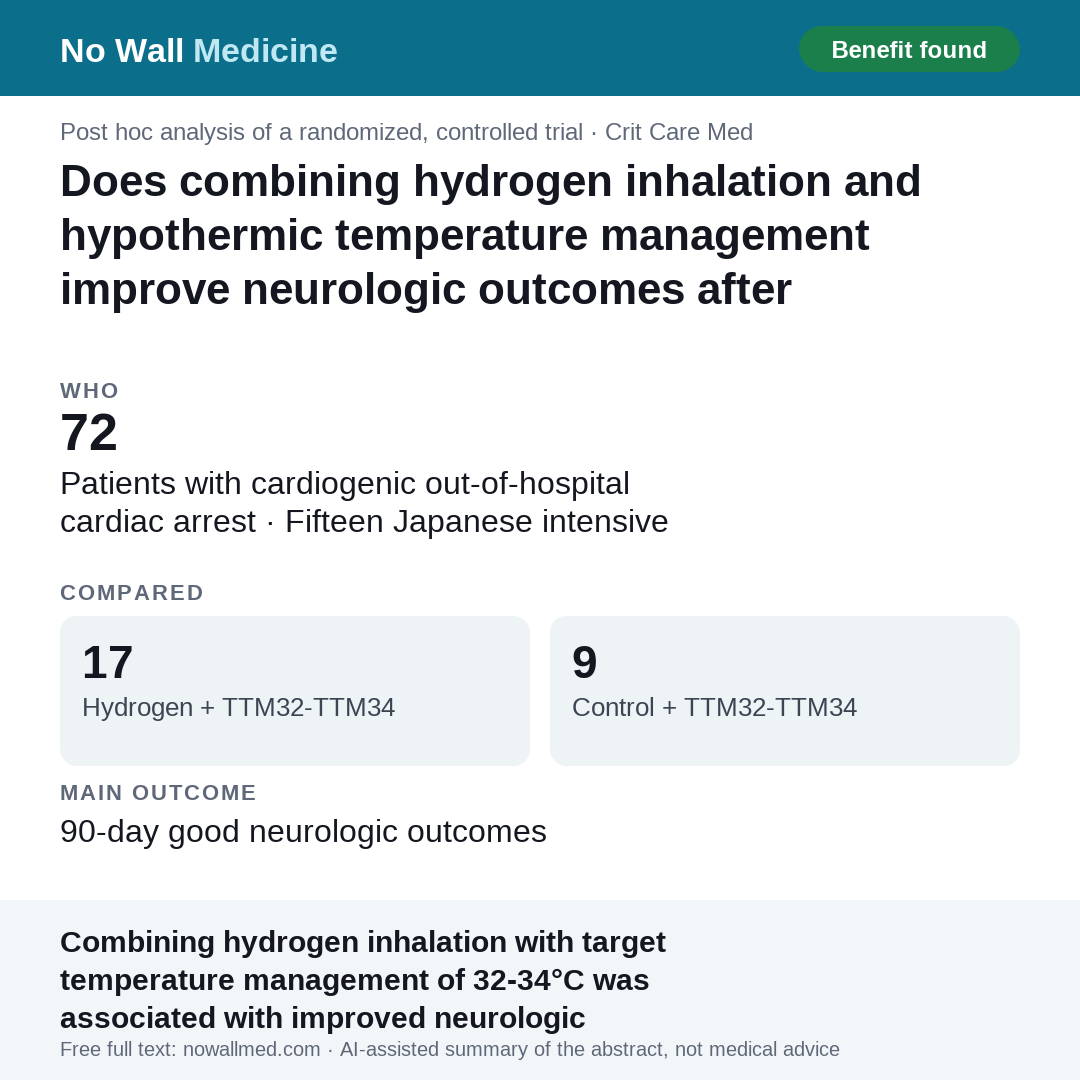
Does combining hydrogen inhalation and hypothermic temperature management improve neurologic outcomes after cardiac arrest?
Who
72
Patients with cardiogenic out-of-hospital cardiac arrest · Fifteen Japanese intensive care units
Compared
17Hydrogen + TTM32-TTM34 (68%)
9Control + TTM32-TTM34 (38%)
Main outcome
90-day good neurologic outcomes
Result: relative risk: 1.81 (95% CI 1.05-3.66)
Bottom line: Combining hydrogen inhalation with target temperature management of 32-34°C was associated with improved neurologic outcomes.
Crit Care Med · 2024-08-12Download image
Clinical question: Does combining hydrogen inhalation and hypothermic temperature management improve neurologic outcomes after cardiac arrest?
Why it matters: It was unclear how combining hydrogen inhalation with different levels of hypothermic target temperature management affects outcomes after out-of-hospital cardiac arrest.
Key points
- Researchers analyzed 72 patients from a randomized trial to see how hydrogen inhalation combined with target temperature management, or controlled cooling, affected outcomes.
- In patients receiving cooling to 32-34°C, 68% in the hydrogen group achieved good neurologic outcomes compared to 38% in the control group.
- The combination of hydrogen and cooling to 32-34°C was not associated with improved survival compared to cooling alone.
Headline and key points written with AI from the paper’s abstract, with every number checked against it. Read the paper before relying on them.
Was this summary helpful?
Subject terms
Cite this article
Tamura T, Narumiya H, Homma K, Suzuki M, Efficacy of Inhaled Hydrogen on Neurologic Outcome Following Brain Ischemia During PostCardiac Arrest Care (HYBRID II) Study Group. Combination of Hydrogen Inhalation and Hypothermic Temperature Control After Out-of-Hospital Cardiac Arrest: A Post hoc Analysis of the Efficacy of Inhaled Hydrogen on Neurologic Outcome Following Brain Ischemia During PostCardiac Arrest Care II Trial. Crit Care Med. 2024. doi:10.1097/CCM.0000000000006395
Spotted a mistake? Suggest a correction
Top studies every Monday
The week’s key trials and guidelines in your specialties, plus any topics you follow. By email, free.
Get the weekly digest