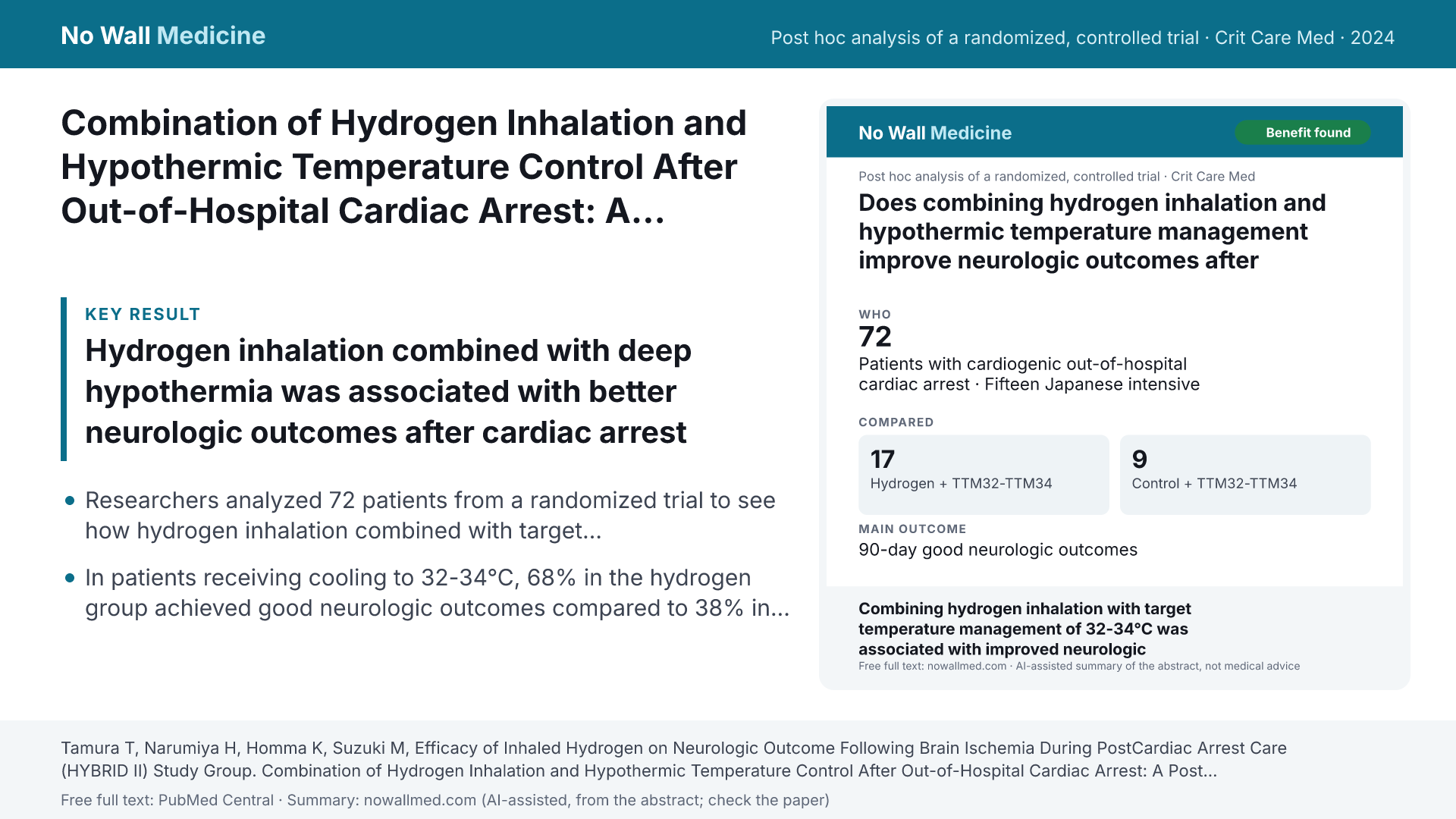
Combination of Hydrogen Inhalation and Hypothermic Temperature Control After Out-of-Hospital Cardiac Arrest: A Post hoc Analysis of the Efficacy of Inhaled Hydrogen on Neurologic Outcome Following Brain Ischemia During PostCardiac Arrest Care II Trial
Key result: Hydrogen inhalation combined with deep hypothermia was associated with better neurologic outcomes after cardiac arrest
Key points
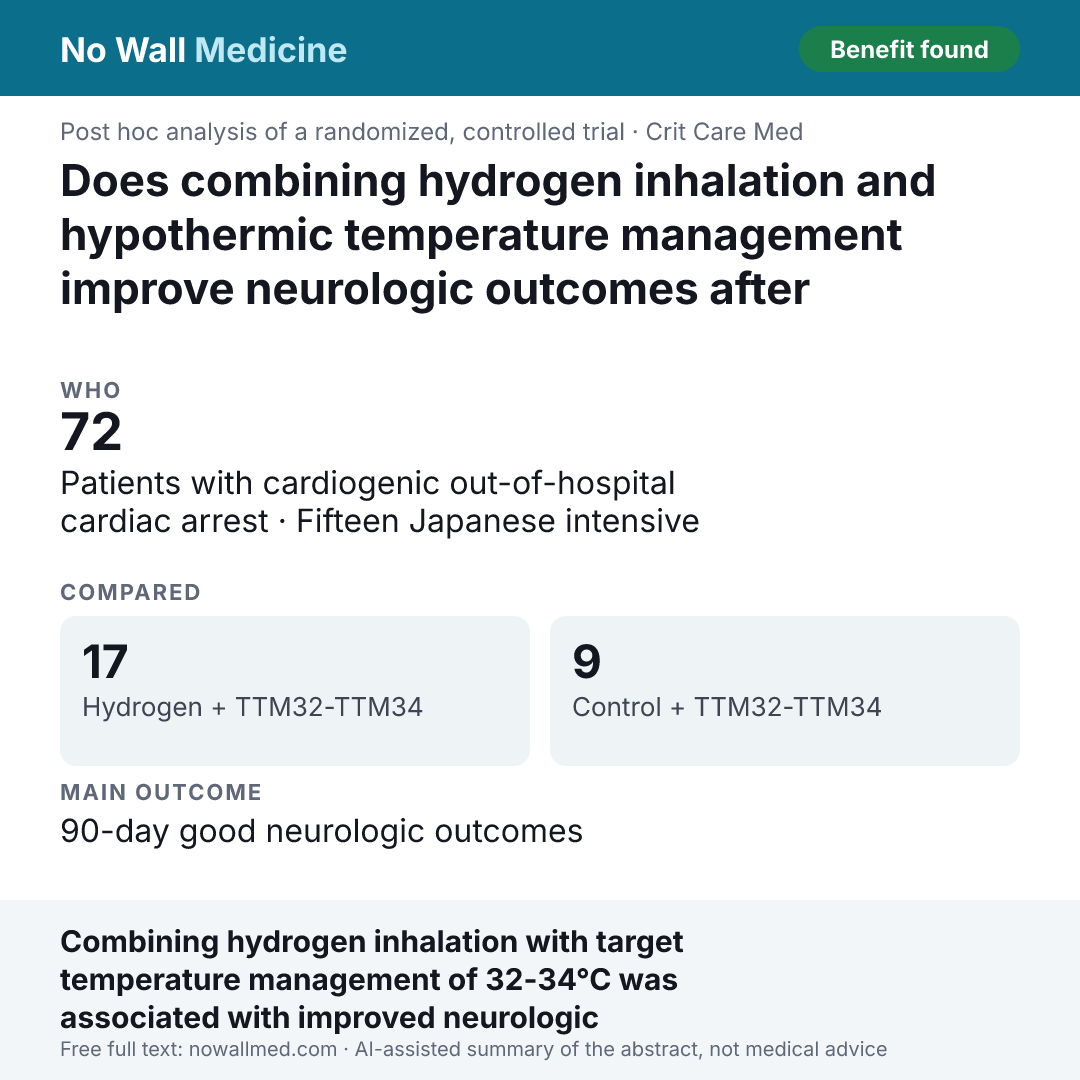
- Researchers analyzed 72 patients from a randomized trial to see how hydrogen inhalation combined with target temperature management, or controlled cooling, affected outcomes.
- In patients receiving cooling to 32-34°C, 68% in the hydrogen group achieved good neurologic outcomes compared to 38% in the control group.
- The combination of hydrogen and cooling to 32-34°C was not associated with improved survival compared to cooling alone.
Discussion prompts
- Would these patients look like yours? Who was left out?
- Is the main outcome one that matters to patients?
- Is the difference large enough to change what you do?
Cite: Tamura T, Narumiya H, Homma K, Suzuki M, Efficacy of Inhaled Hydrogen on Neurologic Outcome Following Brain Ischemia During PostCardiac Arrest Care (HYBRID II) Study Group. Combination of Hydrogen Inhalation and Hypothermic Temperature Control After Out-of-Hospital Cardiac Arrest: A Post hoc Analysis of the Efficacy of Inhaled Hydrogen on Neurologic Outcome Following Brain Ischemia During PostCardiac Arrest Care II Trial. Crit Care Med. 2024;52(10):1567-1576. doi:10.1097/CCM.0000000000006395
Free full text: PubMed Central · Summary and visual abstract: nowallmed.com/a/combination-of-hydrogen-inhalation-and-hypothermic-temperature-87sxag/ (AI-assisted from the abstract; check the paper before relying on it).