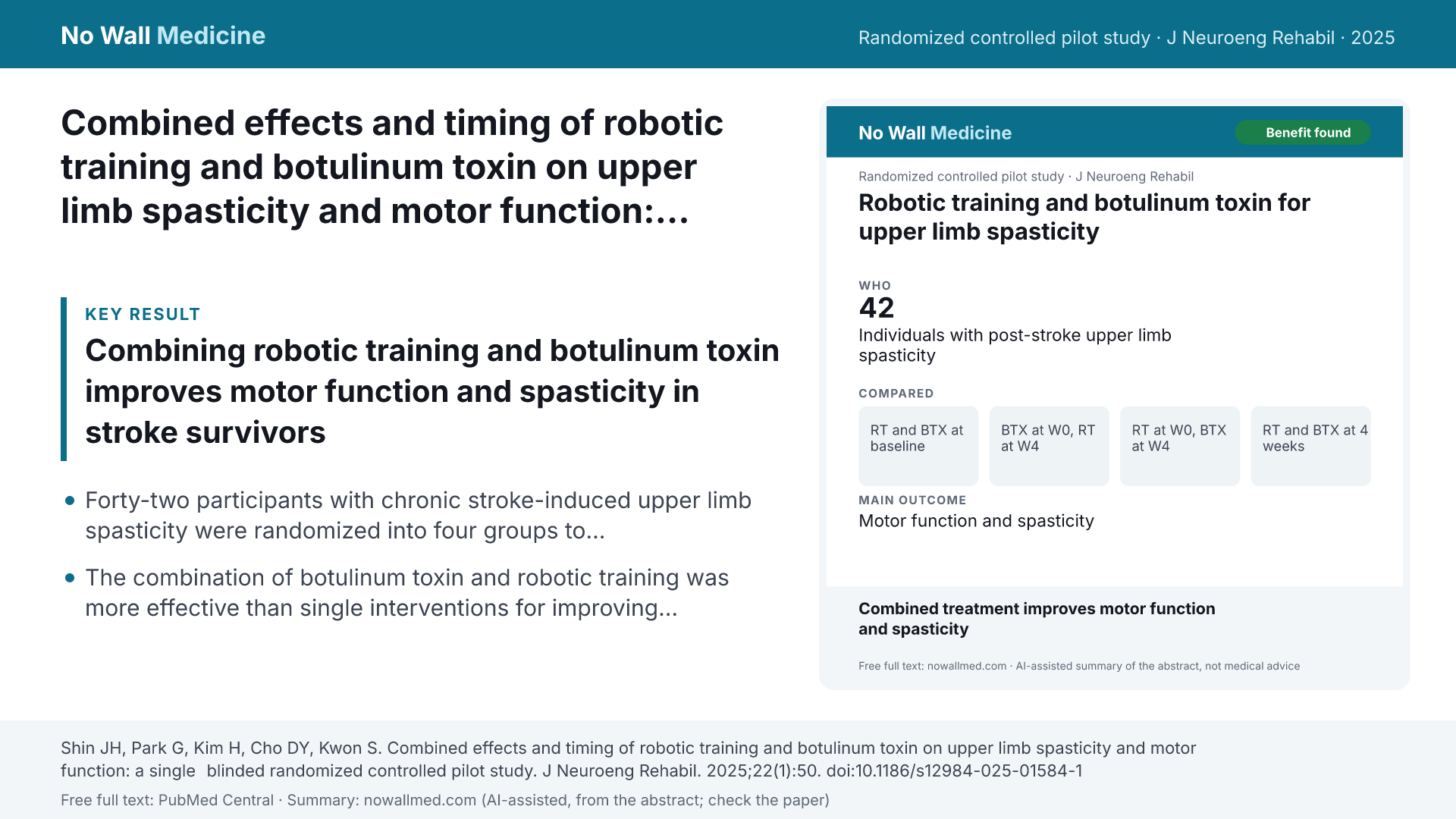
Combining robotic training and botulinum toxin improves motor function and spasticity in stroke survivors
Combined effects and timing of robotic training and botulinum toxin on upper limb spasticity and motor function: a single‑blinded randomized controlled pilot study
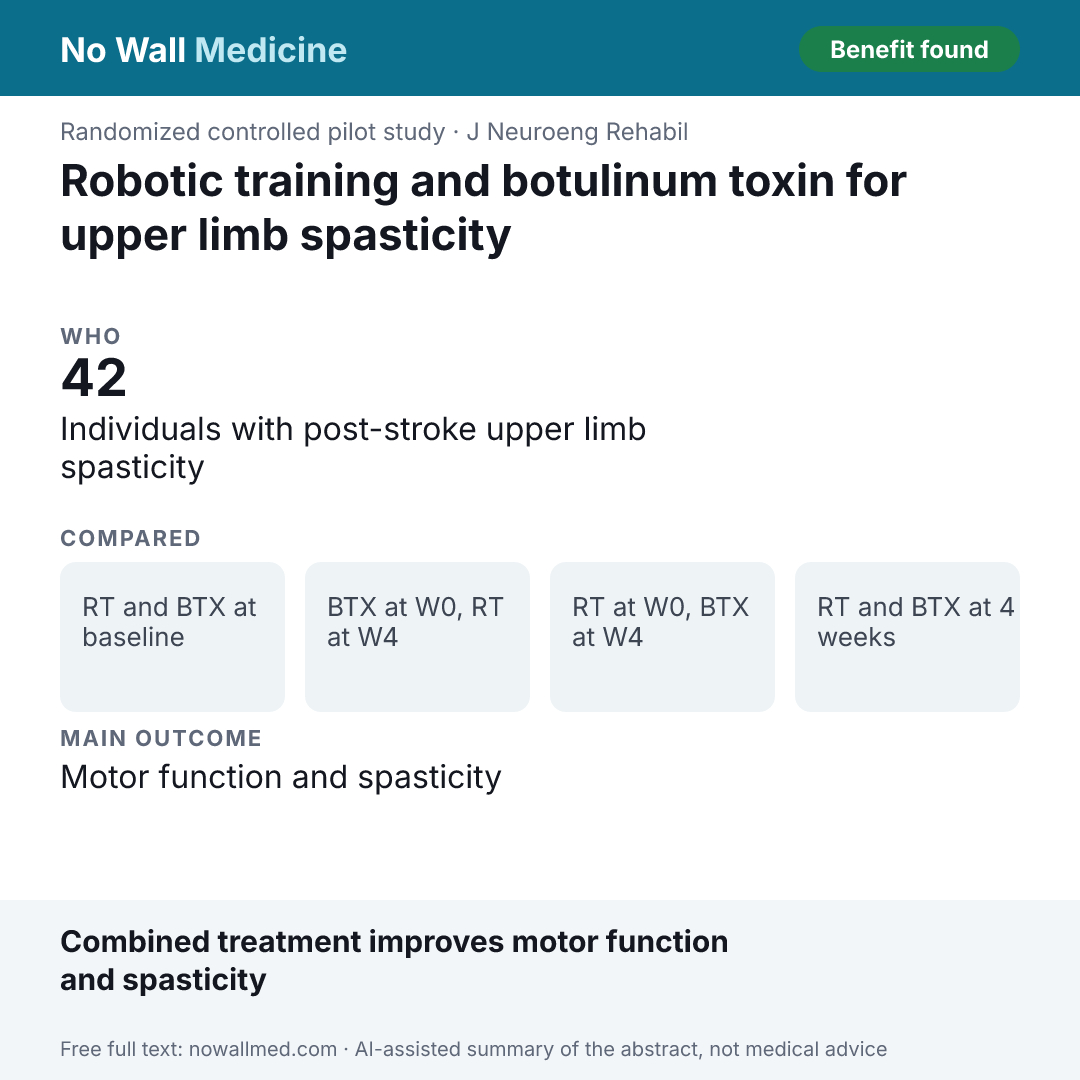
Randomized controlled pilot studyBenefit found
Robotic training and botulinum toxin for upper limb spasticity
Who
42
Individuals with post-stroke upper limb spasticity
Compared
RT and BTX at baseline
BTX at W0, RT at W4
RT at W0, BTX at W4
RT and BTX at 4 weeks
Main outcome
Motor function and spasticity
Bottom line: Combined treatment improves motor function and spasticity
J Neuroeng Rehabil · 2025-03-06 · Save PNG
Key points
- Forty-two participants with chronic stroke-induced upper limb spasticity were randomized into four groups to compare different timings of robotic training and botulinum toxin injections.
- The combination of botulinum toxin and robotic training was more effective than single interventions for improving motor function and reducing muscle stiffness.
- Starting robotic training 4 weeks after botulinum toxin injections resulted in the most substantial improvements in Fugl-Meyer assessment scores and movement kinematics.
Headline and key points written with AI from the paper’s abstract, with every number checked against it. Read the paper before relying on them.
Was this summary helpful?
Subject terms
Headline, design, result, key points, caveat and citation as plain text.
Cite this article
Shin JH, Park G, Kim H, Cho DY, Kwon S. Combined effects and timing of robotic training and botulinum toxin on upper limb spasticity and motor function: a single‑blinded randomized controlled pilot study. J Neuroeng Rehabil. 2025;22(1):50. doi:10.1186/s12984-025-01584-1
Spotted a mistake? Suggest a correction