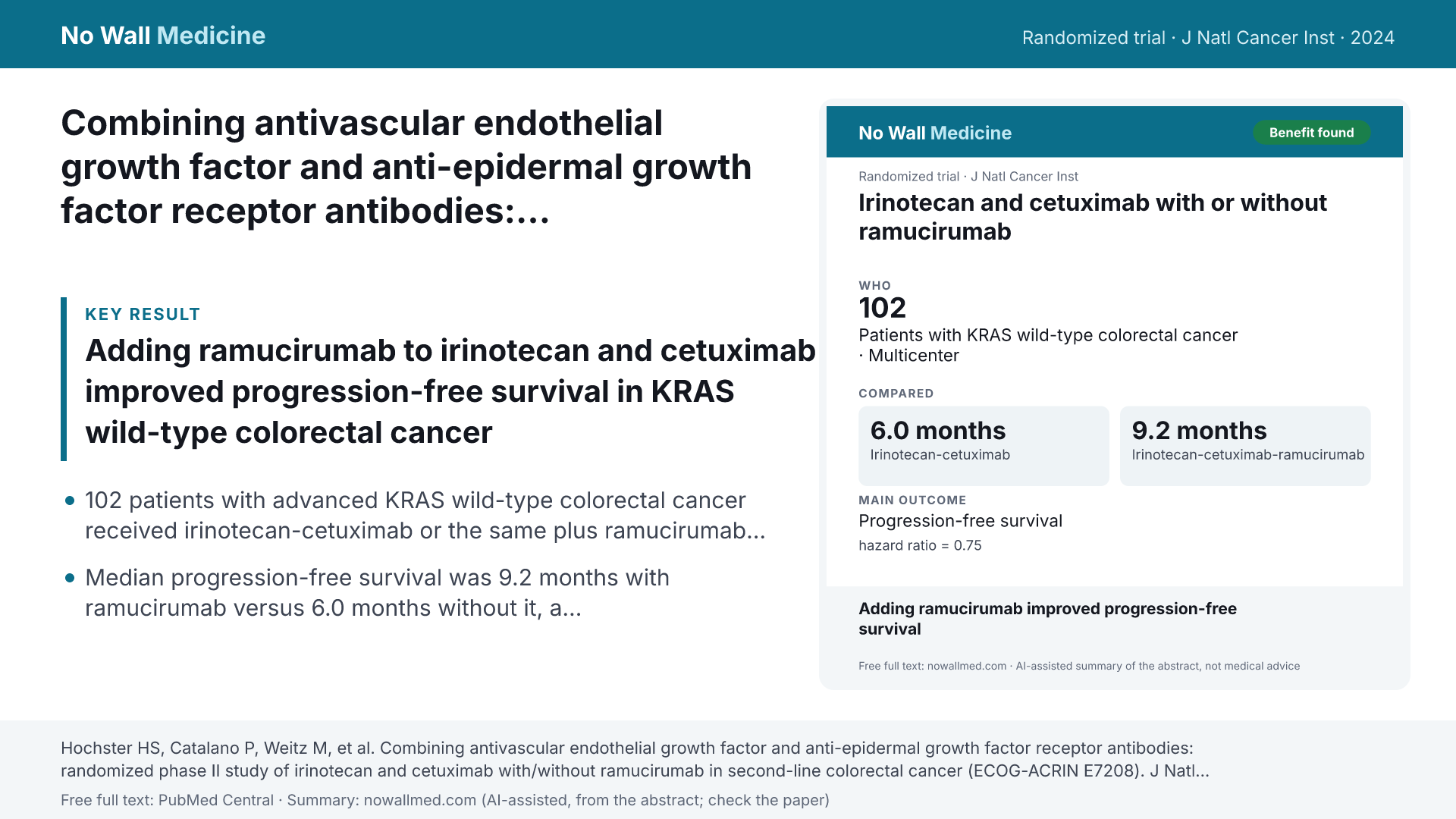
Adding ramucirumab to irinotecan and cetuximab improved progression-free survival in second-line colorectal cancer
Combining antivascular endothelial growth factor and anti-epidermal growth factor receptor antibodies: randomized phase II study of irinotecan and cetuximab with/without ramucirumab in second-line colorectal cancer (ECOG-ACRIN E7208)
Randomized trialBenefit found
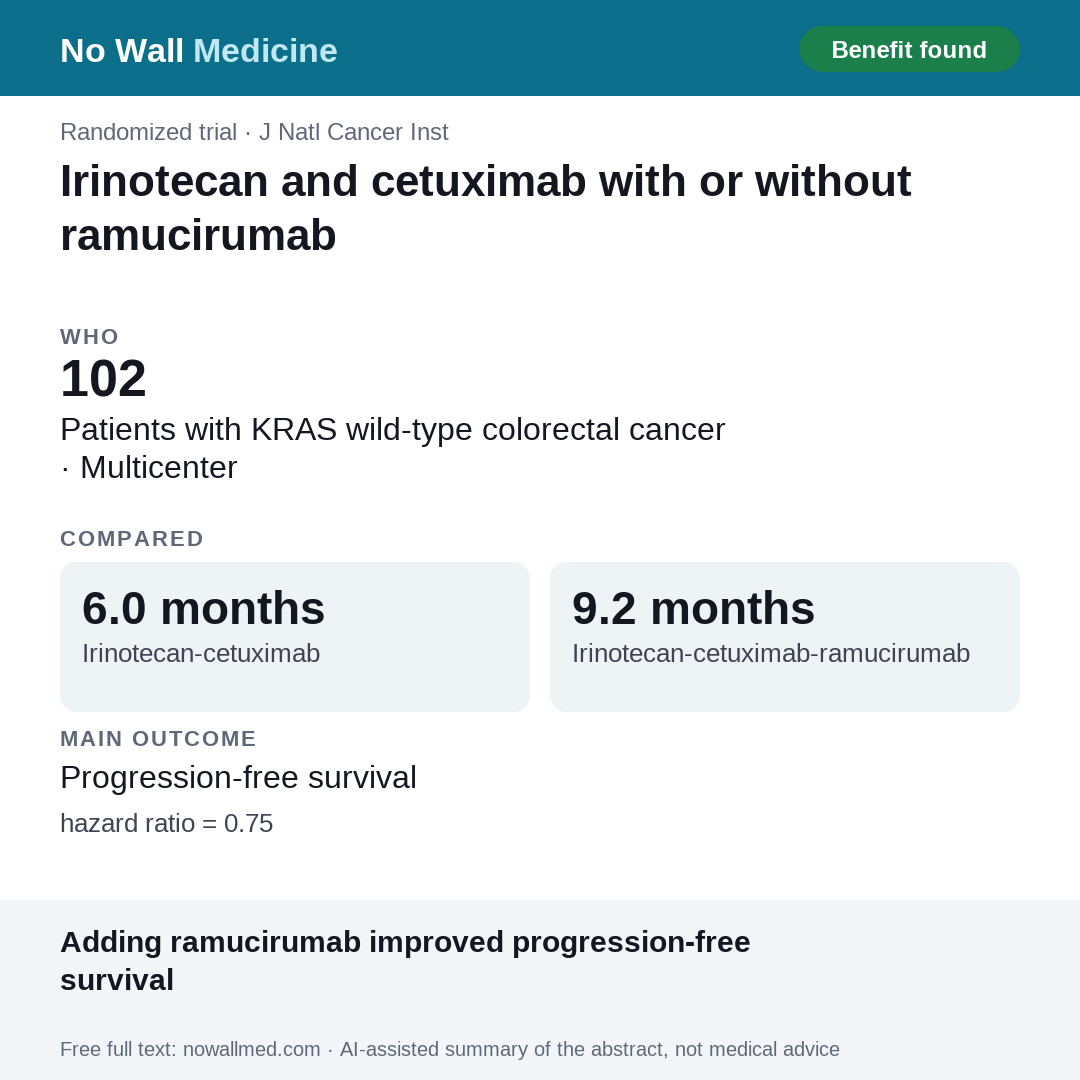
Irinotecan and cetuximab with or without ramucirumab
Who
102
Patients with KRAS wild-type colorectal cancer · Multicenter
Compared
6.0 monthsIrinotecan-cetuximab
9.2 monthsIrinotecan-cetuximab-ramucirumab
Main outcome
Progression-free survival
Result: hazard ratio = 0.75
Bottom line: Adding ramucirumab improved progression-free survival
J Natl Cancer Inst · 2024-05-22Download image
Why it matters: It was unknown if combining anti-epidermal growth factor receptor and anti-vascular endothelial growth factor antibodies is effective for KRAS wild-type colorectal cancer patients.
Key points
- Researchers studied 102 patients with KRAS wild-type colorectal cancer who had previously received fluoropyrimidine, oxaliplatin, and bevacizumab.
- The addition of ramucirumab to irinotecan and cetuximab resulted in a median progression-free survival of 9.2 months compared to 6.0 months.
- The disease-control rate was 73% with ramucirumab versus 52% without it, while grade 3 or higher toxicity was equivalent between groups.
Headline and key points written with AI from the paper’s abstract, with every number checked against it. Read the paper before relying on them.
Was this summary helpful?
Subject terms
Cite this article
Hochster HS, Catalano P, Weitz M, Mitchell EP, Cohen D, O'Dwyer PJ. Combining antivascular endothelial growth factor and anti-epidermal growth factor receptor antibodies: randomized phase II study of irinotecan and cetuximab with/without ramucirumab in second-line colorectal cancer (ECOG-ACRIN E7208). J Natl Cancer Inst. 2024. doi:10.1093/jnci/djae114
Spotted a mistake? Suggest a correction
Top studies every Monday
The week’s key trials and guidelines in your specialties, plus any topics you follow. By email, free.
Get the weekly digest