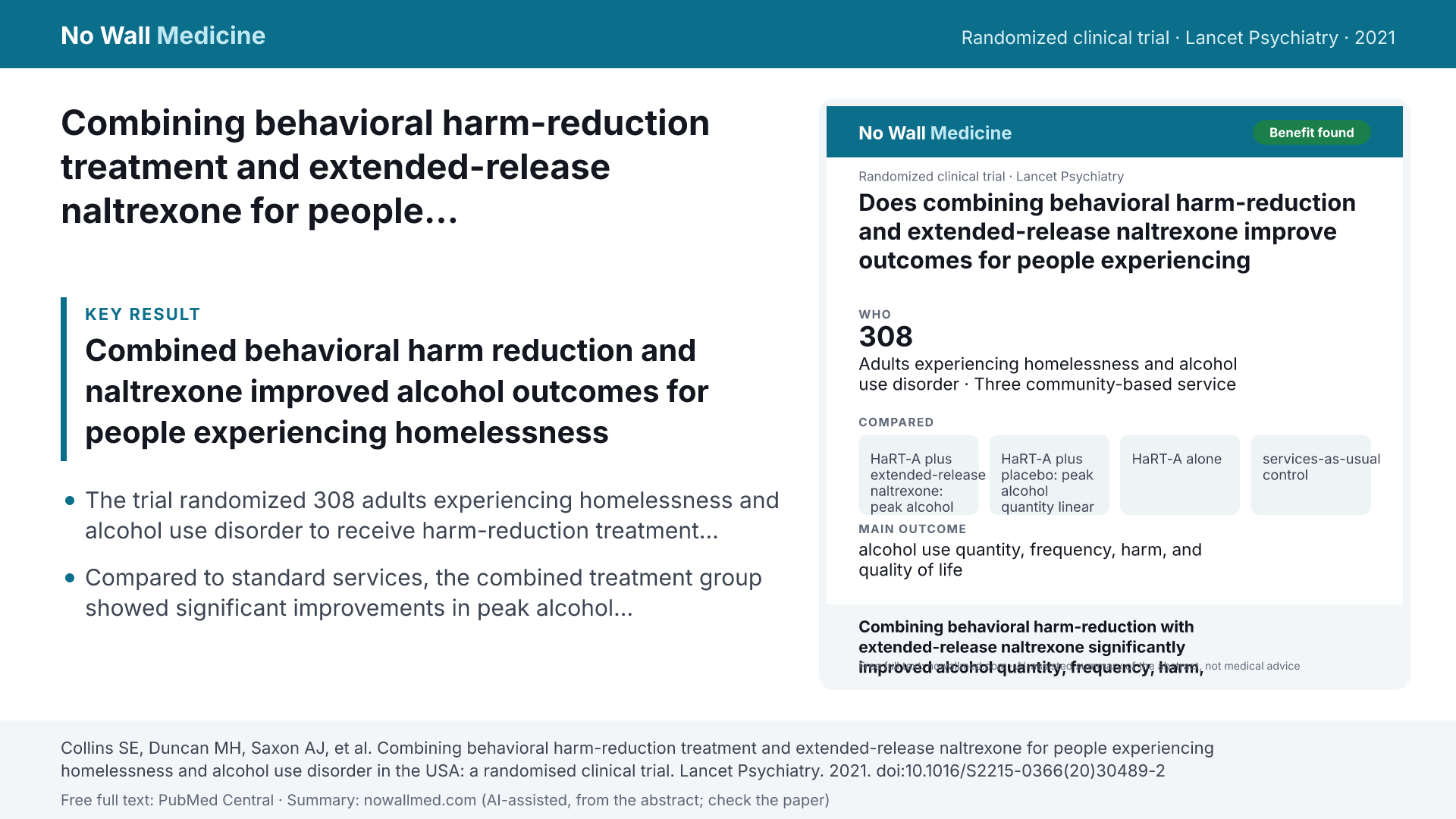
Combining behavioral harm-reduction treatment and extended-release naltrexone for people experiencing homelessness and alcohol use disorder in the USA: a randomised clinical trial
Key result: Combined behavioral harm reduction and naltrexone improved alcohol outcomes for people experiencing homelessness
Key points
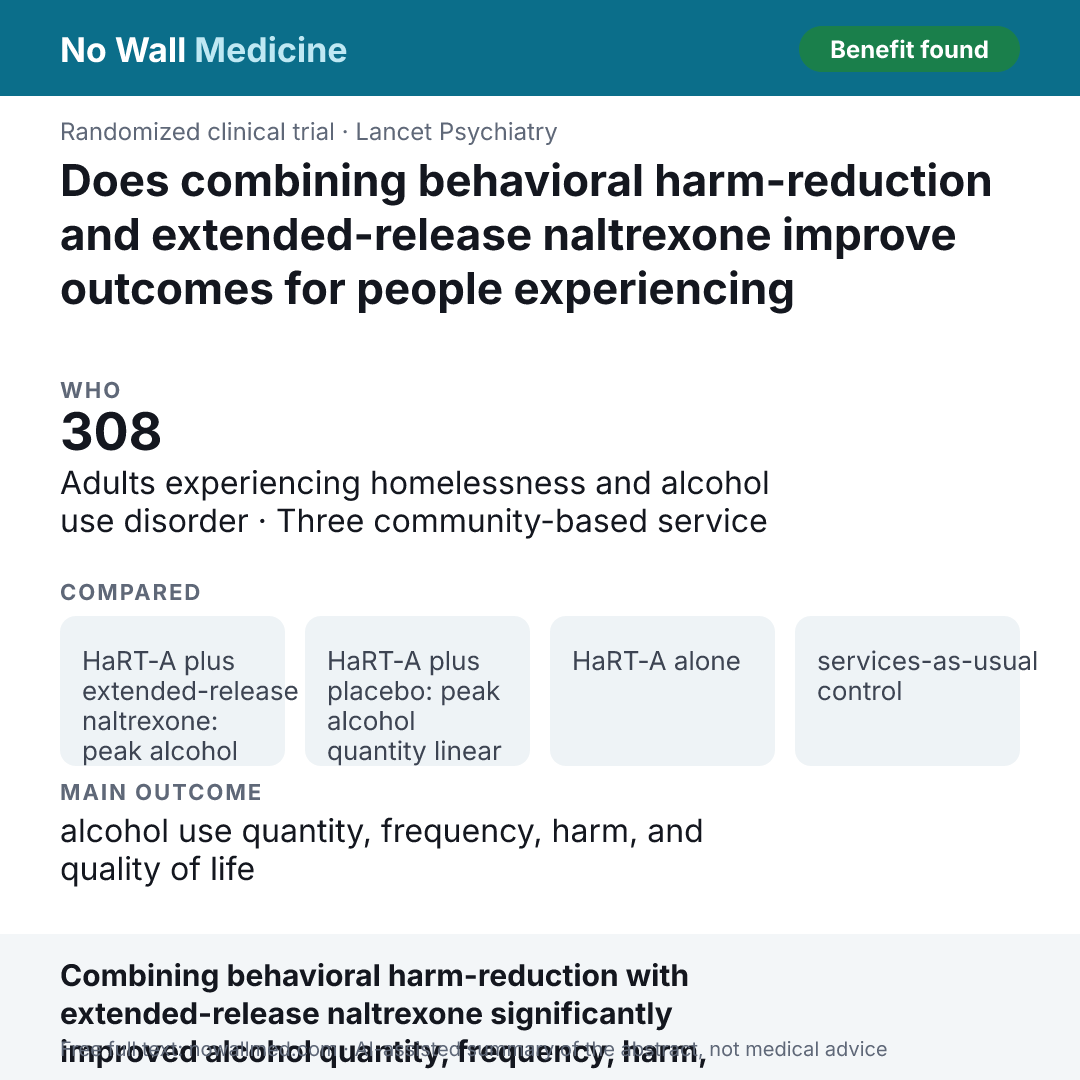
- The trial randomized 308 adults experiencing homelessness and alcohol use disorder to receive harm-reduction treatment with or without extended-release naltrexone, harm-reduction treatment alone, or standard community services.
- Compared to standard services, the combined treatment group showed significant improvements in peak alcohol quantity, alcohol frequency, alcohol-related harm, and physical health-related quality of life at 12 weeks.
- The group receiving harm-reduction treatment plus a placebo also showed significant improvements in peak alcohol quantity and alcohol frequency compared to the standard services group.
Why it matters: Typical abstinence-based treatments may not optimally engage people experiencing homelessness and alcohol use disorder, making the effectiveness of combined pharmacological and behavioral harm-reduction approaches unknown.
Discussion prompts
- Would these patients look like yours? Who was left out?
- Is the main outcome one that matters to patients?
- Is the difference large enough to change what you do?
Cite: Collins SE, Duncan MH, Saxon AJ, et al. Combining behavioral harm-reduction treatment and extended-release naltrexone for people experiencing homelessness and alcohol use disorder in the USA: a randomised clinical trial. Lancet Psychiatry. 2021. doi:10.1016/S2215-0366(20)30489-2
Free full text: PubMed Central · Summary and visual abstract: nowallmed.com/a/combining-behavioral-harm-reduction-treatment-and-extended-release-1711a9c/ (AI-assisted from the abstract; check the paper before relying on it).