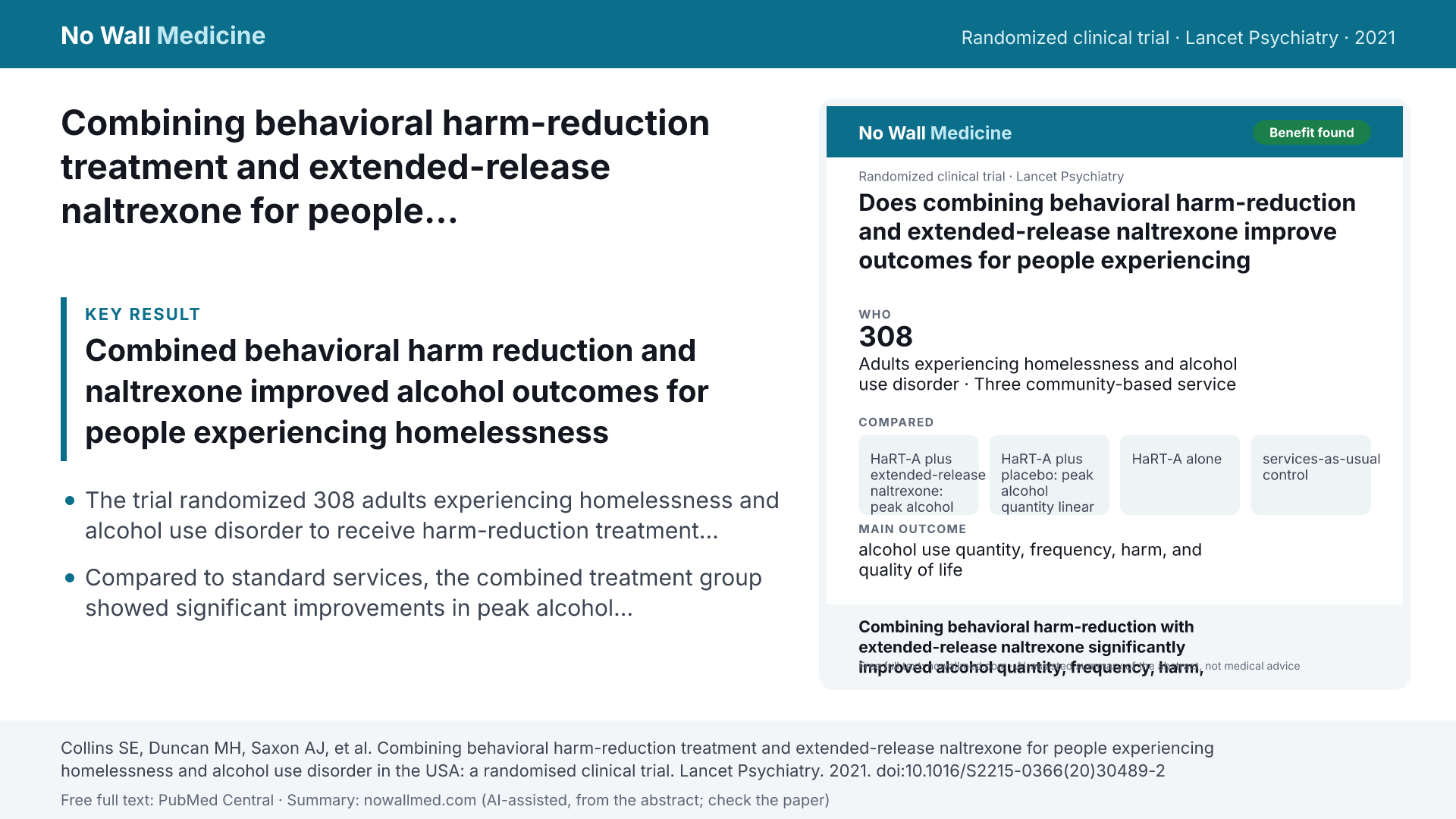
Combined behavioral harm reduction and naltrexone improved alcohol outcomes for people experiencing homelessness
Combining behavioral harm-reduction treatment and extended-release naltrexone for people experiencing homelessness and alcohol use disorder in the USA: a randomised clinical trial
Randomized clinical trialBenefit found
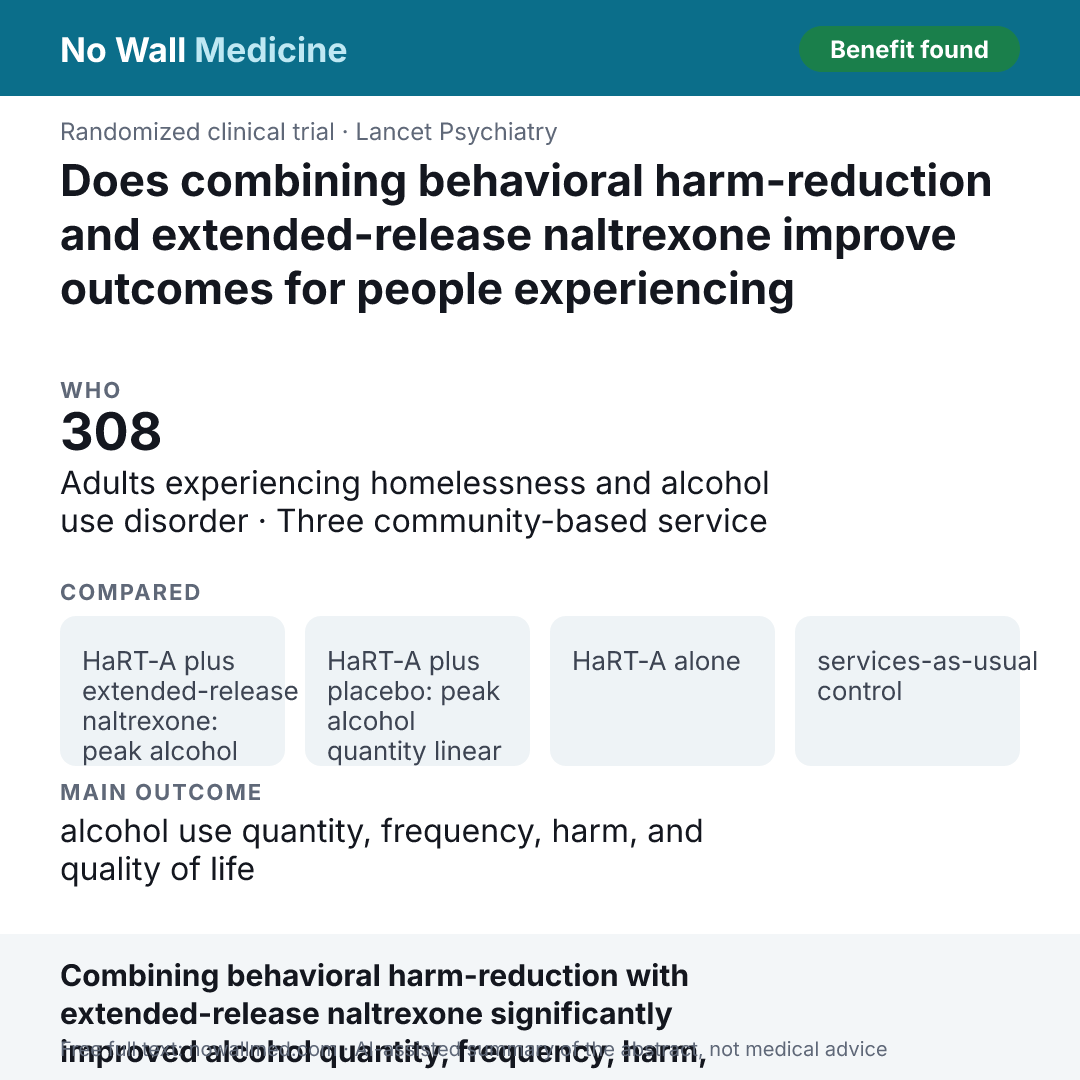
Does combining behavioral harm-reduction and extended-release naltrexone improve outcomes for people experiencing homelessness?
Who
308
Adults experiencing homelessness and alcohol use disorder · Three community-based service sites in Seattle, USA
Compared
HaRT-A plus extended-release naltrexone: peak alcohol quantity linear B -0·48 (95% CI -0·79 to -0·18)
HaRT-A plus placebo: peak alcohol quantity linear B -0·41 (95% CI -0·67 to -0·15)
HaRT-A alone
services-as-usual control
Main outcome
alcohol use quantity, frequency, harm, and quality of life
Result: linear B -0·48 (95% CI -0·79 to -0·18)
Bottom line: Combining behavioral harm-reduction with extended-release naltrexone significantly improved alcohol quantity, frequency, harm, and physical health-related quality of life.
Lancet Psychiatry · 2021-03-10 · Save PNG
Clinical question: Does combining behavioral harm-reduction and extended-release naltrexone improve outcomes for people experiencing homelessness?
Why it matters: Typical abstinence-based treatments may not optimally engage people experiencing homelessness and alcohol use disorder, making the effectiveness of combined pharmacological and behavioral harm-reduction approaches unknown.
Key points
- The trial randomized 308 adults experiencing homelessness and alcohol use disorder to receive harm-reduction treatment with or without extended-release naltrexone, harm-reduction treatment alone, or standard community services.
- Compared to standard services, the combined treatment group showed significant improvements in peak alcohol quantity, alcohol frequency, alcohol-related harm, and physical health-related quality of life at 12 weeks.
- The group receiving harm-reduction treatment plus a placebo also showed significant improvements in peak alcohol quantity and alcohol frequency compared to the standard services group.
Headline and key points written with AI from the paper’s abstract, with every number checked against it. Read the paper before relying on them.
Was this summary helpful?
Subject terms
Headline, design, result, key points, caveat and citation as plain text.
Cite this article
Collins SE, Duncan MH, Saxon AJ, et al. Combining behavioral harm-reduction treatment and extended-release naltrexone for people experiencing homelessness and alcohol use disorder in the USA: a randomised clinical trial. Lancet Psychiatry. 2021. doi:10.1016/S2215-0366(20)30489-2
Spotted a mistake? Suggest a correction