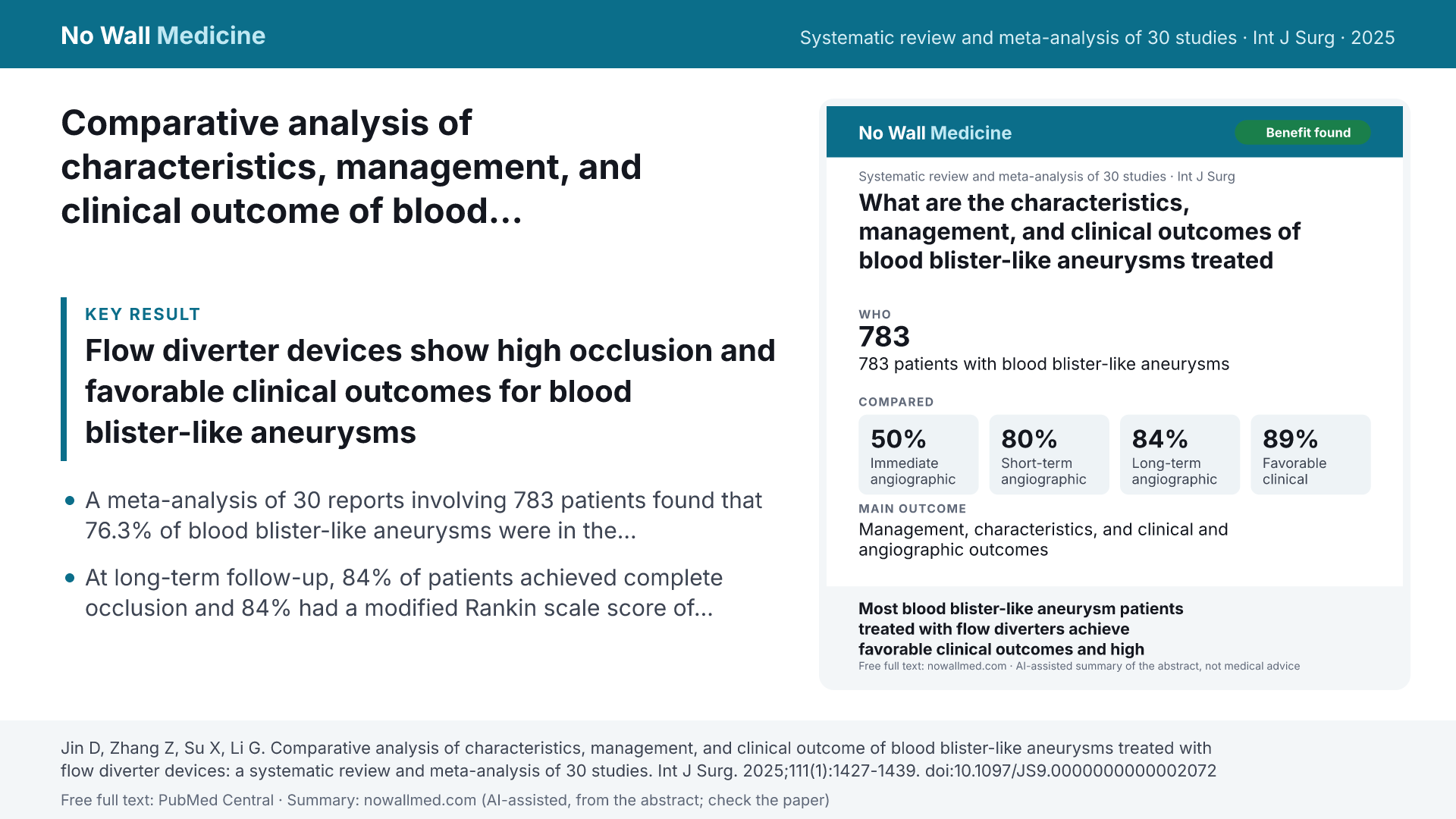
Flow diverter devices show high occlusion and favorable clinical outcomes for blood blister-like aneurysms
Comparative analysis of characteristics, management, and clinical outcome of blood blister-like aneurysms treated with flow diverter devices: a systematic review and meta-analysis of 30 studies
Systematic review and meta-analysis of 30 studiesBenefit found
What are the characteristics, management, and clinical outcomes of blood blister-like aneurysms treated with flow diverter devices?
Who
783
783 patients with blood blister-like aneurysms
Compared
50%Immediate angiographic occlusion (95% CI: 31-69%)
80%Short-term angiographic occlusion (95% CI: 67-92%)
84%Long-term angiographic occlusion (95% CI: 77-91%)
89%Favorable clinical outcome (mRS 0-2) (95% CI: 85-94%)
Main outcome
Management, characteristics, and clinical and angiographic outcomes
Bottom line: Most blood blister-like aneurysm patients treated with flow diverters achieve favorable clinical outcomes and high long-term occlusion rates.
Int J Surg · 2025-01-01Download image
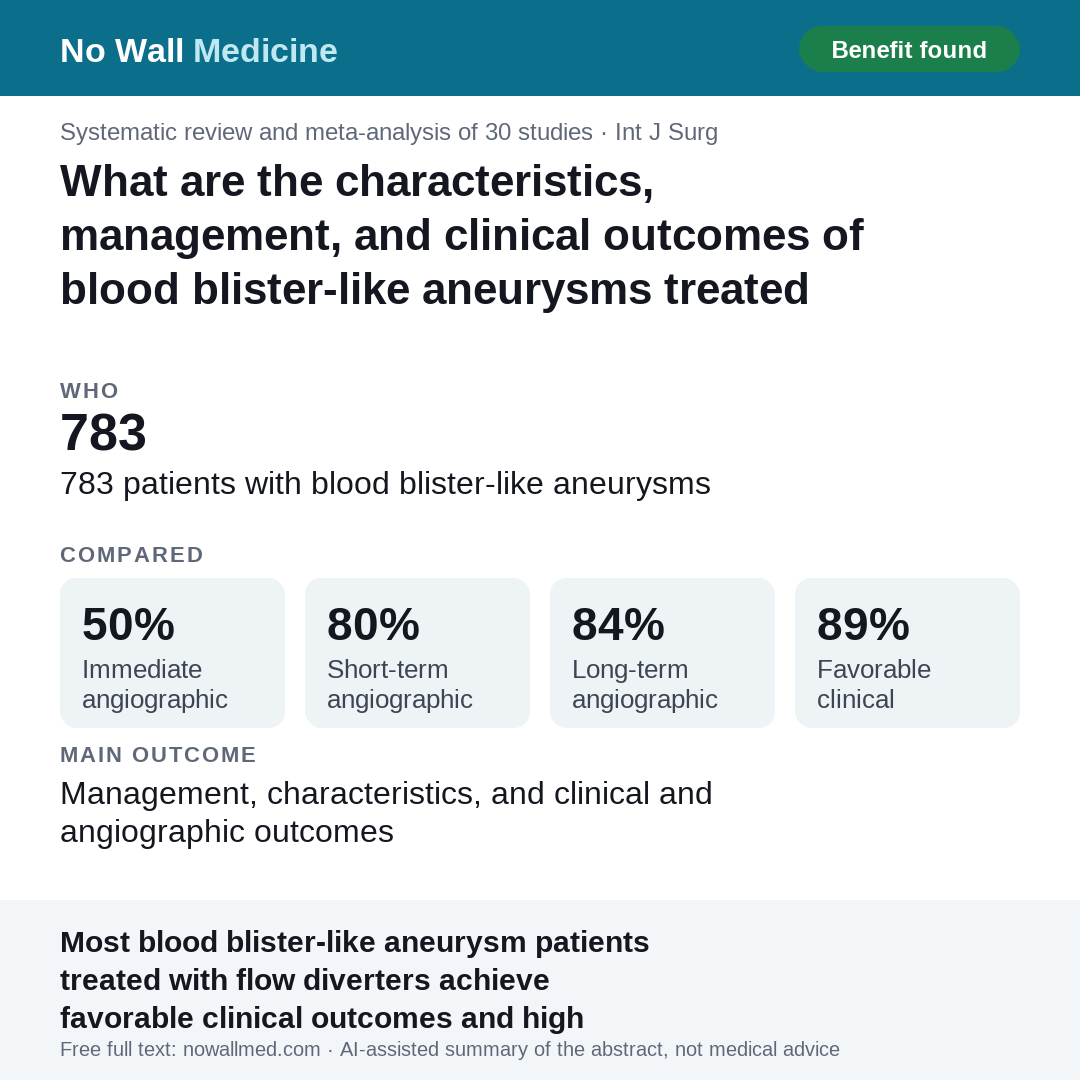
Clinical question: What are the characteristics, management, and clinical outcomes of blood blister-like aneurysms treated with flow diverter devices?
Why it matters: Comprehensive data regarding the characteristics, management, and clinical outcomes of blood blister-like aneurysms treated with flow diverter devices were previously unavailable.
Key points
- A meta-analysis of 30 reports involving 783 patients found that 76.3% of blood blister-like aneurysms were in the internal carotid artery.
- At long-term follow-up, 84% of patients achieved complete occlusion and 84% had a modified Rankin scale score of 0-2, indicating good functional status.
- Overall complications occurred in 16.8% of cases, while periprocedural complications, which happen during or immediately after the procedure, occurred in 9.1% of cases.
Limitation the authors note: The authors state that future studies with enough sample size and long follow-up are required.
Headline and key points written with AI from the paper’s abstract, with every number checked against it. Read the paper before relying on them.
Was this summary helpful?
Subject terms
Cite this article
Jin D, Zhang Z, Su X, Li G. Comparative analysis of characteristics, management, and clinical outcome of blood blister-like aneurysms treated with flow diverter devices: a systematic review and meta-analysis of 30 studies. Int J Surg. 2025. doi:10.1097/JS9.0000000000002072
Spotted a mistake? Suggest a correction
Top studies every Monday
The week’s key trials and guidelines in your specialties, plus any topics you follow. By email, free.
Get the weekly digest