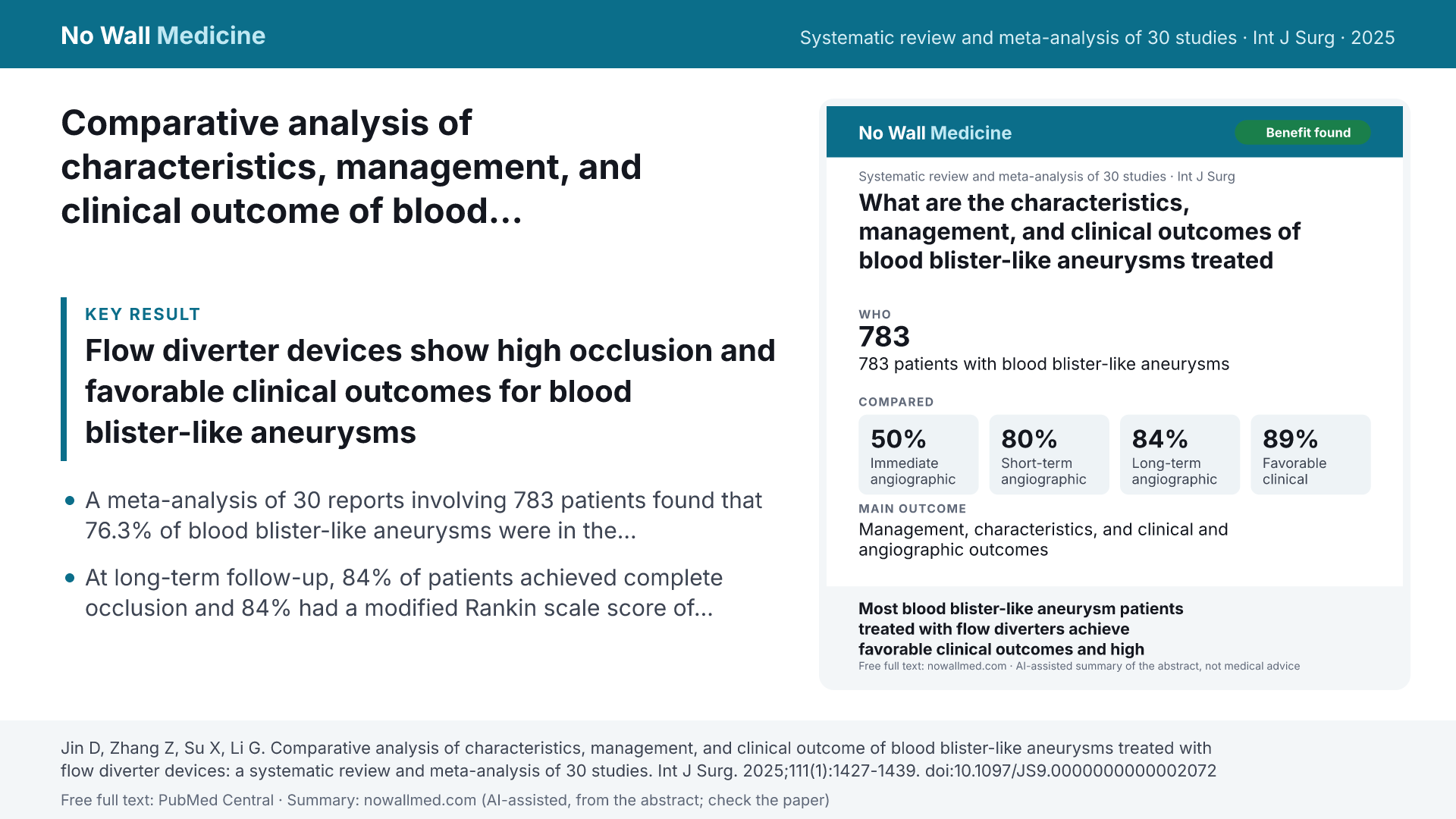
Comparative analysis of characteristics, management, and clinical outcome of blood blister-like aneurysms treated with flow diverter devices: a systematic review and meta-analysis of 30 studies
Key result: Flow diverter devices show high occlusion and favorable clinical outcomes for blood blister-like aneurysms
Key points
- A meta-analysis of 30 reports involving 783 patients found that 76.3% of blood blister-like aneurysms were in the internal carotid artery.
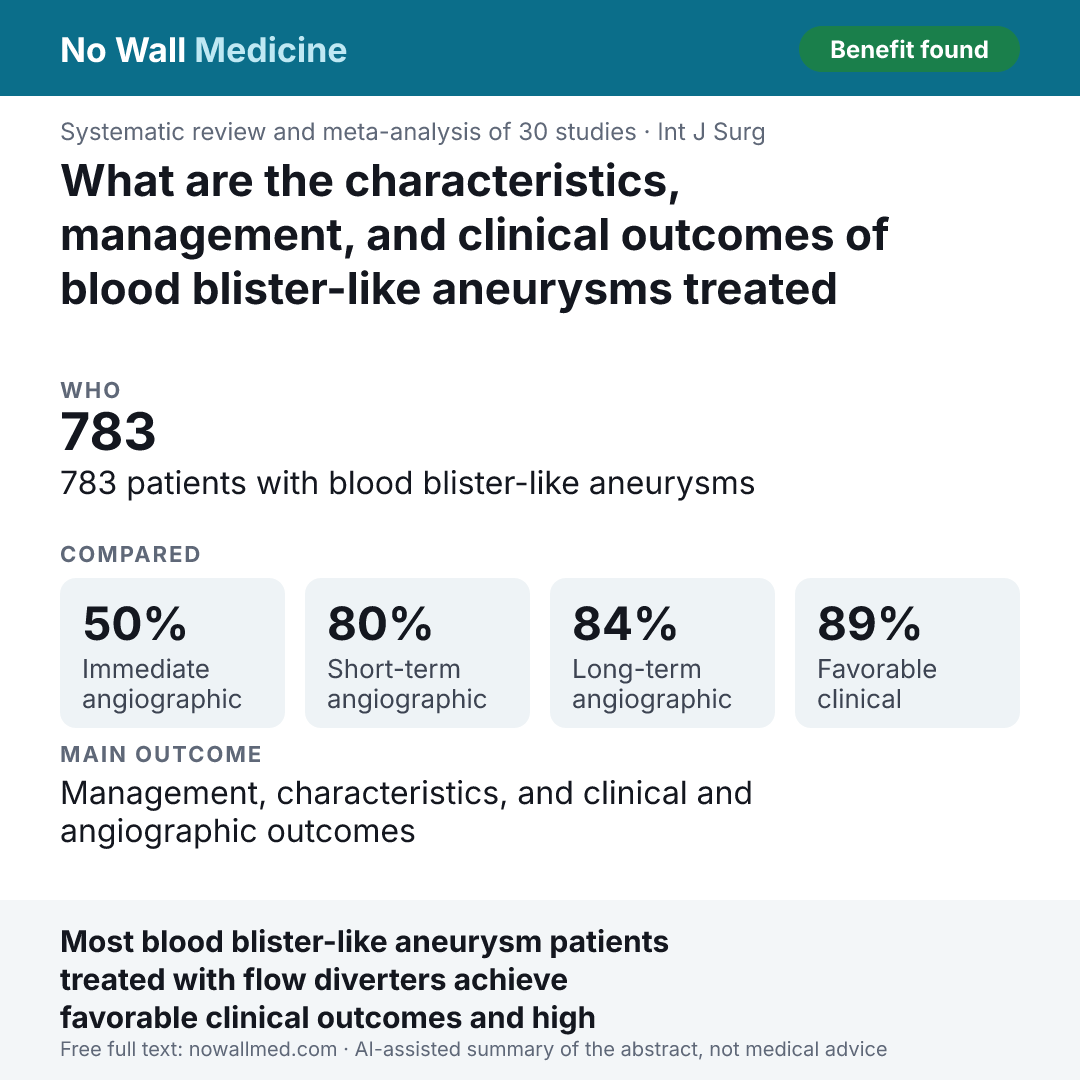
- At long-term follow-up, 84% of patients achieved complete occlusion and 84% had a modified Rankin scale score of 0-2, indicating good functional status.
- Overall complications occurred in 16.8% of cases, while periprocedural complications, which happen during or immediately after the procedure, occurred in 9.1% of cases.
Why it matters: Comprehensive data regarding the characteristics, management, and clinical outcomes of blood blister-like aneurysms treated with flow diverter devices were previously unavailable.
Limitation the authors note: The authors state that future studies with enough sample size and long follow-up are required.
Discussion prompts
- Would these patients look like yours? Who was left out?
- Is the main outcome one that matters to patients?
- Is the difference large enough to change what you do?
Cite: Jin D, Zhang Z, Su X, Li G. Comparative analysis of characteristics, management, and clinical outcome of blood blister-like aneurysms treated with flow diverter devices: a systematic review and meta-analysis of 30 studies. Int J Surg. 2025;111(1):1427-1439. doi:10.1097/JS9.0000000000002072
Free full text: PubMed Central · Summary and visual abstract: nowallmed.com/a/comparative-analysis-of-characteristics-management-and-clinical-5qtegz/ (AI-assisted from the abstract; check the paper before relying on it).