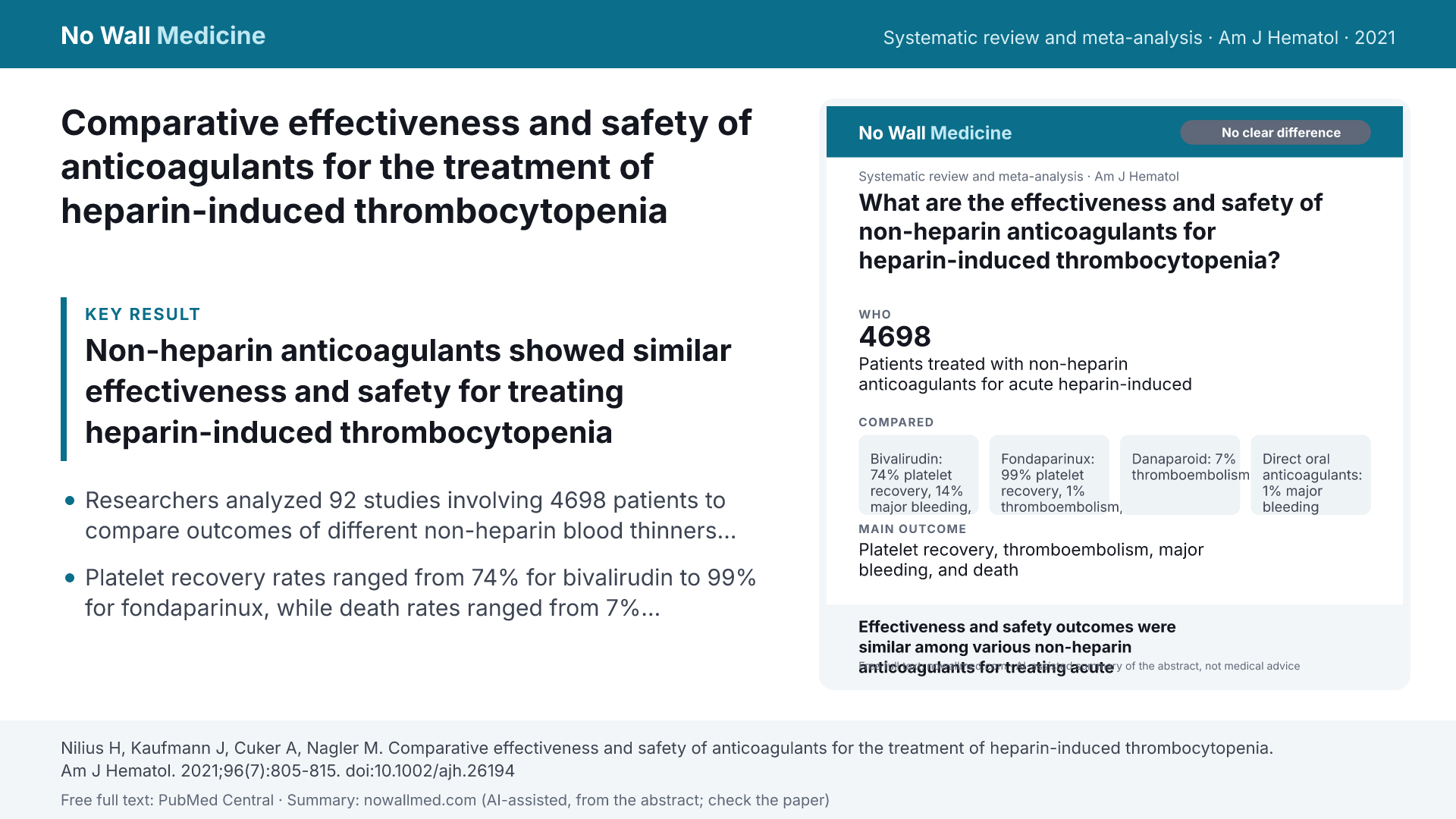
Non-heparin anticoagulants showed similar effectiveness and safety for treating heparin-induced thrombocytopenia
Comparative effectiveness and safety of anticoagulants for the treatment of heparin-induced thrombocytopenia
Systematic review and meta-analysisNo clear difference
What are the effectiveness and safety of non-heparin anticoagulants for heparin-induced thrombocytopenia?
Who
4698
Patients treated with non-heparin anticoagulants for acute heparin-induced thrombocytopenia
Compared
Bivalirudin: 74% platelet recovery, 14% major bleeding, 19% death
Fondaparinux: 99% platelet recovery, 1% thromboembolism, 7% death
Danaparoid: 7% thromboembolism
Direct oral anticoagulants: 1% major bleeding
Main outcome
Platelet recovery, thromboembolism, major bleeding, and death
Bottom line: Effectiveness and safety outcomes were similar among various non-heparin anticoagulants for treating acute heparin-induced thrombocytopenia.
Am J Hematol · 2021-05-03 · Save PNG
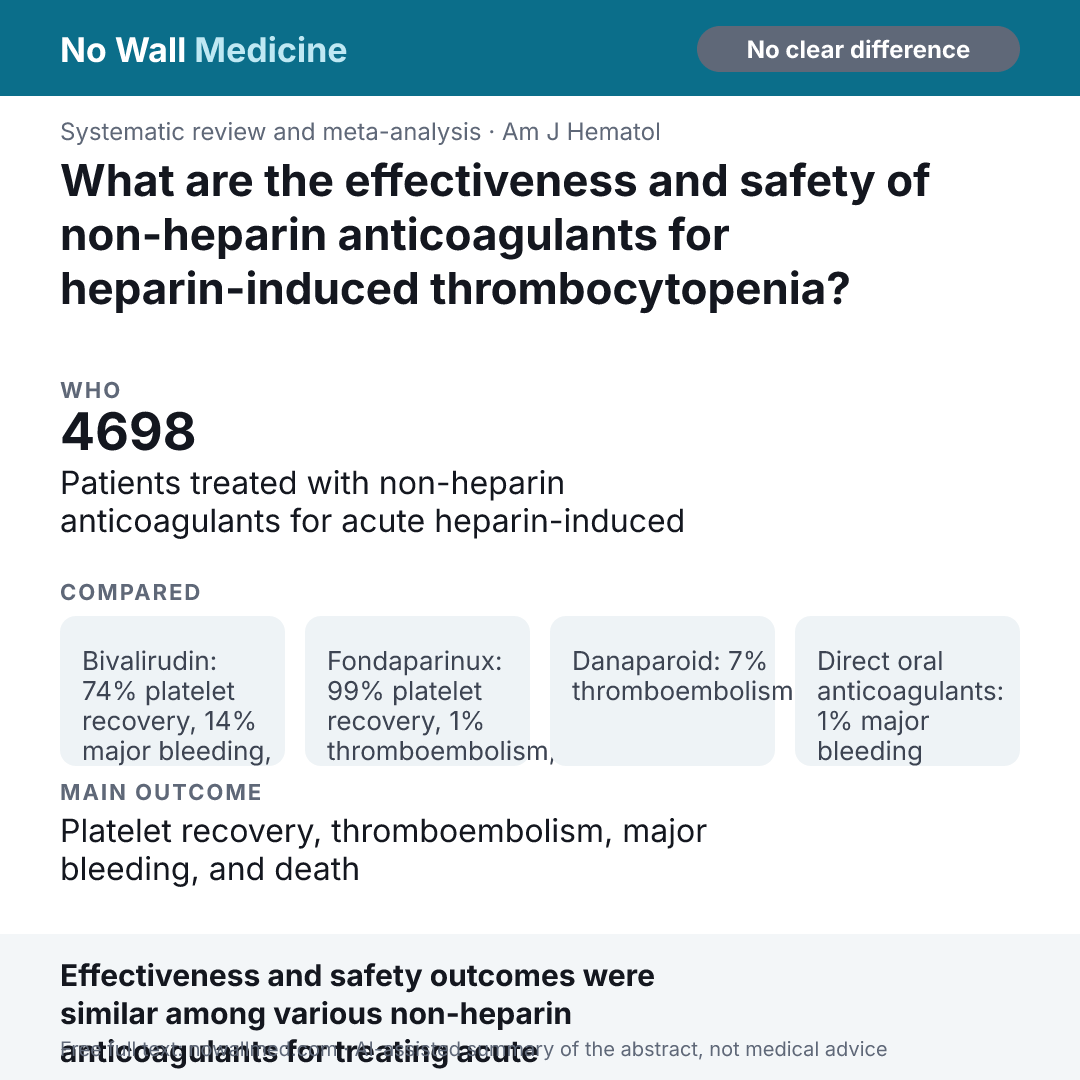
Clinical question: What are the effectiveness and safety of non-heparin anticoagulants for heparin-induced thrombocytopenia?
Key points
- Researchers analyzed 92 studies involving 4698 patients to compare outcomes of different non-heparin blood thinners for acute heparin-induced thrombocytopenia.
- Platelet recovery rates ranged from 74% for bivalirudin to 99% for fondaparinux, while death rates ranged from 7% for fondaparinux to 19% for bivalirudin.
- Thromboembolism, or blood clots, occurred in 1% of fondaparinux patients to 7% of danaparoid patients, and major bleeding occurred in 1% for direct oral anticoagulants to 14% for bivalirudin.
Headline and key points written with AI from the paper’s abstract, with every number checked against it. Read the paper before relying on them.
Was this summary helpful?
Subject terms
Headline, design, result, key points, caveat and citation as plain text.
Cite this article
Nilius H, Kaufmann J, Cuker A, Nagler M. Comparative effectiveness and safety of anticoagulants for the treatment of heparin-induced thrombocytopenia. Am J Hematol. 2021. doi:10.1002/ajh.26194
Spotted a mistake? Suggest a correction