Digital and face-to-face cognitive behavioral therapy show different effects on alcohol drinking patterns
Comparative effectiveness of digital versus face-to-face cognitive behavioral therapy for alcohol use disorder: a systematic review and meta-analysis
Systematic review and meta-analysisMixed results
Are digital or face-to-face cognitive behavioral therapies more effective for alcohol use disorder?
Who
2,065
Adults with alcohol use disorder
Compared
Digital cognitive behavioral therapy: drinking quantity SMCR = 1.21
Face-to-face cognitive behavioral therapy: drinking quantity SMCR = 0.69
Main outcome
Drinking quantity and drinking frequency
Bottom line: Digital therapy improved drinking quantity, but face-to-face therapy showed a stronger effect on drinking frequency.
Psychol Med · 2025-10-20Download image
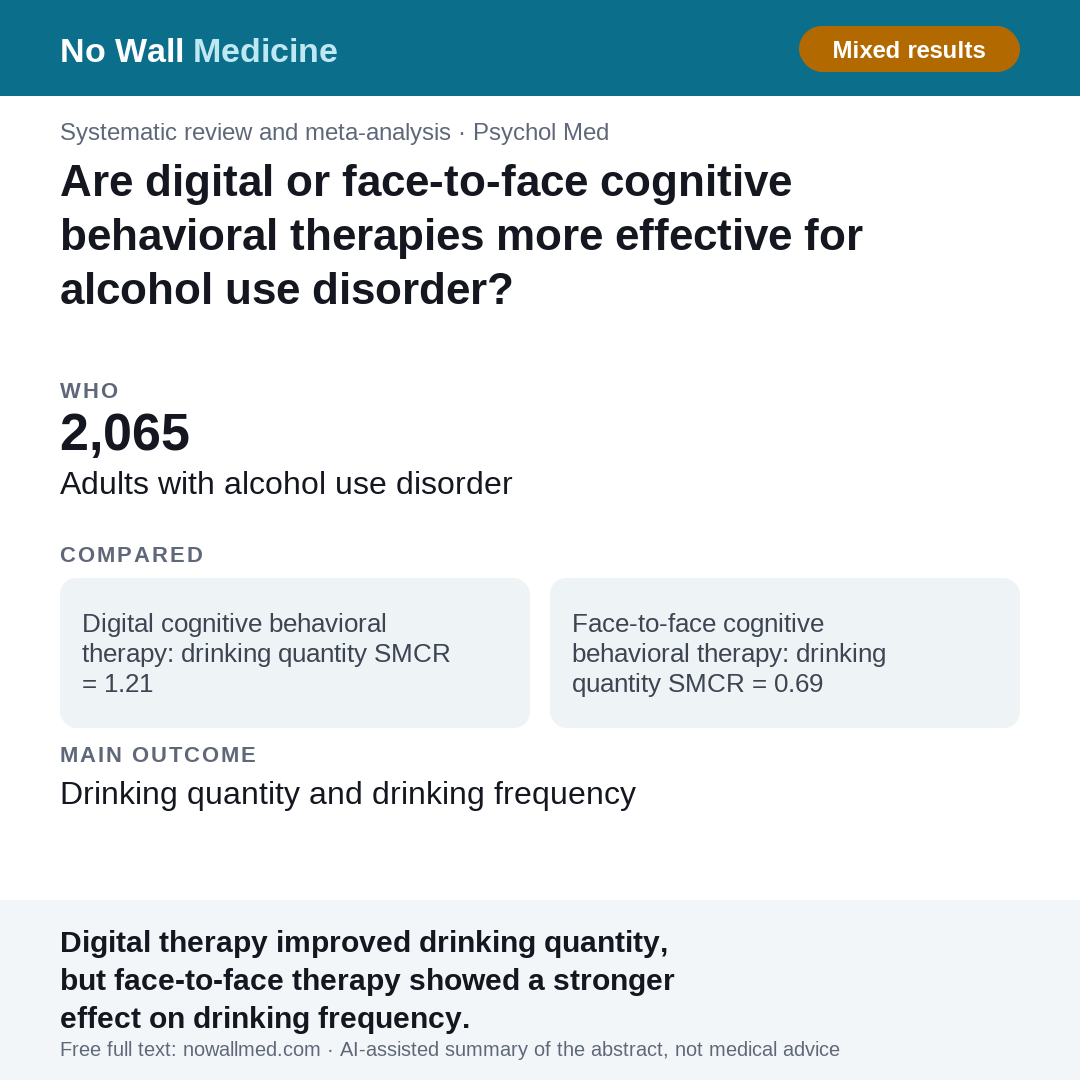
Clinical question: Are digital or face-to-face cognitive behavioral therapies more effective for alcohol use disorder?
Why it matters: Few systematic reviews have directly compared the effectiveness of digital versus face-to-face cognitive behavioral therapy in adults with alcohol use disorder.
Key points
- Researchers analyzed 25 randomized controlled trials involving 2,065 adults to compare digital and face-to-face cognitive behavioral therapy for alcohol use disorder.
- Digital therapy showed a significant effect on drinking quantity (SMCR = 1.21), while face-to-face therapy showed no overall significant effect (SMCR = 0.69).
- Both methods showed significant effects on drinking frequency, but face-to-face therapy had a stronger effect (SMCR = 1.02) than digital therapy (SMCR = 0.54).
Headline and key points written with AI from the paper’s abstract, with every number checked against it. Read the paper before relying on them.
Topics
Cite this article
Kim JE, Kim J, Choi N, Lee SK, Oh HS, Roh S. Comparative effectiveness of digital versus face-to-face cognitive behavioral therapy for alcohol use disorder: a systematic review and meta-analysis. Psychol Med. 2025. doi:10.1017/S0033291725102043
Spotted a mistake? Suggest a correction