Cognitive behavioral therapy for insomnia was associated with fewer alcohol problems in US veterans
Effect of Cognitive Behavioral Therapy for Insomnia on Alcohol Treatment Outcomes Among US Veterans: A Randomized Clinical Trial
Randomized clinical trialMixed results
Does cognitive behavioral therapy for insomnia improve alcohol treatment outcomes among US veterans?
Who
67
Veterans in treatment for alcohol use disorder with insomnia · Veterans Health Administration hospital
Compared
Cognitive behavioral therapy for insomnia: greater decreases in insomnia severity at posttreatment (-3.70; 95% CI, -6.79 to -0.61)
Sleep hygiene control
Main outcome
Insomnia severity, alcohol use frequency, and alcohol-related problems
Result: group x time interaction: -0.84; 95% CI, -1.66 to -0.02 for alcohol problems
Bottom line: Cognitive behavioral therapy for insomnia reduced insomnia symptoms and alcohol problems but did not affect heavy drinking frequency.
JAMA Psychiatry · 2023-06-21Download image
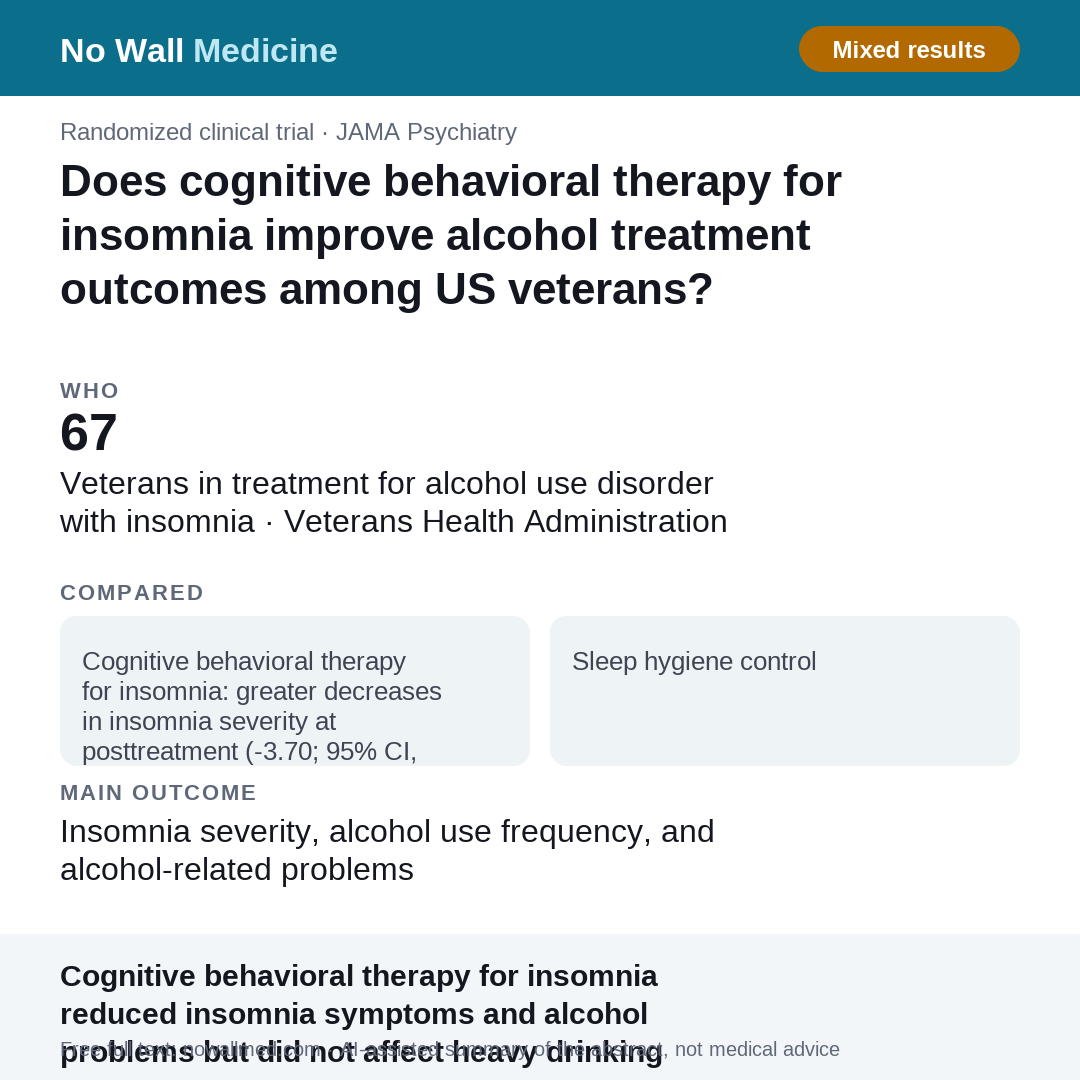
Clinical question: Does cognitive behavioral therapy for insomnia improve alcohol treatment outcomes among US veterans?
Why it matters: It is unknown if treating insomnia with cognitive behavioral therapy early in alcohol use disorder treatment can improve alcohol use outcomes.
Key points
- The study randomized 67 veterans receiving treatment for alcohol use disorder to receive either five sessions of cognitive behavioral therapy for insomnia or a single sleep hygiene session.
- Compared to sleep hygiene, cognitive behavioral therapy for insomnia was associated with greater decreases in insomnia severity and alcohol-related problems at follow-up.
- No group differences were found between the two groups regarding abstinence or the frequency of heavy drinking.
Headline and key points written with AI from the paper’s abstract, with every number checked against it. Read the paper before relying on them.
Was this summary helpful?
Subject terms
Cite this article
Miller MB, Carpenter RW, Freeman LK, Dunsiger S, McGeary JE, Borsari B. Effect of Cognitive Behavioral Therapy for Insomnia on Alcohol Treatment Outcomes Among US Veterans: A Randomized Clinical Trial. JAMA Psychiatry. 2023. doi:10.1001/jamapsychiatry.2023.1971
Spotted a mistake? Suggest a correction
Top studies every Monday
The week’s key trials and guidelines in your specialties, plus any topics you follow. By email, free.
Get the weekly digest