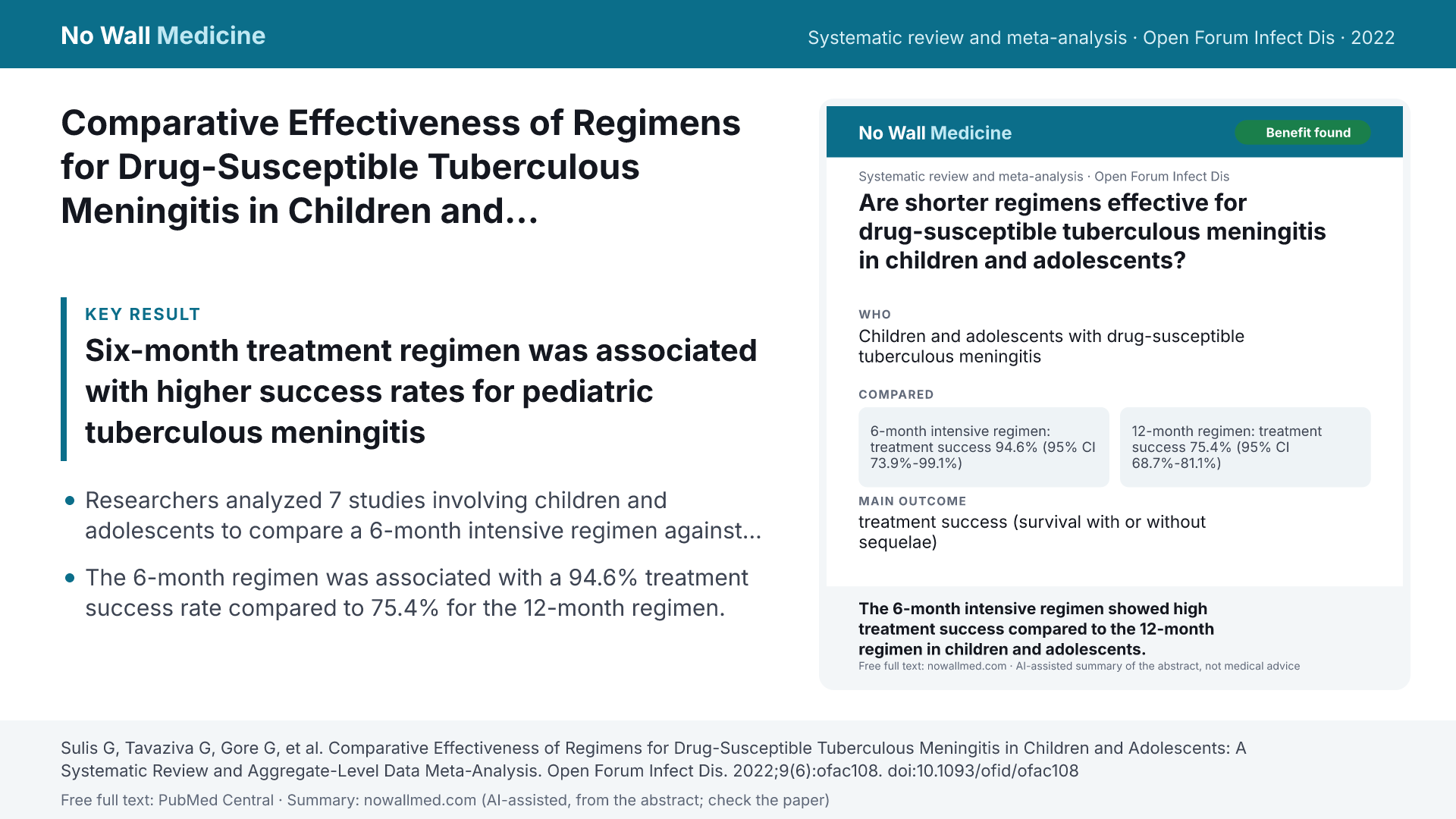
Six-month treatment regimen was associated with higher success rates for pediatric tuberculous meningitis
Comparative Effectiveness of Regimens for Drug-Susceptible Tuberculous Meningitis in Children and Adolescents: A Systematic Review and Aggregate-Level Data Meta-Analysis
Systematic review and meta-analysisBenefit found
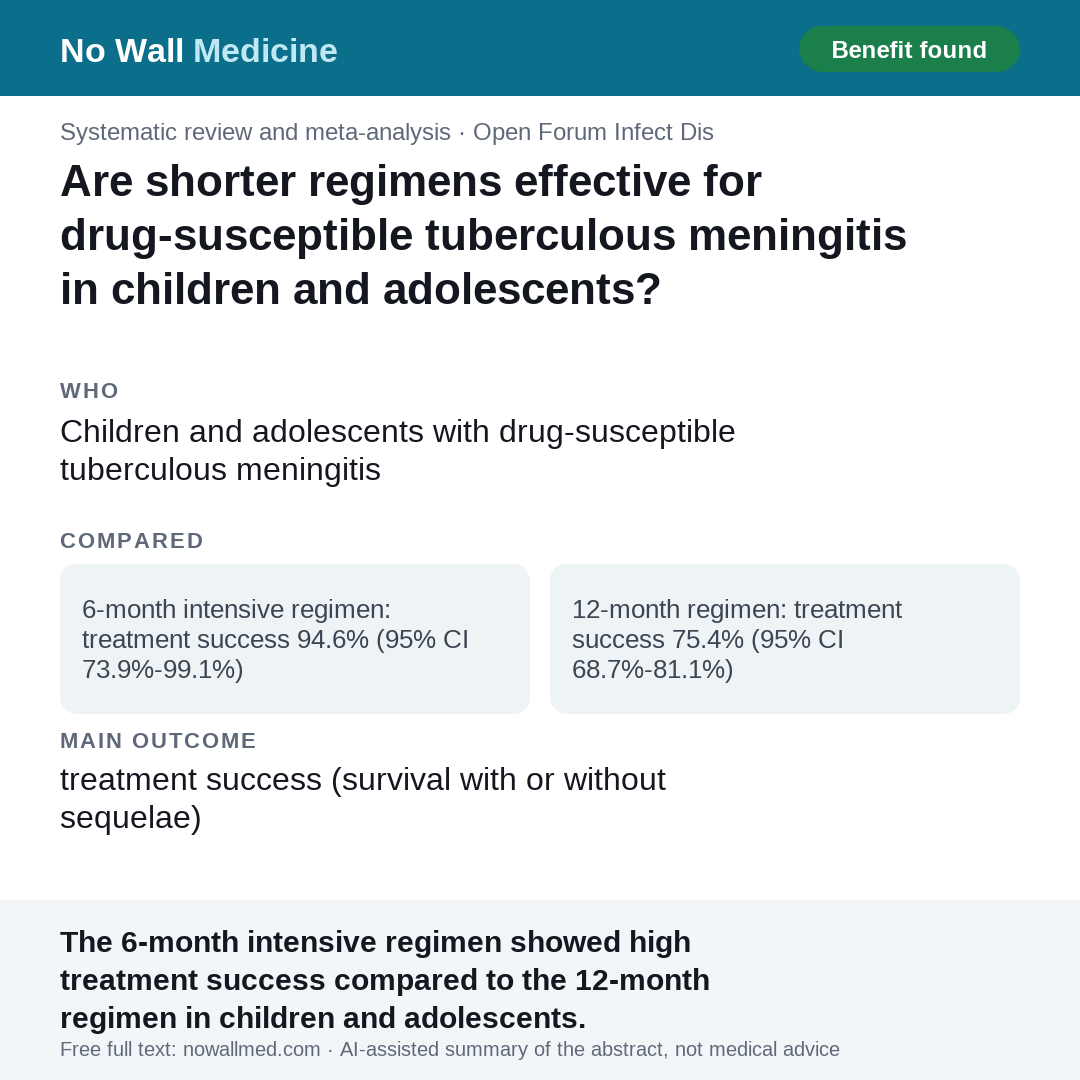
Are shorter regimens effective for drug-susceptible tuberculous meningitis in children and adolescents?
Who
Children and adolescents with drug-susceptible tuberculous meningitis
Compared
6-month intensive regimen: treatment success 94.6% (95% CI 73.9%-99.1%)
12-month regimen: treatment success 75.4% (95% CI 68.7%-81.1%)
Main outcome
treatment success (survival with or without sequelae)
Bottom line: The 6-month intensive regimen showed high treatment success compared to the 12-month regimen in children and adolescents.
Limitation: small number of studies and substantial potential for confounding
Open Forum Infect Dis · 2022-04-09Download image
Clinical question: Are shorter regimens effective for drug-susceptible tuberculous meningitis in children and adolescents?
Why it matters: The comparative effectiveness of shorter treatment regimens for pediatric drug-susceptible tuberculous meningitis was unknown prior to this analysis.
Key points
- Researchers analyzed 7 studies involving children and adolescents to compare a 6-month intensive regimen against a 12-month regimen for drug-susceptible tuberculous meningitis.
- The 6-month regimen was associated with a 94.6% treatment success rate compared to 75.4% for the 12-month regimen.
- Death was associated with 5.5% in the 6-month group versus 23.9% in the 12-month group, though neurological sequelae were higher at 66.0% versus 36.3%.
Limitation the authors note: The findings are limited by a small number of studies and substantial potential for confounding.
Headline and key points written with AI from the paper’s abstract, with every number checked against it. Read the paper before relying on them.
Was this summary helpful?
Cite this article
Sulis G, Tavaziva G, Gore G, Benedetti A, Solomons R, van Toorn R. Comparative Effectiveness of Regimens for Drug-Susceptible Tuberculous Meningitis in Children and Adolescents: A Systematic Review and Aggregate-Level Data Meta-Analysis. Open Forum Infect Dis. 2022. doi:10.1093/ofid/ofac108
Spotted a mistake? Suggest a correction