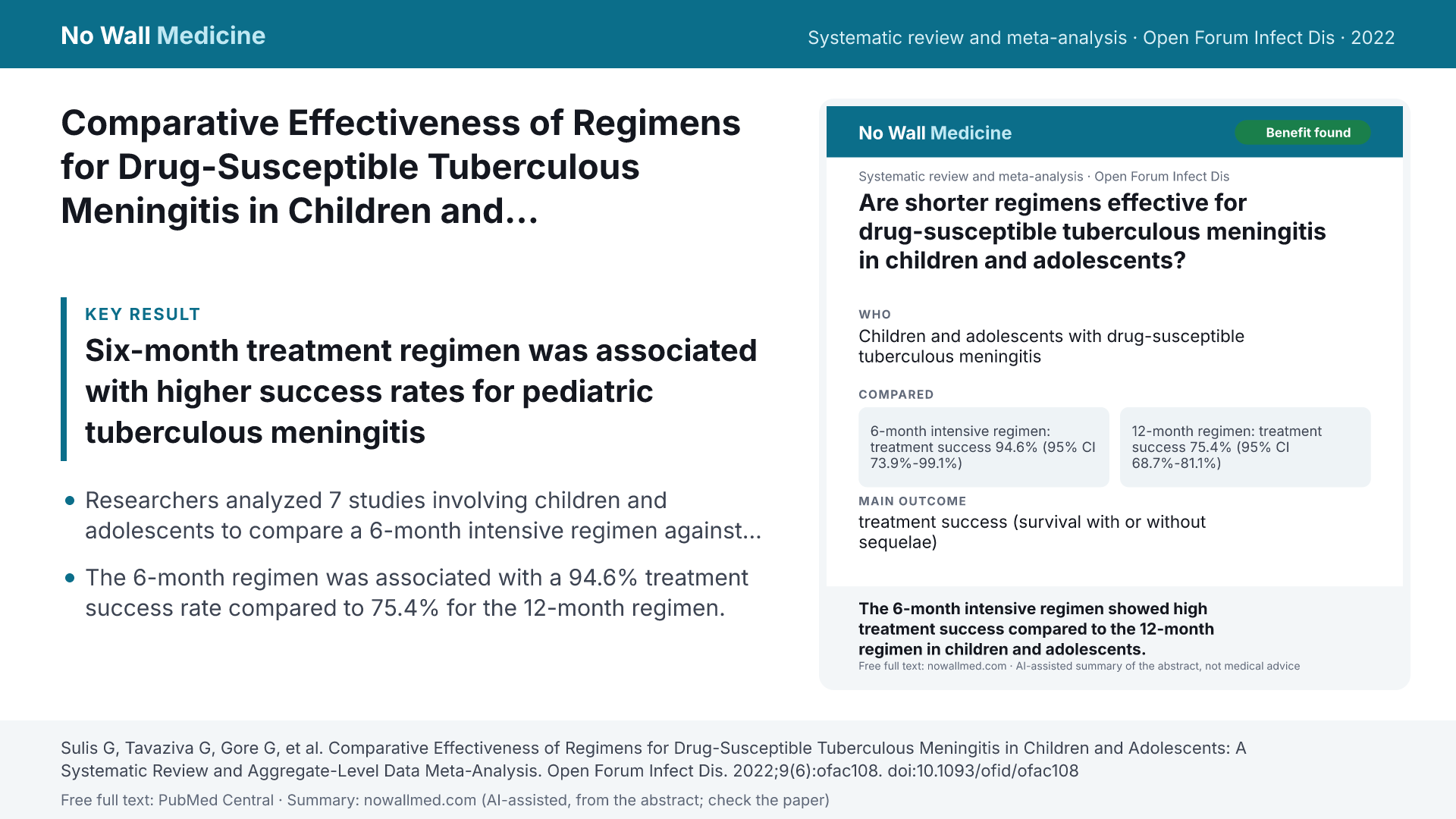
Comparative Effectiveness of Regimens for Drug-Susceptible Tuberculous Meningitis in Children and Adolescents: A Systematic Review and Aggregate-Level Data Meta-Analysis
Key result: Six-month treatment regimen was associated with higher success rates for pediatric tuberculous meningitis
Key points
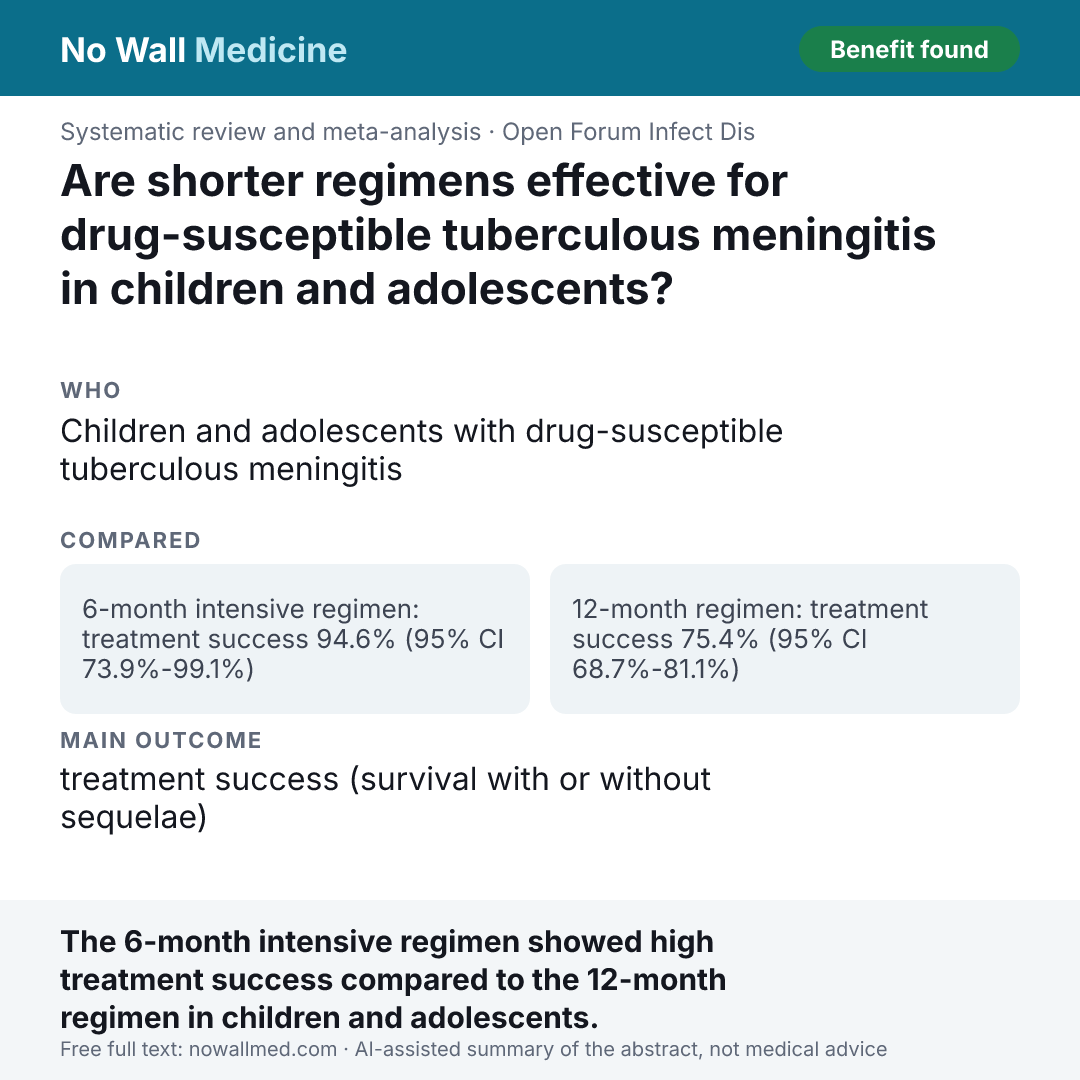
- Researchers analyzed 7 studies involving children and adolescents to compare a 6-month intensive regimen against a 12-month regimen for drug-susceptible tuberculous meningitis.
- The 6-month regimen was associated with a 94.6% treatment success rate compared to 75.4% for the 12-month regimen.
- Death was associated with 5.5% in the 6-month group versus 23.9% in the 12-month group, though neurological sequelae were higher at 66.0% versus 36.3%.
Why it matters: The comparative effectiveness of shorter treatment regimens for pediatric drug-susceptible tuberculous meningitis was unknown prior to this analysis.
Limitation the authors note: The findings are limited by a small number of studies and substantial potential for confounding.
Discussion prompts
- Would these patients look like yours? Who was left out?
- Is the main outcome one that matters to patients?
- Is the difference large enough to change what you do?
Cite: Sulis G, Tavaziva G, Gore G, et al. Comparative Effectiveness of Regimens for Drug-Susceptible Tuberculous Meningitis in Children and Adolescents: A Systematic Review and Aggregate-Level Data Meta-Analysis. Open Forum Infect Dis. 2022;9(6):ofac108. doi:10.1093/ofid/ofac108
Free full text: PubMed Central · Summary and visual abstract: nowallmed.com/a/comparative-effectiveness-of-regimens-for-drug-susceptible-d5o2j/ (AI-assisted from the abstract; check the paper before relying on it).