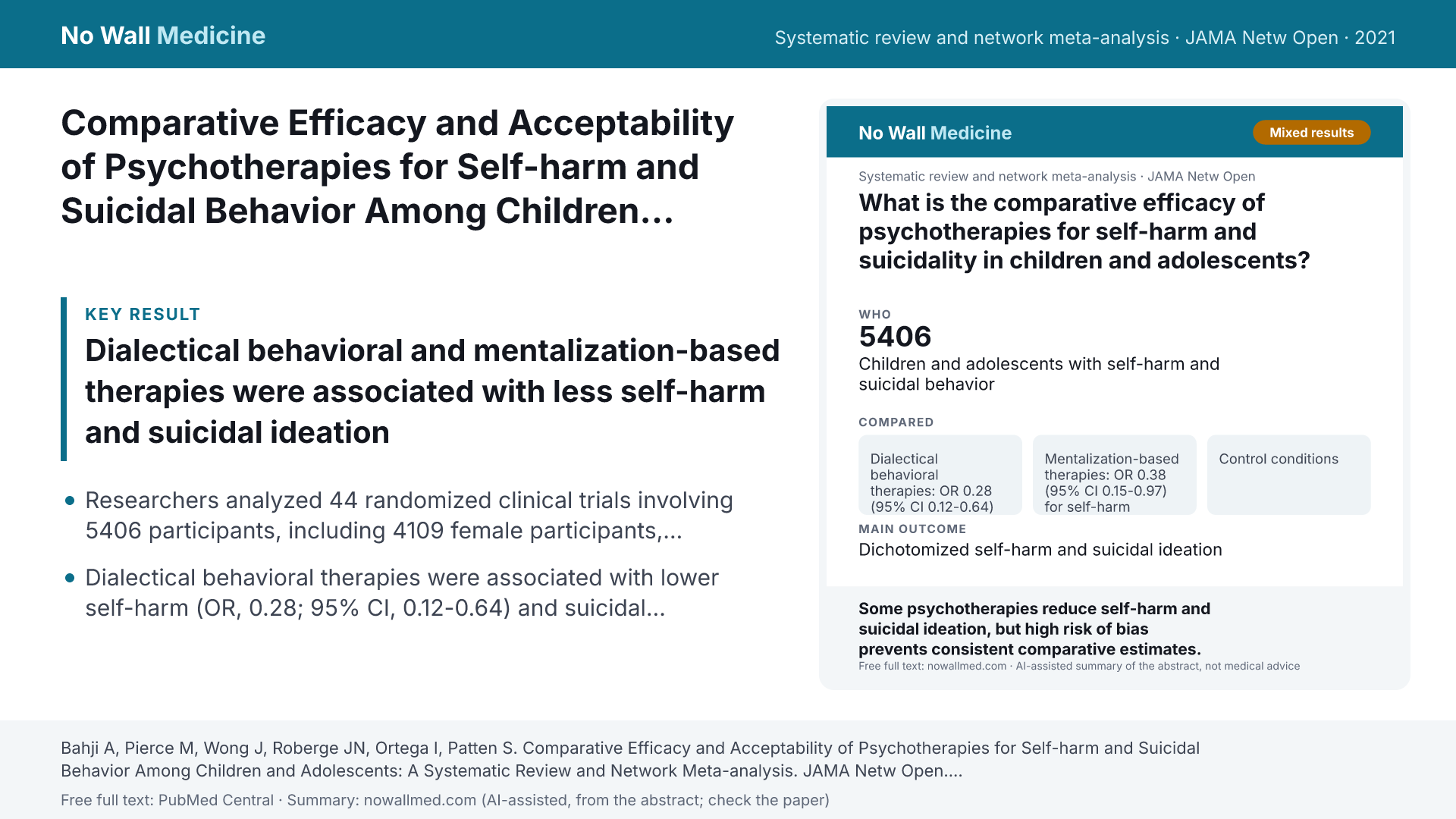
Comparative Efficacy and Acceptability of Psychotherapies for Self-harm and Suicidal Behavior Among Children and Adolescents: A Systematic Review and Network Meta-analysis
Key result: Dialectical behavioral and mentalization-based therapies were associated with less self-harm and suicidal ideation
Key points
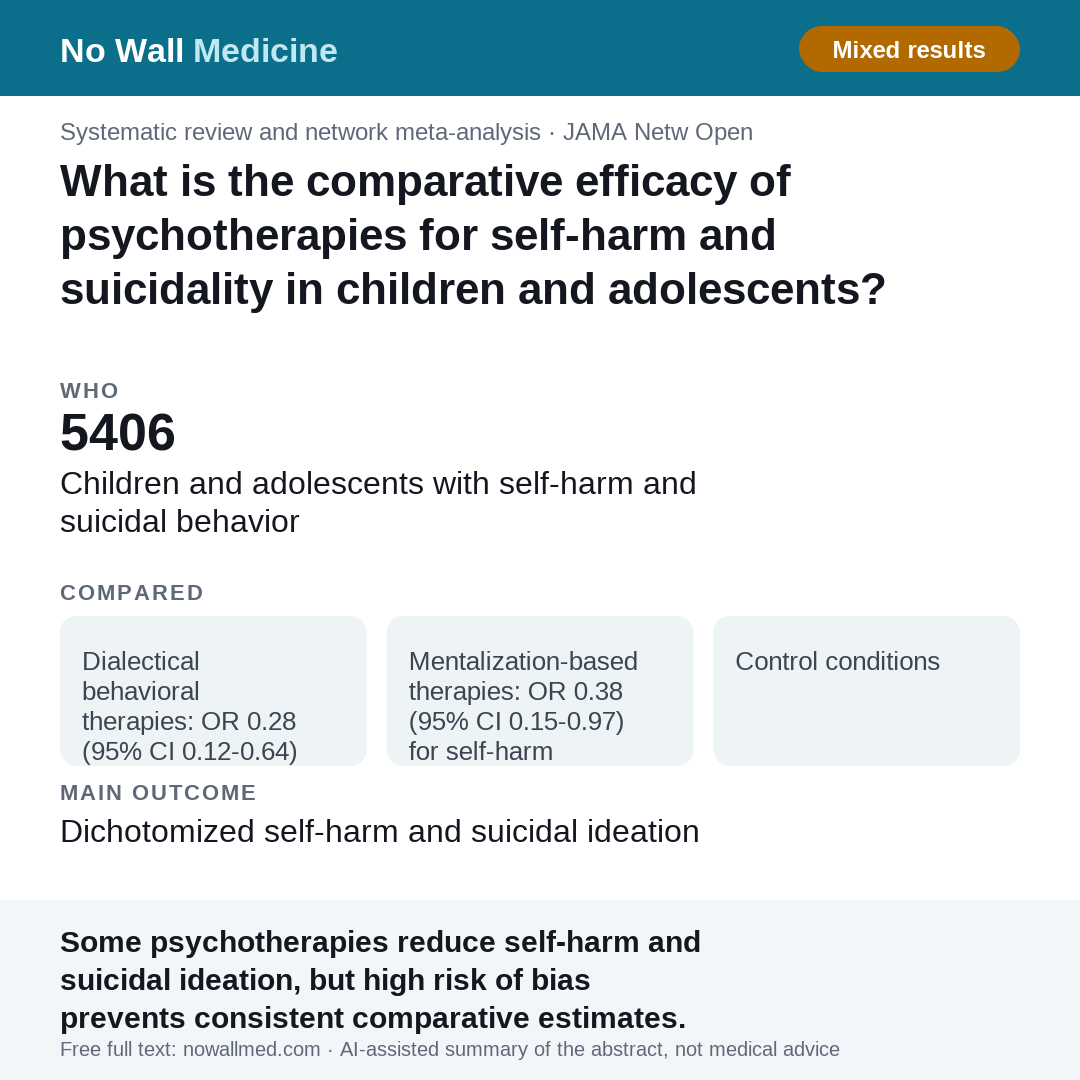
- Researchers analyzed 44 randomized clinical trials involving 5406 participants, including 4109 female participants, to compare different psychotherapies for self-harm and suicidality.
- Dialectical behavioral therapies were associated with lower self-harm (OR, 0.28; 95% CI, 0.12-0.64) and suicidal ideation (Cohen d SMD, -0.71; 95% CI, -1.19 to -0.23) at treatment end.
- Mentalization-based therapies were associated with lower self-harm (OR, 0.38; 95% CI, 0.15-0.97) and suicidal ideation (Cohen d SMD, -1.22; 95% CI, -2.18 to -0.26) at follow-up end.
Why it matters: The comparative performance of different psychotherapies for treating suicidality in children and adolescents is unclear because few head-to-head clinical trials have been conducted.
Limitation the authors note: The quality of evidence was downgraded due to high risk of bias, heterogeneity, publication bias, inconsistency, and imprecision.
Discussion prompts
- Would these patients look like yours? Who was left out?
- Is the main outcome one that matters to patients?
- Is the difference large enough to change what you do?
Cite: Bahji A, Pierce M, Wong J, Roberge JN, Ortega I, Patten S. Comparative Efficacy and Acceptability of Psychotherapies for Self-harm and Suicidal Behavior Among Children and Adolescents: A Systematic Review and Network Meta-analysis. JAMA Netw Open. 2021. doi:10.1001/jamanetworkopen.2021.6614
Free full text: PubMed Central · Summary and visual abstract: nowallmed.com/a/comparative-efficacy-and-acceptability-of-psychotherapies-for-self-pe8wt8/ (AI-assisted from the abstract; check the paper before relying on it).