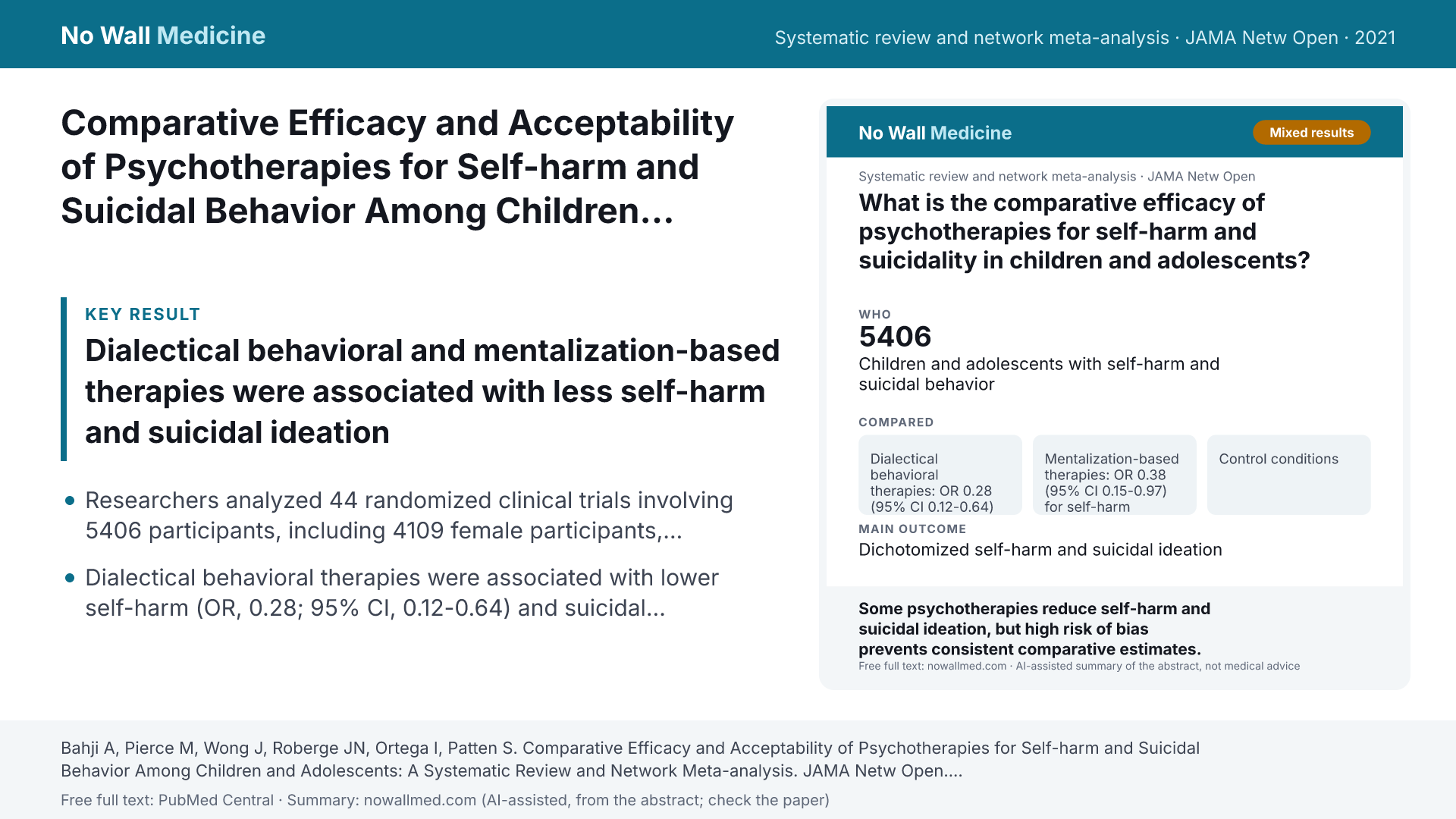
Dialectical behavioral and mentalization-based therapies were associated with less self-harm and suicidal ideation
Comparative Efficacy and Acceptability of Psychotherapies for Self-harm and Suicidal Behavior Among Children and Adolescents: A Systematic Review and Network Meta-analysis
Systematic review and network meta-analysisMixed results
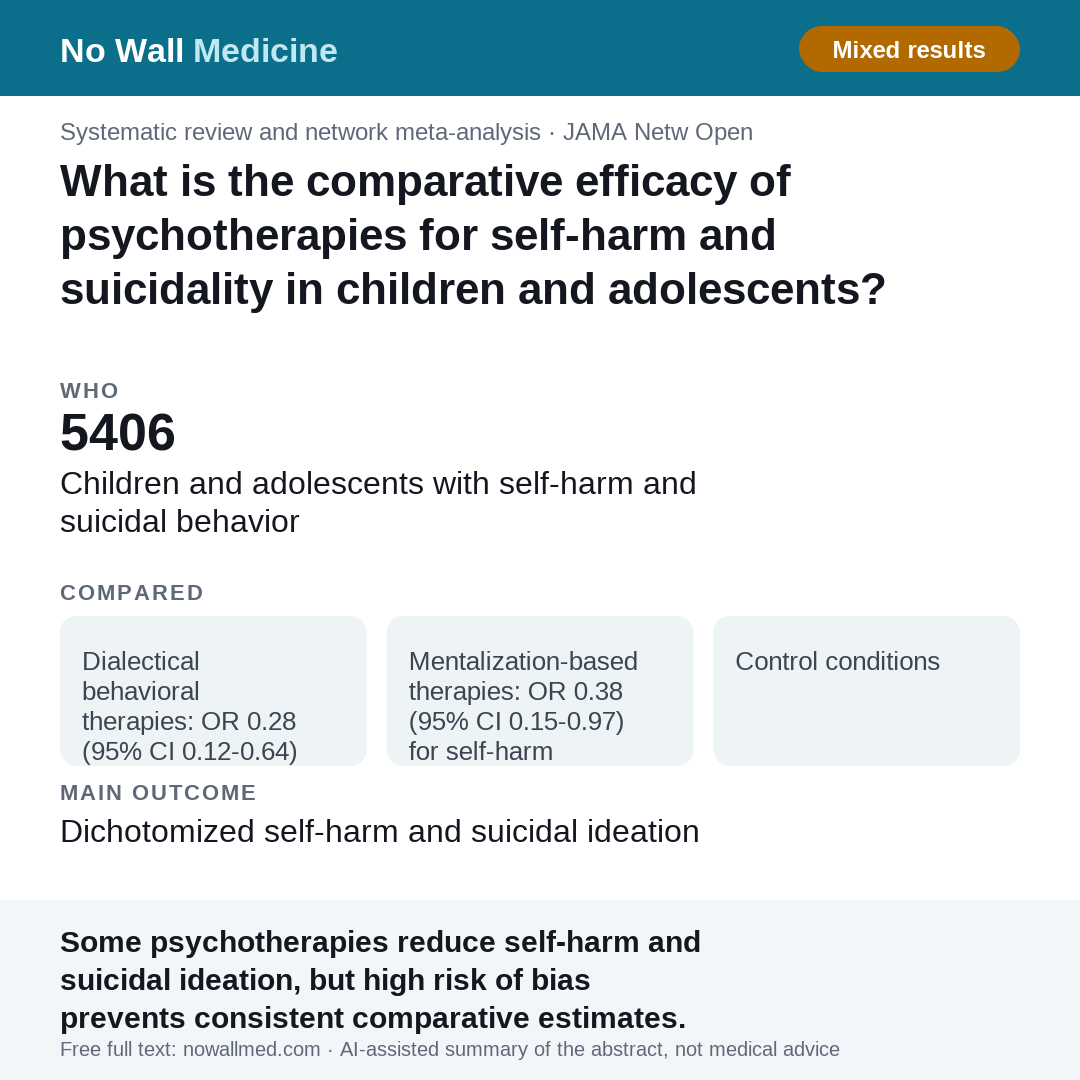
What is the comparative efficacy of psychotherapies for self-harm and suicidality in children and adolescents?
Who
5406
Children and adolescents with self-harm and suicidal behavior
Compared
Dialectical behavioral therapies: OR 0.28 (95% CI 0.12-0.64) for self-harm
Mentalization-based therapies: OR 0.38 (95% CI 0.15-0.97) for self-harm
Control conditions
Main outcome
Dichotomized self-harm and suicidal ideation
Bottom line: Some psychotherapies reduce self-harm and suicidal ideation, but high risk of bias prevents consistent comparative estimates.
Limitation: High risk of bias, heterogeneity, publication bias, inconsistency, and imprecision.
JAMA Netw Open · 2021-04-01Download image
Clinical question: What is the comparative efficacy of psychotherapies for self-harm and suicidality in children and adolescents?
Why it matters: The comparative performance of different psychotherapies for treating suicidality in children and adolescents is unclear because few head-to-head clinical trials have been conducted.
Key points
- Researchers analyzed 44 randomized clinical trials involving 5406 participants, including 4109 female participants, to compare different psychotherapies for self-harm and suicidality.
- Dialectical behavioral therapies were associated with lower self-harm (OR, 0.28; 95% CI, 0.12-0.64) and suicidal ideation (Cohen d SMD, -0.71; 95% CI, -1.19 to -0.23) at treatment end.
- Mentalization-based therapies were associated with lower self-harm (OR, 0.38; 95% CI, 0.15-0.97) and suicidal ideation (Cohen d SMD, -1.22; 95% CI, -2.18 to -0.26) at follow-up end.
Limitation the authors note: The quality of evidence was downgraded due to high risk of bias, heterogeneity, publication bias, inconsistency, and imprecision.
Headline and key points written with AI from the paper’s abstract, with every number checked against it. Read the paper before relying on them.
Was this summary helpful?
Subject terms
Cite this article
Bahji A, Pierce M, Wong J, Roberge JN, Ortega I, Patten S. Comparative Efficacy and Acceptability of Psychotherapies for Self-harm and Suicidal Behavior Among Children and Adolescents: A Systematic Review and Network Meta-analysis. JAMA Netw Open. 2021. doi:10.1001/jamanetworkopen.2021.6614
Spotted a mistake? Suggest a correction