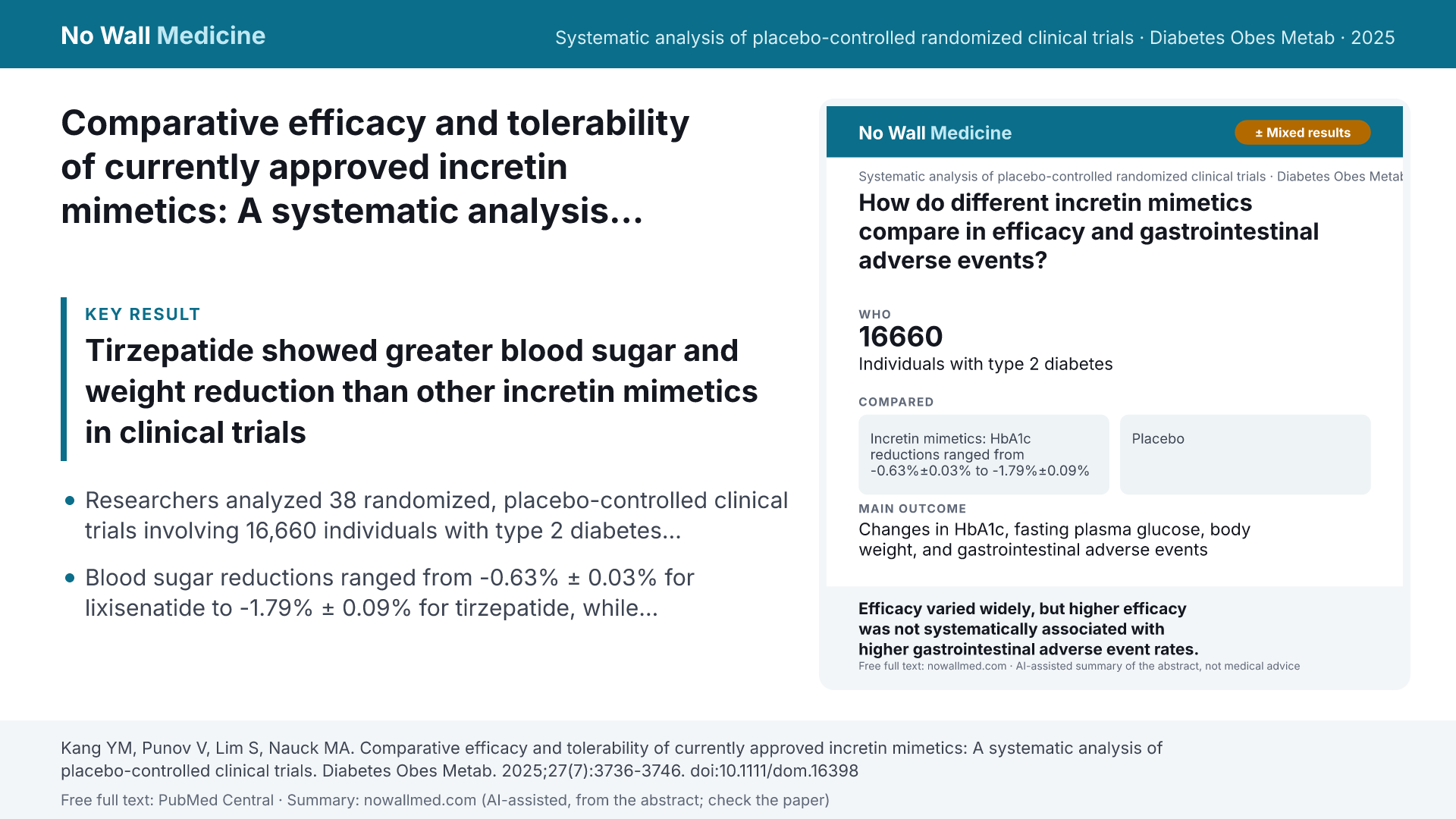
Tirzepatide showed greater blood sugar and weight reduction than other incretin mimetics in clinical trials
Comparative efficacy and tolerability of currently approved incretin mimetics: A systematic analysis of placebo-controlled clinical trials
Systematic analysis of placebo-controlled randomized clinical trialsMixed results
How do different incretin mimetics compare in efficacy and gastrointestinal adverse events?
Who
16660
Individuals with type 2 diabetes
Compared
Incretin mimetics: HbA1c reductions ranged from -0.63%±0.03% to -1.79%±0.09%
Placebo
Main outcome
Changes in HbA1c, fasting plasma glucose, body weight, and gastrointestinal adverse events
Bottom line: Efficacy varied widely, but higher efficacy was not systematically associated with higher gastrointestinal adverse event rates.
Diabetes Obes Metab · 2025-04-11Download image
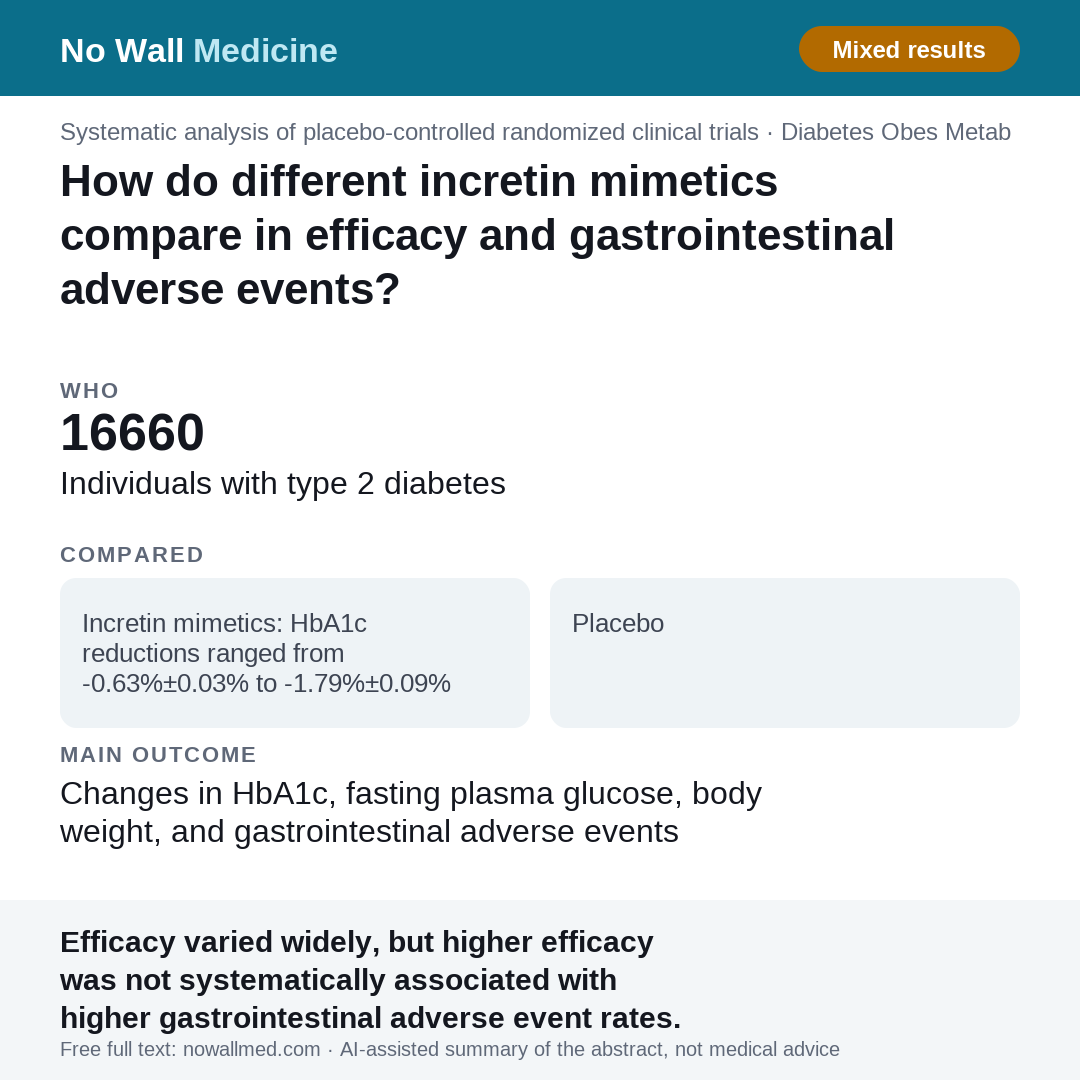
Clinical question: How do different incretin mimetics compare in efficacy and gastrointestinal adverse events?
Why it matters: The comparative efficacy and gastrointestinal side effect profiles of different approved incretin mimetics for treating type 2 diabetes were not fully established.
Key points
- Researchers analyzed 38 randomized, placebo-controlled clinical trials involving 16,660 individuals with type 2 diabetes to compare different incretin mimetics.
- Blood sugar reductions ranged from -0.63% ± 0.03% for lixisenatide to -1.79% ± 0.09% for tirzepatide, while weight reductions ranged from -0.75 ± 0.10 kg to -9.65 ± 0.56 kg.
- Larger therapeutic efficacy was not systematically associated with higher rates of gastrointestinal side effects like nausea, vomiting, or diarrhea.
Headline and key points written with AI from the paper’s abstract, with every number checked against it. Read the paper before relying on them.
Was this summary helpful?
Subject terms
Cite this article
Kang YM, Punov V, Lim S, Nauck MA. Comparative efficacy and tolerability of currently approved incretin mimetics: A systematic analysis of placebo-controlled clinical trials. Diabetes Obes Metab. 2025. doi:10.1111/dom.16398
Spotted a mistake? Suggest a correction